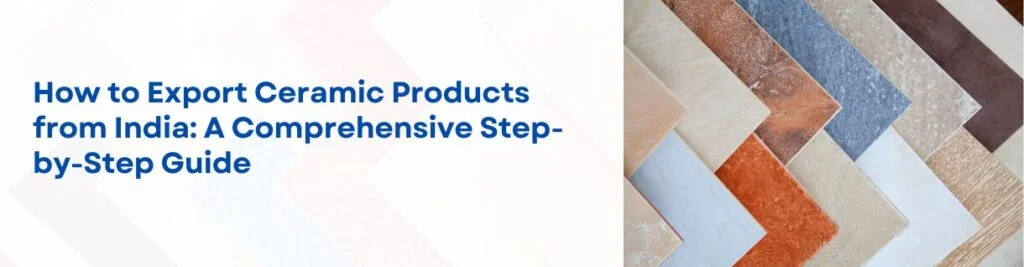
The Indian ceramic industry is currently undergoing a massive transformation, evolving from a traditional craft-based sector into a global powerhouse. As the world seeks reliable alternatives to established manufacturing hubs, India has emerged as the second-largest producer of ceramic tiles globally. Whether it’s exquisite vitrified tiles, sanitary ware, or high-tech industrial ceramics, the demand for Indian craftsmanship is skyrocketing in markets like the USA, UAE, Europe, and Southeast Asia.
However, entering the international market requires more than just high-quality products. It demands a deep understanding of legal compliances, quality standards, and logistics. This guide provides an exhaustive roadmap for entrepreneurs looking to build a successful ceramic export business from India.
1. Understanding the Global Demand for Indian Ceramics
Before diving into the “how,” it is essential to understand the “what” and “where.” India’s ceramic hub, primarily centered in Morbi (Gujarat), produces a vast array of products that are in high demand worldwide.
Popular Export Categories:
- Tiles: Vitrified, glazed, porcelain, wall, and floor tiles. These dominate the construction sectors in developing and developed nations.
- Sanitary Ware: Washbasins, water closets, and bathroom accessories.
- Tableware: Bone china and porcelain kitchenware used in the hospitality and residential sectors.
- Industrial Ceramics: Refractories, bioceramics, and silicon carbide used in heavy machinery and medical applications.
Top Target Markets:
Countries like the USA, Saudi Arabia, UAE, Nepal, and several European nations are the primary importers. With the “China Plus One” strategy being adopted by global corporations, Indian exporters have a golden opportunity to fill the supply gap.
2. Setting Up Your Business Foundation
To export legally, you must transition from a domestic seller to a recognized international entity.
Step 1: Business Registration
You must register your business as a Sole Proprietorship, Partnership, LLP, or Private Limited Company. For international credibility, a Private Limited Company or LLP is often preferred by foreign buyers.
Step 2: Obtain the IEC (Import Export Code)
The Import Export Code (IEC) is the most critical document. Issued by the Directorate General of Foreign Trade (DGFT), this 10-digit code is mandatory for any shipment leaving Indian shores. Without an IEC, you cannot clear customs or receive foreign currency in your bank account.
Step 3: RCMC with CAPEXIL
The Chemical and Allied Products Export Promotion Council (CAPEXIL) is the relevant body for ceramic exporters. Obtaining a Registration-cum-Membership Certificate (RCMC) from CAPEXIL provides you with access to government incentives, trade fairs, and market intelligence.
3. Quality Standards and International Certifications
International buyers are highly sensitive to quality. Ceramic products are fragile and must meet specific technical parameters to be accepted in foreign markets.
BIS and ISO Certification
While BIS (Bureau of Indian Standards) is often used for domestic quality, ISO 9001 (Quality Management) and ISO 14001 (Environmental Management) are globally recognized. Having these certifications acts as a “trust signal” for your brand.
The Role of CGCRI Testing
The CSIR-Central Glass & Ceramic Research Institute (CGCRI) provides specialized testing for Indian ceramics. Before exporting, your products should be tested for:
- Mechanical Strength: To ensure tiles don’t crack under pressure.
- Water Absorption: Crucial for vitrified tiles and sanitary ware.
- Chemical and Heat Resistance: Vital for industrial and kitchen ceramics.
4. Market Research and Finding International Buyers
Success in export is 20% production and 80% marketing. You need to identify where your specific product fits.
- Digital Presence: Build a professional, SEO-optimized website showcasing your catalog with high-resolution images and technical specifications (HS Codes, dimensions, material).
- B2B Portals: Platforms like Alibaba, IndiaMART, and TradeIndia are excellent for lead generation.
- Trade Fairs: Attending exhibitions like Vibrant Ceramics in India or Cersaie in Italy can connect you directly with wholesalers and distributors.
- Indian Embassies: Contact the commercial wing of Indian embassies in your target countries to get lists of registered importers.
5. Pricing and Payment Terms
Pricing for exports is different from domestic sales. You must account for:
- FOB (Free on Board) or CIF (Cost, Insurance, and Freight) pricing.
- Packaging costs (which are higher for fragile ceramics).
- Currency fluctuations.
Securing Your Payment:
To avoid the risk of non-payment, new exporters should insist on:
- Letter of Credit (LC): The safest method where the buyer’s bank guarantees payment.
- Telegraphic Transfer (TT): Advance payment (e.g., 30% advance, 70% against a copy of the Bill of Lading).
6. Logistics: The Art of Packaging Ceramics
Ceramics are “Fragile Cargo.” A single mistake in logistics can result in a container full of broken pieces, leading to heavy losses and a tarnished reputation.
- Palletization: Always use high-quality wooden pallets that are heat-treated (ISPM 15 standards).
- Cushioning: Use corrugated sheets, foam, and bubble wrap between layers.
- Container Stuffing: Ensure there is no “empty space” in the container that allows the pallets to shift during sea transit.
- Insurance: Never ship ceramics without Marine Insurance. It protects you against breakage, theft, or loss during transit.
7. Mandatory Documentation Checklist
A smooth customs clearance depends on accurate paperwork. Ensure you have the following:
- Proforma Invoice & Commercial Invoice
- Packing List (Detailed dimensions and weight)
- Bill of Lading (BL) (Issued by the shipping line)
- Certificate of Origin (COO) (Proves the goods are made in India)
- Shipping Bill
- Test Reports (CGCRI/BIS)
8. Government Incentives for Ceramic Exporters
The Government of India encourages ceramic exports through various schemes:
- RoDTEP (Remission of Duties and Taxes on Exported Products): Provides a refund of embedded central, state, and local duties.
- Duty Drawback: A refund of customs duty paid on raw materials imported for manufacturing export goods.
- GSP (Generalized System of Preferences): Allows Indian ceramics to enter certain developed markets (like the EU) at lower or zero tariffs.
9. Common Challenges and How to Overcome Them
- Breakage: Mitigate this through superior packaging and hiring experienced freight forwarders.
- Anti-Dumping Duties: Some countries (like the EU or GCC) may impose anti-dumping duties on Indian ceramics to protect their local industries. Always check the current trade barriers for your target country.
- Design Trends: Markets like Europe prefer minimalist, matte finishes, while the Middle East may prefer glossy, ornate designs. Stay updated with global trends.
Conclusion: The Path Ahead
Exporting ceramic products from India is a highly lucrative venture, provided you approach it with a long-term vision. By focusing on quality certification (CGCRI), robust packaging, and strategic market research, you can scale your business from a local factory to a global brand.
The road to international trade may seem complex due to the documentation and regulations involved. However, with the right partners—like export consultants and reliable logistics providers—you can navigate these waters successfully. The global floor is waiting for Indian tiles; it’s time for you to step on it.