Metals & Alloys
Steel Industry Alert: BIS Compliance Rules for Intermediate Products Explained
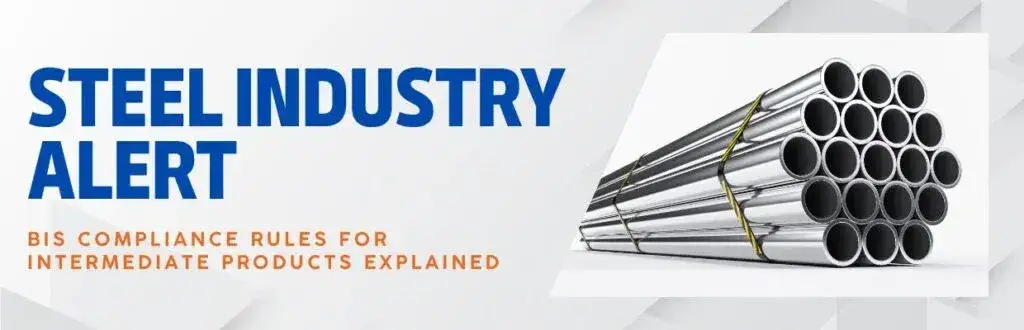
In a significant move to uphold the quality of steel products in India and protect the interests of domestic manufacturers, the Ministry of Steel issued a clarificatory order on June 13, 2025, regarding the enforcement of Quality Control Orders (QCOs) for steel products. Background Over the years, the Ministry of Steel has introduced Quality Control Orders covering 151 Bureau of Indian Standards (BIS) standards for steel products to ensure that both domestic production and imports conform to prescribed safety and performance standards. The last QCO was issued in August 2024, and no new QCO has been issued since.
Key Highlights of the Clarification
Intermediate Materials Must Also Be BIS Compliant
Manufacturers and importers must now ensure that intermediate steel products used in the production of BIS-regulated final products also comply with the relevant BIS standards. For example, coated steel that uses Hot Rolled (HR) or Cold Rolled (CR) coils as base material must ensure those coils are BIS certified. If the base material isn’t compliant, the final product cannot be BIS compliant either.Ensuring Parity Between Domestic and Imported Products
Previously, Indian manufacturers were required to use BIS-certified intermediates, whereas importers could bypass this, giving them an unfair advantage. The new clarification removes this disparity, ensuring fair competition and protecting domestic producers.Protection Against Substandard Imports
With global steel consumption slowing and production capacities rising, countries may seek to dump cheap, substandard steel into fast-growing markets like India. This clarification is aimed at preventing the inflow of low-quality steel, safeguarding the integrity of India’s steel infrastructure.Clarification for Integrated Steel Plants
Integrated steel plants, which manufacture both intermediate and final products, will receive further clarification from the Ministry after verification with BIS. This ensures that their processes align with the new compliance requirements.Implications for the Industry
For Domestic Manufacturers
- Enhanced Quality Assurance: Ensures that all materials, including intermediates, meet BIS standards, leading to higher-quality final products.
- Level Playing Field: Eliminates the advantage previously held by importers using non-compliant materials.
For Importers
- Compliance Requirement: Must ensure that both intermediate and final steel products meet BIS standards.
- Potential for Delays: Non-compliant products may face delays or rejections at customs.
For Consumers
- Improved Product Quality: Access to steel products that meet stringent quality standards, ensuring safety and durability.