
In India’s booming beverage industry, where the packaged water market is projected to reach ₹40,000 crores by 2026, launching a mineral water plant isn’t just about sourcing pure water—it’s about proving its safety and quality. The ISI Mark, administered by the Bureau of Indian Standards (BIS), is the gold standard for this, ensuring your product meets rigorous health and safety benchmarks. Without it, your plant risks shutdowns, fines up to ₹5 lakhs, or product seizures under the BIS Act, 2016.
At Instacertify, we’ve assisted over 200 mineral water entrepreneurs in securing ISI certification, streamlining the process from setup to compliance. This detailed guide, updated for October 2025 words and covers everything from standards to challenges. Whether you’re a startup or an expanding producer, we’ll walk you through obtaining ISI certification for your mineral water plant, helping you build consumer trust and tap into India’s health-conscious market. Let’s dive in.
What is ISI Certification for Mineral Water Plants?
The ISI (Indian Standards Institute) Mark is a certification symbol issued by the Bureau of Indian Standards (BIS), India’s national standards body, indicating that a product conforms to specified Indian Standards (IS). For mineral water plants, ISI certification mandates that packaged natural mineral water meets quality, safety, and labeling requirements, making it mandatory for legal production and sale.
Why ISI Certification Matters for Mineral Water
- Consumer Safety: Ensures water is free from contaminants like E. coli, heavy metals, and pesticides. In 2024, BIS reported over 500 cases of non-compliant water products causing health alerts, underscoring the need for verified purity.
- Regulatory Compliance: Under the Food Safety and Standards (Prohibition and Restriction on Sales) Regulations, 2011, all packaged natural mineral water must carry the ISI Mark. Non-compliance leads to penalties or bans.
- Market Credibility: The ISI logo boosts buyer confidence—certified brands see 25-30% higher sales in retail and e-commerce.
- Business Growth: Enables participation in government tenders, exports, and partnerships with hotels/F&B chains.
- Sustainability Edge: Aligns with eco-friendly practices, as standards emphasize minimal chemical use and proper waste management.
As of 2025, over 30 ISI licenses have been granted for packaged natural mineral water, per BIS data. With rising demand for premium, naturally sourced water, certification positions your plant as a reliable player.
Relevant Indian Standard: IS 13428:2005
Packaged natural mineral water falls under IS 13428:2005, which specifies requirements for water derived from natural sources (springs, aquifers) without added minerals or treatments beyond disinfection. Key parameters include:
- Physical: Turbidity <1 NTU, TDS 50-500 mg/L.
- Chemical: pH 6.5-8.5, no arsenic, lead, or mercury beyond limits.
- Microbiological: Absent coliforms, zero E. coli.
- Radioactive & Pesticide Residues: Strict upper limits.
Note: For treated drinking water (not natural mineral), use IS 14543:2016. Always confirm your category—mineral water must be “natural” and calorie-free.
Who Needs ISI Certification for a Mineral Water Plant?
ISI certification is mandatory for all entities producing or packaging natural mineral water for sale in India.
Key Stakeholders
- Manufacturers: Plant owners extracting and bottling natural mineral water.
- Importers: Foreign producers exporting to India (via Foreign Manufacturers Certification Scheme – FMCS).
- Brand Owners: Companies outsourcing production but labeling under their name.
- Packagers: Facilities handling final bottling, even if sourcing pre-treated water.
Applicability by Business Type
- Startups/SMEs: Essential for new plants; costs ₹1-3 lakhs initially, but ROI via premium pricing.
- Large Producers: Renewals ensure scalability; non-compliance risks recalls.
- Foreign Entities: Must appoint an Authorized Indian Representative (AIR).
Exemptions are rare—only for R&D prototypes. Plants producing <500 liters/day still need it if selling commercially.
Prerequisites for Setting Up a Mineral Water Plant
Before applying, ensure your plant meets foundational requirements.
Legal and Infrastructure Setup
- Business Registration: Form a proprietorship, partnership, or Pvt. Ltd. company; obtain PAN, GST, and MSME/Udyam registration.
- Location: Choose a site away from pollutants (min. 500m from industrial areas). Secure groundwater rights via state groundwater boards.
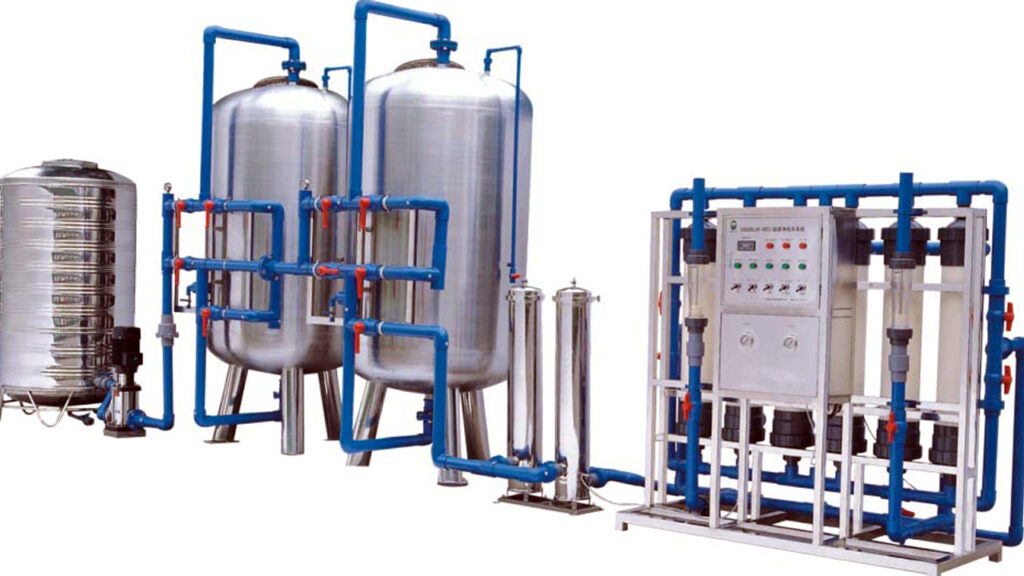
- Plant Layout: 1,000-2,000 sq. ft. minimum, with separate zones for extraction, treatment, testing, and packaging. Install RO, UV, ozonation systems.
- Equipment: Source pumps, filters, bottling lines from BIS-compliant vendors. Budget: ₹20-50 lakhs for a small plant.
- In-House Lab: Mandatory for self-testing; equip with TDS meters, pH kits, and microscopes (₹5-10 lakhs).
- FSSAI License: Parallel requirement; apply for State/Central based on turnover (₹12 lakhs+ needs Central).
Water Source Compliance
Source from approved natural springs/aquifers. Conduct initial geological surveys and obtain No Objection Certificates (NOCs) from Pollution Control Boards.
Step-by-Step Guide to Obtaining ISI Certification
The process under BIS’s Scheme-I (Product Certification) takes 3-6 months. Here’s a detailed walkthrough.
Step 1: Verify Compliance with IS 13428:2005
- Review the standard (available on BIS portal).
- Conduct internal audits: Test water for 20+ parameters (e.g., minerals, microbes).
- Tip: Engage a BIS-recognized consultant like Instacertify for gap analysis—reduces rejections by 80%.
Step 2: Prepare Documentation
Gather these essentials:
- Business Docs: Incorporation certificate, PAN, GST, address proof.
- Technical Docs: Plant layout, process flow chart, equipment list, water source report.
- Quality Docs: In-house test reports, SOPs for hygiene/QC, labeling designs (must include ISI Mark, source details).
- Affidavit: Declaring compliance and no prior violations.
- Fee Payment Proof: Initial application fee.
For foreign applicants: AIR agreement (notarized).
Instacertify Tip: Use digital checklists; incomplete docs cause 40% delays.
Step 3: Apply via BIS MANAKonline Portal
- Register at www.manakonline.in.
- Fill Form I: Select IS 13428, upload docs.
- Pay ₹1,000-5,000 application fee.
- Submit samples (5-10 bottles) to BIS-recognized labs (e.g., NABL-accredited).
Portal tracks status; expect acknowledgment in 7-10 days.
Step 4: Laboratory Testing
- Labs test for all IS parameters: Microbiological (e.g., coliforms), chemical (e.g., fluoride <1 mg/L), physical (color <5 Hazen units).
- Duration: 2-4 weeks; cost: ₹20,000-50,000 per sample set.
- If fails: Rectify (e.g., enhance filtration) and retest.
Case Example: A Rajasthan plant failed initial turbidity tests; we upgraded their settling tanks, passing on retry in 3 weeks.
Step 5: Factory Inspection and Audit
- BIS officers visit: Check hygiene, equipment calibration, waste disposal.
- Mock audit prep: Instacertify conducts pre-inspections (₹15,000 fee).
- Duration: 1-2 weeks post-testing.
Step 6: Grant of License and Marking
- Approval: BIS issues License No. (valid 1-2 years).
- Affix ISI Mark on labels: “IS 13428” + license number.
- Commence production only post-grant.
Step 7: Surveillance and Renewal
- Annual audits: BIS draws samples quarterly.
- Renewal: Apply 3 months pre-expiry; fresh tests required.
- Changes (e.g., new source): Notify BIS for amendments.
Costs, Timelines, and Validity
Costs Breakdown (2025 Estimates)
| Category | Cost (₹) | Notes |
|---|---|---|
| Application Fee | 1,000-5,000 | Per model/variant |
| Lab Testing | 20,000-50,000 | Per sample set; multiple if variants |
| Inspection/Audit | 10,000-20,000 | Travel + fees |
| Consultancy (Instacertify) | 25,000-75,000 | End-to-end package |
| In-House Lab Setup | 5-10 lakhs | One-time |
| Total Initial | 1-2 lakhs | Excl. plant setup |
Renewal: 50% of initial costs.
Timelines
- Application to Testing: 1-2 months.
- Inspection to Approval: 1-3 months.
- Total: 3-6 months; delays from retests add 1-2 months.
Instacertify accelerates by 30% via pre-audits.
Validity
- Initial: 1 year; renewable indefinitely.
- Surveillance: Mandatory quarterly samples; non-compliance revokes license.
Common Challenges and Solutions
Challenge 1: Source Water Non-Compliance
- Issue: Natural sources often exceed mineral limits.
- Solution: Geological surveys pre-setup; blend if needed (within IS).
Challenge 2: Lab Test Failures
- Issue: Microbial contamination common (30% failure rate).
- Solution: Enhance UV/ozone; retest with Instacertify’s protocol.
Challenge 3: Documentation Gaps
- Issue: Missing SOPs delay 25% applications.
- Solution: Use templates; our audits ensure 95% first-pass.
Challenge 4: High Setup Costs for SMEs
- Issue: Lab/equipment strains budgets.
- Solution: Phase investments; subsidies via MSME schemes.
Challenge 5: Renewal Overlooks
- Issue: Forgetting audits leads to lapses.
- Solution: Automated reminders from partners like us.
Why Choose Instacertify for ISI Certification?
With 10+ years in compliance, we’ve certified 200+ plants, achieving 98% approval rates.
- Full Support: From NOC to renewal.
- Lab Network: Partnerships for priority testing.
- AIR Services: For imports.
- Cost Savings: Up to 25% via bundled services.
- 2025 Expertise: Updated for new BIS digital portals.
Client Story: A Gujarat startup secured ISI in 4 months, launching with ₹50 lakhs turnover in Year 1.
Recent Updates (October 2025)
- Digital Enhancements: MANAKonline now AI-assisted for faster reviews (20% quicker).
- Stricter Microbe Tests: Enhanced E. coli protocols per FSSAI-BIS alignment.
- Green Incentives: Subsidies for sustainable sourcing (up to 20% rebate).
Subscribe to our blog for alerts.
Best Practices for Success
- Start with Source Audit: Test water pre-plant build.
- Invest in Training: Staff on hygiene (HACCP-certified).
- Digital Tracking: Use BIS app for compliance logs.
- Diversify Variants: Certify multiple sizes early.
- Partner Experts: Avoid DIY pitfalls.
- Monitor Market: Align with FSSAI labeling changes.
Is ISI mandatory for mineral water?
Yes, under the 2011 Regulations, no sales without it.
What’s the difference from FSSAI?
ISI focuses on quality standards; FSSAI on food safety/licensing.
How long does the process take?
3-6 months; faster with experts.
Case Study: From Setup to Certified Success
A Maharashtra entrepreneur faced delays in microbial tests for their spring-sourced plant. Instacertify:
- Audited source, installed advanced ozonation.
- Handled docs/testing, passed inspection in 3 months.
- Result: ₹2 crore annual revenue post-launch.
The Future of Mineral Water Certification in India
By 2030, with water scarcity rising, ISI will integrate blockchain for traceability and stricter sustainability (e.g., recyclable packaging). Plants adopting now gain a competitive edge. Instacertify is ready with future-proof solutions.
Conclusion: Secure Your Plant’s Future with ISI
ISI certification isn’t a hurdle—it’s your mineral water plant’s foundation for trust, compliance, and growth. With natural purity as your USP, let Instacertify handle the complexities. Contact us for a free consultation at instacertify.com or visit bis.gov.in to start.