
Energy efficiency has become the new benchmark for quality, trust, and sustainability in India’s manufacturing and import ecosystem. With consumers becoming energy-conscious and the government tightening compliance norms, BEE certification is now one of the most critical regulatory approvals for electrical and electronic products.
Whether you’re a domestic manufacturer, importer, or brand owner, understanding how to get BEE certification in India can save you from compliance delays, product rejections, and lost business opportunities.
In this in-depth guide, we’ll walk you through everything — from what BEE certification means, to the step-by-step process, documents required, costs involved, and how Instacertify helps you get certified faster, legally, and efficiently.
What is BEE Certification?
BEE Certification refers to the approval issued by the Bureau of Energy Efficiency (BEE) — an agency established by the Government of India under the Ministry of Power, as per the Energy Conservation Act, 2001.
Its purpose is to promote the manufacture and sale of energy-efficient appliances and reduce India’s overall energy consumption.
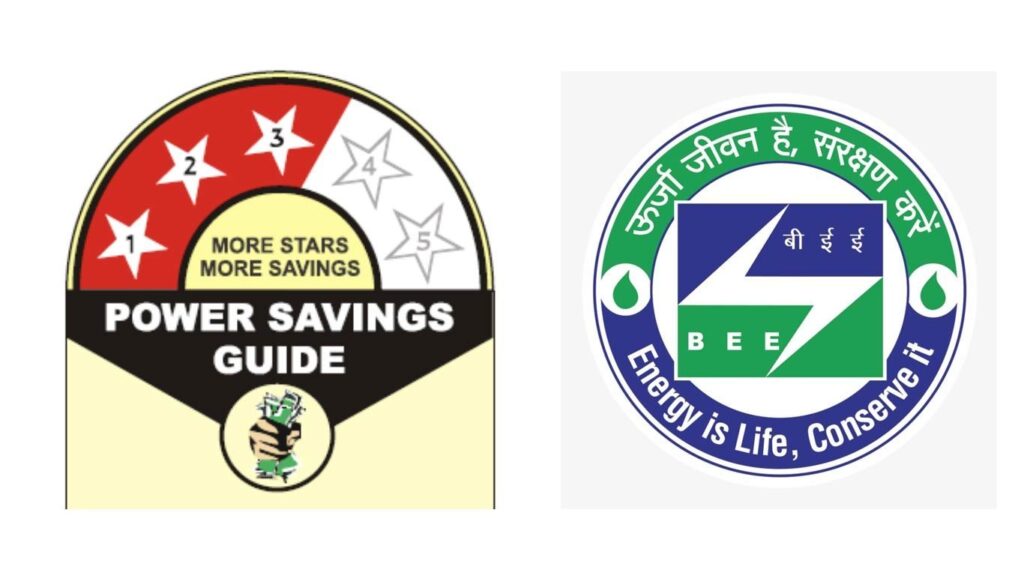
Every BEE-certified product carries a Star Rating Label — ranging from 1-Star (least efficient) to 5-Star (most efficient) — that helps customers identify how power-efficient the product is.
Example: A 5-star rated air conditioner consumes 30–40% less electricity than a 3-star model, which saves the consumer thousands of rupees annually.
Legal Framework Behind BEE Certification
The Energy Conservation Act, 2001 empowers the Bureau of Energy Efficiency to:
- Prescribe energy efficiency standards.
- Enforce labeling schemes for appliances.
- Conduct product testing through accredited labs.
- Monitor compliance and penalize violations.
This means that BEE Certification is not optional for certain appliances — it’s a legal requirement to sell or import products in India.
Non-compliance can result in:
- Heavy fines
- Market withdrawal orders
- Brand reputation damage
- Customs clearance issues for imports
Categories Under BEE Star Labeling Scheme
The BEE Star Labeling Program is divided into two schemes:
1. Mandatory Labeling Scheme
Products under this scheme must have BEE certification before being sold or imported.
Examples of mandatory products (as of 2025):
- Room Air Conditioners
- Frost-Free Refrigerators
- LED Lamps
- Tubular Fluorescent Lamps
- Washing Machines
- Water Heaters (Geysers)
- Ceiling Fans
- Distribution Transformers
- Color Televisions
- Computer Monitors
2. Voluntary Labeling Scheme
Manufacturers can voluntarily register their products for a BEE Star Label to gain a competitive edge and build consumer trust.
Examples:
- Electric Ovens
- LPG Stoves
- Set-Top Boxes
- Water Purifiers
- Mixer Grinders
Tip: Even if your product falls under the voluntary list, early certification builds credibility and prepares your brand for future mandatory inclusion.
Types of BEE Certification
BEE certification can be divided into two primary stages:
A. Company Registration
Every manufacturer or importer must first register their organization and brand with BEE.
This acts as a pre-requisite before any product model can be registered.
B. Model Registration
Once the company is registered, each specific product model (with unique specifications) must be registered individually for star rating and labeling.
Each model receives a unique BEE registration number and authorization to use the BEE label.
Detailed Step-by-Step Process of Getting BEE Certification in India
Step 1: Identify Applicable Product Category
The first step is to confirm whether your product falls under the mandatory or voluntary BEE list.
Instacertify’s experts analyze your product specifications and guide you through eligibility verification.
Step 2: Product Testing in a NABL-Accredited Lab
Every product model must undergo testing in a NABL (National Accreditation Board for Testing and Calibration Laboratories)-accredited laboratory recognized by BEE.
Key requirements:
- Test reports must not be older than 90 days.
- Reports must follow BEE-prescribed test procedures (e.g., IS standards).
- Each variant or model needs a separate test.
Example:
If a brand manufactures three air conditioner models of varying tonnage (1.0, 1.5, 2.0), each model must be tested separately.
Step 3: Company Registration on the BEE Portal
Manufacturers/importers must register on the BEE online portal and submit basic company details.
Documents Required:
- Certificate of Incorporation / MSME Registration
- PAN Card & GST Certificate
- Brand Authorization (for importers or OEMs)
- Authorized Signatory ID & Authorization Letter
- BIS Certificate (if applicable)
Instacertify ensures all documentation is accurate and uploaded in the right format to prevent rejection.
Step 4: Model Registration & Application Submission
Once the company profile is approved, you must register each product model individually.
You’ll need to provide:
- NABL Test Report (in BEE format)
- Sample Label Design
- Product Images & Brochure
- Model Technical Sheet
- Undertaking of Authenticity
- Application Fees Payment Proof
Instacertify’s technical team prepares and reviews the model documentation before submission — a critical step to avoid technical rejections, which are common if formats are incorrect.
Step 5: BEE Evaluation & Star Label Assignment
BEE reviews the application and verifies:
- Test data
- Product compliance with energy performance standards
- Documentation authenticity
If approved, BEE issues the Star Label Approval, authorizing the manufacturer to use the BEE Star Rating Label on the product packaging, advertisement, and marketing materials.
Step 6: Payment of Labeling Fees
Manufacturers are required to pay a labeling fee for every model registered under the BEE program.
The fee amount varies depending on:
- Product category
- Star rating achieved
- Number of models approved
Step 7: Renewal and Ongoing Compliance
BEE certificates are valid for one year, after which renewal is mandatory.
Instacertify maintains an internal compliance tracker for its clients, ensuring timely renewals, updated test reports, and no lapse in certification validity.
Documents Checklist for BEE Certification
| Category | Required Documents |
|---|---|
| Company Documents | PAN, GST, CIN, Incorporation Certificate, ISO, MSME Registration |
| Authorized Person | ID Proof, Authorization Letter, Power of Attorney |
| Product Details | Product Catalog, Brochure, User Manual, High-Resolution Images |
| Testing & Technical | NABL Test Report, Model Code Sheet, Energy Performance Data |
| Legal/Other | Undertaking of Authenticity, Fee Payment Proof, Brand Ownership Certificate |
Instacertify provides ready-to-use document templates and assists with data formatting per BEE’s requirements.
Timeframe for BEE Certification
The average time to complete the BEE certification process varies:
| Stage | Estimated Duration |
|---|---|
| Product Testing | 10–15 working days |
| Company Registration | 5–10 working days |
| Model Registration | 15–20 working days |
| Final Approval & Label Issue | 30–45 days total |
With expert handling and proactive follow-ups, Instacertify often completes approvals 30% faster than standard timelines.
Cost of BEE Certification in India (2025 Updated Estimate)
| Stage | Approx. Fee (INR) |
|---|---|
| Company Registration | ₹25,000 – ₹40,000 |
| Product Testing | ₹15,000 – ₹60,000 per model |
| Model Registration | ₹10,000 – ₹25,000 per model |
| Labeling Fee | ₹2,000 – ₹10,000 (per label) |
Note: Total cost varies depending on the product type, test lab, and number of models.
Common Reasons for BEE Application Rejection
- Outdated or invalid test reports
- Incomplete documents or missing signatures
- Incorrect labeling format
- Mismatch between product name and lab report
- Submission of unauthorized lab reports
Instacertify’s team reviews all documents and handles pre-validation before submission to eliminate these risks entirely.
Benefits of Getting BEE Certification
- ✅ Mandatory Compliance – Legal requirement for many product categories.
- ⭐ Market Advantage – 5-Star products attract eco-conscious consumers.
- 🔋 Energy Efficiency – Promotes sustainable manufacturing.
- 📈 Improved Sales – Star rating builds customer confidence.
- 🌍 Export Readiness – Recognized by international buyers.
- 🧾 Brand Credibility – Builds long-term trust and visibility.
How Instacertify Helps You Get BEE Certification Hassle-Free
Applying for BEE certification requires technical precision, document accuracy, and regulatory know-how. Instacertify simplifies the entire process for businesses.
Our End-to-End BEE Certification Services Include:
- ✅ Product eligibility analysis
- ✅ Coordination with NABL-accredited testing labs
- ✅ Preparation & submission of documentation
- ✅ Application filing on the BEE portal
- ✅ Star label design & approval
- ✅ Follow-ups until certification is issued
- ✅ Renewal & compliance management
Why Choose Instacertify?
- 🧑💼 Experienced consultants specializing in BEE, BIS, and EPR certifications
- ⚙️ 100% digital process management
- 📞 Dedicated account manager
- 🔒 Error-free documentation
- 🕒 On-time delivery and renewal reminders
With a track record of helping hundreds of Indian manufacturers and importers, Instacertify has become one of the most trusted certification service providers in the compliance industry.
📚 Real-World Example
A Delhi-based LED manufacturer faced repeated rejections for BEE model registration due to incomplete documentation.
After partnering with Instacertify, their certification was approved in just 18 days.
Today, the company sells nationwide with a 5-star rated product line, boosting sales by over 40%.
Get Your BEE Certification Today
Don’t let paperwork or technicalities delay your market launch.
With Instacertify’s end-to-end BEE certification services, you can focus on innovation while we handle compliance.
📍 Visit: www.instacertify.com
📧 Email: info@instacertify.com
How long does it take to get BEE certification in India
Typically 4–6 weeks, depending on product testing timelines and documentation readiness.
Is BEE certification mandatory for imported products?
Yes, imported electrical appliances sold in India must be tested in Indian NABL labs and certified by BEE.