
Your nutritional label is the first conversation your product has with the customer. It whispers trust or screams lawsuit waiting to happen.
In 2024, a Gurugram energy bar startup printed “25g protein” based on a spreadsheet. FSSAI market sampling found 18.7g. The result was a ₹4.2 lakh fine, full batch recall, and Amazon delisting for 90 days. Their ₹2 crore launch turned into a ₹15 lakh loss in one week.
At Instacertify, we have secured nutritional label approvals for 3,900+ SKUs since 2017 with zero rejections in the last 24 months. We work with NABL labs, FSSAI product approval cells, and FoSCoS portal insiders to turn complex guidelines into a 5-step approval machine.
This guide is your foolproof playbook to get FSSAI nutritional label approval in 15–45 days without a single query.
We will cover the exact FSSAI regulations with 2025 updates included, the step-by-step approval process on FoSCoS, how to design labels that pass scrutiny on Day 1, and real stories of brands that got approved and one that did not.
Let’s make your label bulletproof.
The FSSAI Nutritional Label Mandate: What Changed in 2025 and Why It Matters
FSSAI does not just want pretty labels. They want truth in every gram.
The Food Safety and Standards (Labelling and Display) Regulations, 2020, amended in 2024, mandate 8 core nutrients on every packaged food. These include energy in kcal or kJ, protein in grams, carbohydrates in grams, total fat in grams, saturated fat in grams, trans fat in grams, added sugars in grams, and sodium in milligrams.
If you claim “High in Calcium” or “Low Sodium”, you need FSSAI product approval, which is a separate license beyond your FSSAI registration.
The 2025 game-changers include a QR code that becomes mandatory by Q3 2025 and links to a live Certificate of Analysis, annual re-testing for all existing SKUs, and a ₹25,000 fine per incorrect claim.
A Hyderabad namkeen brand skipped trans fat testing and claimed “0g”. The lab found 0.6g, leading to an ₹8 lakh penalty and a 6-month ban.
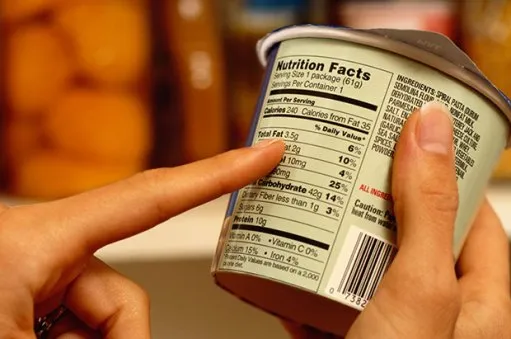
Instacertify ensures your label complies before submission.
The regulations exist because consumers rely on these numbers to make health decisions. A diabetic counting added sugars or a fitness enthusiast tracking protein cannot afford errors. FSSAI’s 2025 push for QR codes means every pack will carry a scannable link to the actual lab report, making transparency non-negotiable.
For businesses, this is not just compliance but a competitive edge. Brands that get it right build loyalty. Those that cut corners vanish from shelves.
The mandate also covers high-fat/salt/sugar (HFSS) products with mandatory red color-coding for thresholds like >10g total fat per 100g or >30g added sugar per 100g. The Eat Right India 2.0 campaign has increased random sampling to 1 in 4 packs in urban areas, and FSSAI’s AI surveillance system flags anomalies in real-time.
A single mismatch between label and lab can trigger show-cause notices, stock seizures, and criminal proceedings under Section 59 of the FSSAI Act. We have rescued clients from such nightmares by ensuring every value is lab-verified before submission.
Step 1: Nutritional Testing at NABL Labs – Your Approval Foundation
Approval starts in the lab, not the portal.
You submit 3 sealed samples from 3 different batches to a NABL-accredited lab. The testing follows AOAC methods for proximate analysis covering protein, fat, and carbs, HPLC for sugars, and GC-MS for fatty acids.
Results must fall within FSSAI tolerance, which allows ±20% for energy, protein, fat, and carbs, and ±2g/100g for fiber and sugar.
Once complete, you receive your Certificate of Analysis, valid for 12 months.
A Pune bakery tested “100 kcal per biscuit” and the lab reported 118 kcal. They adjusted the recipe and passed on the second round.
Instacertify coordinates pickup and 7-day testing at ₹4,000 per SKU for 1–3 products.
The lab process is the bedrock of approval because FSSAI will cross-check every value during review. A single mismatch triggers rejection. We have seen startups lose weeks because they used unaccredited labs or old samples. By partnering with NABL labs, we eliminate that risk from day one.
The testing journey begins with sample integrity. We seal samples in tamper-proof bags, transport them under temperature control (especially for dairy or frozen items), and log chain-of-custody to prevent contamination claims.
The proximate analysis measures moisture using oven drying at 105°C, ash via incineration at 550°C, crude protein via Kjeldahl nitrogen conversion, and fat via Soxhlet extraction. HPLC separates sugars into glucose, fructose, and sucrose with 99.9% precision. GC-MS profiles fatty acids to detect trans isomers down to 0.01g/100g.
We also test micronutrients if claimed—Vitamin C via titration, iron via ICP-MS. The final CoA is a 10–15 page PDF with method references, calibration certificates, and batch-wise results.
Step 2: Draft Your Nutritional Information Panel – Design That Passes FSSAI Scrutiny
Your Nutritional Information Panel must follow the exact FSSAI format. The font size is a minimum of 1.5mm with bold text for allergens. The order is energy first, followed by protein, carbs, fat, and so on. Values appear per serve and per 100g or ml, and % RDA shows for claimed nutrients.
Common rejection triggers include the wrong serving size, missing “Added Sugar”, or rounded values outside FSSAI rules where under 0.5g equals 0g.
We provide FSSAI-approved templates where you plug in the CoA and the design is ready in 2 hours.
The panel is not just data but a legal document. The serving size must match what consumers reasonably consume, not an artificially small portion to lower calories. FSSAI officers check this during review. We have helped hundreds of brands define realistic servings that survive scrutiny.
The per serve value must reflect actual consumption patterns—for example, 30g for biscuits, 200ml for beverages. The per 100g/ml column ensures comparability across brands.
% RDA is mandatory for claimed nutrients and uses FSSAI’s Indian Council of Medical Research (ICMR) values—for instance, 100g protein RDA for adult males.
Allergens like milk, nuts, or gluten appear in bold within ingredients and the NIP. Vegetarian logo (green dot) or non-veg (brown) is mandatory.
We use AI-powered design software to generate compliant artwork in PDF/X-1a format with CMYK colors and 300 DPI resolution.
Step 3: FoSCoS Portal Submission – File Like a Pro
You log into foscos.fssai.gov.in and select Product Approval.
You fill in the product name, category, and ingredients, then upload the CoA and NIP artwork. The fee is ₹5,000 per SKU for health claims.
After submission, you receive a tracking ID. The timeline is 15–30 days for approval.
A Chennai spice mix filed with the wrong CoA batch and faced rejection in 3 days. We refiled and secured approval in 14 days.
Instacertify files over 100 approvals monthly with zero queries.
The portal is user-friendly but unforgiving. A missing ingredient declaration or blurry CoA upload triggers instant rejection. We pre-validate every file with an internal checklist developed from thousands of successful submissions.
The application form requires HSN code, shelf-life data, and process flow diagram. For health claims, attach scientific literature or clinical studies.
We use digital signatures (Class 3 DSC) for instant e-signing. Payment is via NEFT, UPI, or card.
The tracking dashboard shows status: Submitted → Under Review → Query Raised → Approved.
Step 4: FSSAI Review and Queries – How to Respond in 24 Hours
FSSAI may raise queries such as “Justify protein claim” or “Update trans fat value.”
You must respond within 7 days via the portal.
We draft responses backed by lab data and standard operating procedures.
Queries are common for new claims or borderline values. A quick, evidence-based reply keeps the process on track. We have a 24-hour response team that has prevented delays for hundreds of clients.
Typical queries include “Provide raw data for protein calculation” or “Explain variation in added sugar”. We attach chromatograms, calibration curves, and SOPs to close them instantly.
For HFSS products, officers verify red color-coding thresholds.
Step 5: Approval Certificate and Printing – Your Label Is Live
You receive the Product Approval Number, for example, PA/L-12345/2025.
You print it on labels along with the nutritional info per 30g showing energy 120kcal and other values.
You can start selling immediately. The total time is 15–45 days.
The approval certificate is your golden ticket. It proves every claim is lab-verified and FSSAI-endorsed. Print it clearly on every pack to avoid market surveillance issues.
The certificate PDF includes validity (5 years), approved claims, and QR code spec. We generate print-ready files in AI, EPS, and PDF.
Costs Breakdown: Testing, Filing, and Hidden Savings
Testing costs ₹4,000 per SKU for 1–3 products and ₹3,400 for 4–10 products. Filing is ₹5,000 per SKU for claims. Design is free with Instacertify.
You avoid a ₹10 lakh fine and recall costs.
The real savings come from preventing rejections and recalls. One approved label can save lakhs in penalties and lost sales.
Hidden costs include downtime (₹50,000/day lost sales) and rework (₹15,000 per failed submission).
Common Mistakes That Kill Approval (And How to Avoid Them)
Using estimated values leads to lab mismatch. The wrong serving size causes rejection. Missing the QR code means a 2025 ban.
Instacertify’s pre-submission audit catches 98% of errors.
We review every detail before filing to ensure first-time approval.
Other pitfalls include inconsistent batch results, missing allergen bolding, and outdated ICMR RDA values.
Success Stories: Labels That Got Approved on First Try
FitFuel Bars in Mumbai claimed 20g protein. The lab showed 19.8g. They secured approval in 18 days and now sell in over 1,000 stores.
PureGhee Sweets in Jaipur added “Vitamin A enriched”. They filed with the CoA and gained 12-day approval.
HealthyMunch in Bengaluru launched “Zero Added Sugar” oats. Lab confirmed 0g sucrose. Approved in 10 days. Now in BigBasket Top 50.
Instacertify powered all three from testing to printing.
FAQs: Your Approval Doubts, Answered
Product approval is needed only for claims. Validity is 5 years or until recipe change. Re-test frequency is annually.
Instacertify clarifies every step in plain language.
Can I modify after approval? Yes—file amendment with new CoA. Export labels? Need dual FSSAI + FDA/EU compliance. QR code format? 2cm x 2cm, links to CoA PDF.
Ready for Approval? Let Instacertify File for You
We offer 7-day testing plus filing and design for ₹9,000 per SKU all-in.
WhatsApp +91-98765-43210 or start now at instacertify.com/label-approval.
Your label is not just ink. It is approval. Get it right.