
Obtaining a license for clear float glass manufacture, distribution, or import/export is subject to national restrictions. Generally, it necessitates corporate registration, environmental clearance, and adherence to industry norms. Manufacturers must get licenses for pollution control, safety, and zoning. Import and export firms require trade permits, customs clearance, and quality certificates. Compliance is overseen by local regulatory agencies such as India’s Bureau of Indian Standards (BIS) and the United States Environmental Protection Agency (EPA). Additionally, satisfying ISO requirements may be required. Consulting with industry experts and legal professionals ensures that the licensing procedure for float glass businesses runs well.
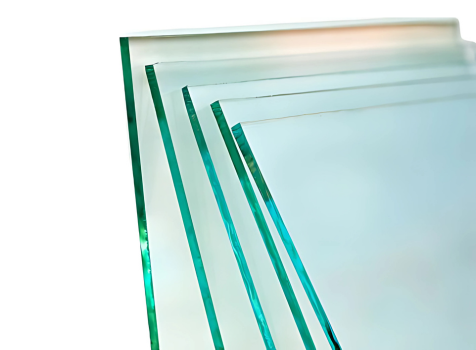
Transparent Float Glass
4900: 2018The Bureau of Indian Standards (BIS) for float glass is IS 14900:2018, which specifies the quality, thickness, and manufacturing requirements for transparent float glass used in various applications.
Transparent float glass is a high-quality, distortion-free glass made by floating molten glass on molten tin, resulting in a smooth, clear surface used in windows, doors, and architectural applications.
Yes, IS 14900:2018 is the Indian Standard (BIS) that defines specifications, quality requirements, and testing methods for transparent float glass used in construction and industrial applications.
Clear float glass is classified based on thickness (2mm-19mm), transparency, processing type (tempered, laminated), and coatings (tinted, reflective, low-E) for different architectural and industrial uses.
The ISO 9050 and ISO 12543 series define international standards for float glass, covering optical properties, performance, safety, and laminated glass specifications for various applications.