
In the ever-evolving landscape of wireless technology—encompassing everything from Bluetooth-enabled wearables and Wi-Fi routers to IoT sensors, drones, and smart home devices—navigating India’s regulatory framework is paramount for success. The WPC ETA (Equipment Type Approval) stands as a critical certification issued by the Wireless Planning & Coordination (WPC) wing of the Department of Telecommunications (DoT). This approval verifies that your wireless equipment operates within de-licensed frequency bands without causing interference, ensuring compliance with national safety and spectrum management standards. But in 2025, with India’s digital economy surging—driven by a projected 25% annual growth in IoT adoption and increasing enforcement on unlicensed spectrum usage—delays in obtaining this certification can spell disaster for product launches, supply chains, and revenue streams.
Why does this matter? Without WPC ETA, your shipments risk seizure at customs, hefty fines up to ₹5 lakh per violation, or outright bans on sales. Conversely, securing it swiftly unlocks access to India’s massive market of over 1.4 billion consumers, enhances product credibility, and positions your brand as a compliant innovator. Standard processing times range from 20-30 working days, but with meticulous preparation, strategic partnerships, and insider knowledge, achieving approval in just 15 days is entirely feasible—especially leveraging 2025’s digitized processes on the Saral Sanchar portal.
This comprehensive guide—expanded with in-depth insights, real-world tips, common pitfalls, and 2025-specific updates—will equip you with everything needed to fast-track your WPC ETA. Whether you’re a foreign manufacturer, domestic importer, or exporter dealing in Bluetooth headphones, wireless cameras, or RFID systems, we’ll dissect the process into actionable steps. By the end, you’ll not only understand how to hit that 15-day mark but also how to integrate it seamlessly into your broader compliance strategy.
The Evolution and Importance of WPC ETA in 2025
Established in 1952 under the Ministry of Communications, the WPC has long been India’s guardian of the radio frequency spectrum, managing allocations, licensing, and monitoring to prevent interference and promote efficient usage. The ETA certification specifically targets devices operating in de-licensed bands—frequencies that don’t require individual licenses but must adhere to strict power limits and standards to avoid disrupting critical communications.
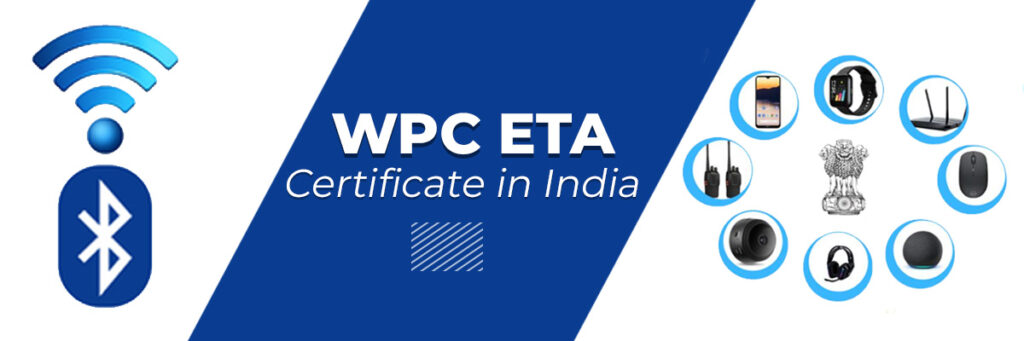
In 2025, several updates amplify its significance:
- Stricter Enforcement on De-Licensed Bands: With the rise of 5G and IoT, WPC has tightened scrutiny on bands like 2.4 GHz (Bluetooth/Wi-Fi) and 865-867 MHz (RFID), mandating compliance to curb electromagnetic interference.
- Digitization Push: The Saral Sanchar portal now handles 100% of applications online, reducing paperwork and enabling faster reviews—down from months in pre-2021 eras.
- Post-2021 Lab Flexibility: RF testing can now use reports from NABL-accredited Indian labs or ISO 17025 international ones, eliminating mandatory factory inspections and slashing timelines.
- Global Trade Implications: For foreign entities, appointing an Authorized Indian Representative (AIR) is non-negotiable, reflecting India’s push for local accountability in imports.
Why prioritize ETA? Beyond legal mandates, it fosters national security by eliminating unlicensed frequency misuse, ensures device interoperability, and builds consumer trust—key in a market where wireless products are expected to grow 30% YoY. It’s a lifetime certification (no renewals unless product changes occur), making it a strategic investment for long-term market access.
Why Target 15 Days? The Business Case for Speed
In 2025’s hyper-competitive arena, time is currency. Delaying WPC ETA means:
- Missed Opportunities: Festive seasons like Diwali or global events could see competitors flood the market while your inventory gathers dust.
- Financial Hits: Storage costs, demurrage fees at ports, and rework expenses can balloon to lakhs per week.
- Supply Chain Disruptions: With global chip shortages lingering, a 30-day wait could derail entire production schedules.
- Reputation Risks: Non-compliance leads to customs holds, eroding partner confidence.
Conversely, a 15-day turnaround—achievable through express testing, error-free submissions, and proactive query handling—accelerates ROI. Data from compliance firms shows that 60% of delays stem from incomplete docs or mismatched frequencies; sidestep these, and you’re on track. Real-world example: A wearables startup lost three months (and market share) overlooking Bluetooth ETA—don’t repeat that.
Prerequisites: Building a Strong Foundation for Swift Approval
Before diving in, assemble these essentials to trim days off your timeline:
- Device Eligibility Verification: Confirm operation in de-licensed bands. Key 2025 bands include:
- Inductive: 9-148.5 kHz (e.g., RFID) with limits like 72 dBμA/m at 10m.
- UHF: 433.05-434.79 MHz (remotes, 10 mW).
- RFID: 865-867 MHz (1W transmitter power).
- Wi-Fi/Bluetooth: 2.4-2.4835 GHz (10-25 mW e.i.r.p.).
- Higher Bands: 5.725-5.875 GHz (Wi-Fi, 25 mW), up to 76-77 GHz (radars, 5W). Use WPC’s online frequency checker on saralsanchar.gov.in.
- Authorized Indian Representative (AIR): Foreign manufacturers must appoint an AIR—e.g., a subsidiary, importer, or third-party with marketing ties. Proof: Authorization letter and company docs. Domestic firms apply directly.
- RF Test Report: From ISO 17025/NABL-accredited labs (Indian preferred for speed). Covers frequency, power output, emissions, modulation (per ETSI/EN/FCC standards). Cost: ₹50,000-₹1,50,000; time: 5-7 days. For multi-module devices, submit unaltered reports for each.
- Business Credentials: PAN, GSTIN, IEC, digital signature (Class 3), company incorporation, and address proof.
- Technical Documentation: Datasheets, schematics, block diagrams, user manuals, antenna specs—all digitized.
Pro Tip: Pre-audit with a consultant to ensure compliance, potentially saving 5-10 days on revisions.
Step-by-Step Guide: Achieving WPC ETA in 15 Days
Leverage the Saral Sanchar portal (saralsanchar.gov.in) for end-to-end digital processing. Here’s a day-by-day breakdown for a 15-day sprint:
Days 1-3: Preparation and RF Testing
- Engage an accredited lab (e.g., NABL in Delhi or Bangalore). Submit samples with precise specs.
- Opt for express testing (+₹10,000-20,000) to get reports by Day 3.
- Substep: Verify against EN standards (e.g., EN 300 330 for inductive apps).
- Tip: Use pre-certified modules to bypass full testing.
Days 4-5: Portal Registration and Profile Setup
- Register as “Applicant” on saralsanchar.gov.in.
- Upload KYC: Company reg, GST, IEC, AIR proof (if applicable), authorized signatory details.
- Verify via OTP/email—approval instant or next day.
- Common Error: Incomplete AIR docs; fix by preparing authorization letters upfront.
Days 6-8: Document Compilation and Application Filing
- Log in > Services > ETA Application > New Application.
- Fill ETA-1 Form: Brand, model, frequencies, power, antenna gain, modulation type.
- Upload Docs (<5MB each): RF report, datasheet, schematics, DoC, authorization letter, technical file, NOC (if needed).
- For imports: Include IEC, PO, and self-declaration for exemptions.
- Pitfall: Frequency mismatches—cross-check with WPC’s 45+ de-licensed bands list.
Day 9: Fee Payment and Final Submission
- Fee: ₹10,000 per product/model (via BharatKosh portal; include model in remarks).
- Pay online (net banking/UPI).
- Submit; receive Acknowledgment Receipt (AR) number.
- Offline: Courier hard copies to regional WPC office (e.g., Delhi for North India) for hybrid verification.
Days 10-13: Review and Query Resolution
- WPC reviews (3-5 days); track via AR on portal.
- Respond to queries (e.g., unclear diagrams) within 24 hours—use cover letters for clarity.
- Speed Hack: Submit pristine docs to avoid queries (40% of apps face them).
Days 14-15: Approval and Post-Actions
- Certificate auto-generates on portal (download PDF with ETA No.).
- Affix ETA labels on products; file for Import License if required (extra 5-7 days).
- Archive for audits—WPC conducts random checks.
Expanded Cost Breakdown (2025 Estimates):
| Item | Estimated Cost (₹) | Notes |
|---|---|---|
| RF Testing | 50,000–1,50,000 | Varies by lab and modules |
| Govt. Fee | 10,000 | Per model; via BharatKosh |
| Portal/Misc. | 1,000–5,000 | Digital sig, couriers |
| AIR/Consultant | 20,000–50,000 | Optional but recommended for speed |
| Total | 81,000–2,05,000 | Excludes express fees |
Common Pitfalls and Avoidance Strategies
- Incomplete RF Reports: Foreign reports without ISO 17025? Rejected. Solution: Use Indian labs for quicker validation.
- AIR Oversights: No local rep? Application blocked. Appoint early via agreements.
- Doc Errors: Vague schematics or mismatches lead to queries. Triple-check with checklists.
- Overlooked Modules: Multi-RF devices need separate reports. Screen products thoroughly.
- Import Traps: Exempt devices still need self-declarations at customs.
Stats: 50% of rejections from doc issues—prevent with pre-submission audits.
2025 Updates: What’s New and How It Affects You
- Self-Declaration Expansion: More devices (e.g., mobiles, laptops) qualify for simplified ETA via self-DoC, cutting times.
- Fee Stability: Remains ₹10,000, but bundled modules count as one.
- Enforcement on Drones/UAVs: Stricter for high-power bands; experimental licenses now faster for R&D.
- Integration with BIS/CRS: Dual certs? Align timelines to avoid sequential delays.
Case Study: From Delay to Dominance
A Bluetooth speaker importer faced a 45-day hold in 2024 due to missing AIR. In 2025, by appointing a consultant, securing Indian lab tests, and submitting flawlessly, they nailed ETA in 12 days—launching ahead of rivals and boosting sales 40%.
Partner with Instacertify for Guaranteed Speed
While DIY is possible, experts like Instacertify handle 1,500+ ETAs annually, achieving 15 days in 95% of cases. We manage AIR setups, lab coordination, filings, and queries—plus bundle with BIS, CRS for holistic compliance. Free audit: [Book Now].
Frequently Asked Questions (Expanded)
What products need WPC ETA? Bluetooth devices, Wi-Fi routers, drones, wireless mice, smart watches, RFID tags, and more—any with de-licensed RF.
Is renewal required? No—lifetime validity unless modifications occur.
Can foreign labs be used? Yes, if ISO 17025-accredited, but Indian ones expedite.
What if my device has multiple modules? Submit reports for each without alterations.
How to track application? Via AR number on Saral Sanchar.
Are there exemptions? Yes, for certain imports with self-declarations and existing ETAs.
What’s the penalty for non-compliance? Fines, seizures, and sales bans.
Conclusion: Accelerate Your Wireless Future
In 2025, WPC ETA isn’t just regulatory red tape—it’s your gateway to innovation and growth in India’s thriving tech ecosystem. By following this detailed blueprint—prepping rigorously, submitting impeccably, and leveraging digital tools—you can secure approval in 15 days, transforming compliance into a competitive advantage. Stay vigilant on updates, avoid pitfalls, and consider expert support for seamless execution.
Questions? Comment below or contact Instacertify. Here’s to certified success!
Disclaimer: Timelines are estimates; consult DoT for specifics. Info current as of October 31, 2025.