Others
Big Boost for Small Business: RBI’s New ₹20 Lakh Loan Waiver Explained
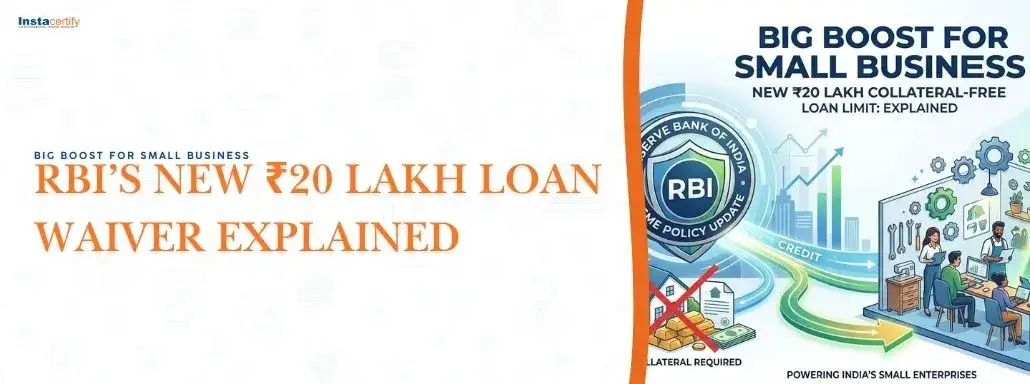
The Micro, Small, and Medium Enterprises (MSME) sector has long been hailed as the backbone of the Indian economy. Contributing nearly 30% to the nation’s GDP and accounting for almost half of its exports, MSMEs are the engines of innovation and employment. However, despite their pivotal role, one hurdle has persistently slowed their growth: Access to formal credit.
For decades, small business owners have struggled with the “collateral crunch”—the inability to secure loans because they lack high-value assets to pledge as security. Recognizing this bottleneck, the Reserve Bank of India (RBI) has made a historic move in its latest monetary policy update.
As of February 2026, the RBI has officially raised the limit for collateral-free loans to MSMEs from ₹10 Lakh to ₹20 Lakh. This mandate, effective from April 1, 2026, is set to revolutionize how small businesses fund their operations, expand their infrastructure, and manage working capital.
In this detailed guide, we will break down exactly what this notification means for your business, the eligibility criteria, the role of the CGTMSE, and how you can leverage this opportunity to scale your enterprise without the stress of pledging assets.
Big Update: From ₹10 Lakh to ₹20 Lakh
For years, the ceiling for collateral-free loans for the MSME sector was capped at ₹10 lakh. While this was significant when introduced, the rising cost of machinery, raw materials, and general inflation rendered this limit insufficient for many growing businesses in the mid-2020s.

The RBI’s new directive, issued under the powers of the Banking Regulation Act, 1949 (Section 21 and 35A), makes it mandatory for banks to waive collateral requirements for loans up to ₹20 lakh.
Key Highlights of the 2026 Amendment:
| Feature | Previous Norms (Pre-2026) | New Norms (Effective April 1, 2026) |
| Collateral-Free Limit | Up to ₹10 Lakh | Up to ₹20 Lakh (Mandatory) |
| Discretionary Limit | Banks could demand collateral above ₹10 Lakh. | Banks cannot demand collateral up to ₹20 Lakh. |
| High-Value Extension | Rare exceptions for higher amounts. | Provision to extend up to ₹25 Lakh for borrowers with an excellent track record. |
| Target Group | Micro & Small Enterprises | Expanded coverage including newer Startups. |
This shift is not just a suggestion; it is a regulatory mandate. It ensures that banks and Non-Banking Financial Companies (NBFCs) cannot turn away a viable MSME loan application under ₹20 lakh simply due to a lack of collateral.
Why Did the RBI Take This Step?
The decision to double the loan limit wasn’t taken in isolation. It addresses several critical gaps in the financial ecosystem:
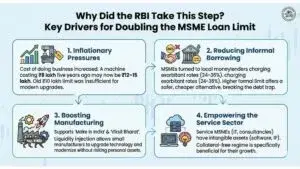
- Inflationary Pressures: The cost of doing business has increased. A machine that cost ₹8 lakh five years ago may now cost ₹12–15 lakh. The old limit of ₹10 lakh was no longer sufficient for capital-intensive upgrades.
- Reducing Informal Borrowing: Many MSMEs, unable to secure bank loans due to collateral demands, turned to local moneylenders who charge exorbitant interest rates (often 24% to 36%). This trap stifled growth. The higher formal limit offers a safer, cheaper alternative.
- Boosting Manufacturing: With the government’s “Make in India” and “Viksit Bharat” initiatives, small manufacturers need capital to upgrade technology. This liquidity injection allows them to modernize without risking their personal assets.
- Empowering the Service Sector: For service-based MSMEs (like IT firms, consultancies, and logistics), “assets” are often intangible (software, talent, intellectual property) rather than physical land or machinery. A collateral-free regime is specifically beneficial for them.
Safety Net: Role of CGTMSE
You might wonder: If I don’t provide collateral, who protects the bank if I default?
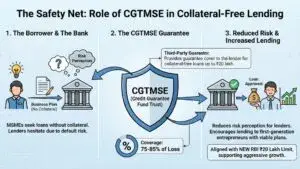
The answer lies in the Credit Guarantee Fund Trust for Micro and Small Enterprises (CGTMSE).
This scheme acts as a third-party guarantor. When a bank lends you ₹20 lakh without collateral, the CGTMSE provides a guarantee cover to the lender. If the borrower defaults, the trust compensates the bank for a significant portion of the loss (often up to 75-85%).
With the new RBI update, the coverage of CGTMSE has been aligned to support these higher loan amounts aggressively. This reduces the risk perception for lenders, encouraging them to lend more freely to first-generation entrepreneurs who may have a great business plan but no ancestral property to pledge.
Eligibility Criteria: Who Can Apply?
The expansion of the limit is great news, but it is not a “free money” scheme. Banks will still conduct due diligence. To be eligible for the ₹20 Lakh Collateral-Free Loan, your business must generally meet the following criteria:
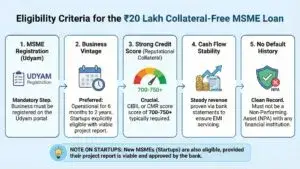
- MSME Registration (Udyam): Your business must be registered as a Micro, Small, or Medium Enterprise on the Udyam portal. If you haven’t registered yet, this is the first step.
- Business Vintage: While startups are eligible, most banks prefer businesses that have been operational for at least 6 months to 2 years.
- Credit Score: This is crucial. Since there is no collateral, your “Reputational Collateral” is your CIBIL or CMR (Commercial Rank) score. A score of 700-750+ is typically required.
- Cash Flow Stability: Lenders will look at your bank statements to ensure you have steady revenue to service the EMI.
- No Default History: You should not be a Non-Performing Asset (NPA) with any other financial institution.
- Note on Startups: The new guidelines explicitly mention that new MSMEs (startups) can also access this facility, provided their project report is viable and approved by the bank.
Documentation Checklist
To ensure a smooth application process for your ₹20 Lakh loan, have the following documents ready. As a compliance-focused entity, we at Instacertify always recommend keeping your paperwork audit-ready.
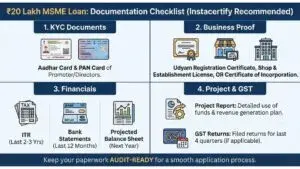
KYC Documents: Aadhar, PAN Card of the promoter/directors.
Business Proof: Udyam Registration Certificate, Shop & Establishment License, or Certificate of Incorporation.
Financials:
- Last 2-3 years of Income Tax Returns (ITR).
- Last 12 months’ Bank Statements.
- Projected Balance Sheet (for the next year).
Project Report: A detailed document explaining how you will use the funds (e.g., buying a machine, hiring staff, marketing) and how it will generate revenue.
GST Returns: Proof of filed GST returns for the last 4 quarters (if applicable).
How to Apply for the Loan
The process has been simplified over the years. You can apply through two primary channels:
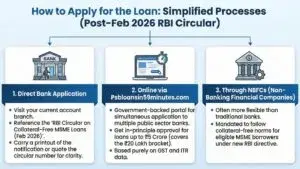
1. Direct Bank Application:
Visit the branch where you hold your current account. Reference the “RBI Circular on Collateral-Free MSME Loans (Feb 2026)”. Many branch managers may still operate on old norms, so carrying a printout of the notification or referencing the circular number is helpful.
2. Online via Psbloansin59minutes.com:
This government-backed portal allows you to apply to multiple public sector banks simultaneously. You can get an in-principle approval for loans up to ₹5 Crore (and certainly for the ₹20 Lakh bracket) purely based on your GST and ITR data.
3. Through NBFCs:
Non-Banking Financial Companies are often more flexible than traditional banks. With the RBI’s new directive, NBFCs are also mandated to follow the collateral-free norms for eligible MSME borrowers.
Strategic Impact on Your Business
How should you utilize this increased limit? Here are a few strategic ways to deploy ₹20 lakh:
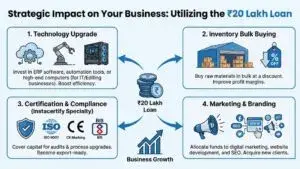
- Technology Upgrade: Invest in ERP software, automation tools, or high-end computers (for IT/Editing businesses).
- Inventory Bulk Buying: Use the funds to buy raw materials in bulk at a discount, improving your profit margins.
- Certification & Compliance: Obtaining vital certifications like ISO 9001, CE Marking, or BIS (which we specialize in at Instacertify) often requires capital for audits and process upgrades. This loan can cover those costs, making your business export-ready.
- Marketing & Branding: Allocate funds to digital marketing, website development, and SEO to acquire new clients.
Challenges to Watch Out For
While the policy is excellent, implementation on the ground can sometimes be slow.
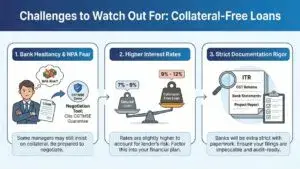
- Bank Hesitancy: Some branch managers may still insist on collateral due to fear of NPAs. In such cases, citing the CGTMSE cover is your best negotiation tool.
- Interest Rates: Collateral-free loans often carry a slightly higher interest rate (usually 9% to 12%) compared to secured loans (7% to 9%) to account for the risk.
- Documentation Rigor: Since the bank has no asset to seize, they will be extra strict about your paperwork. Ensure your ITR and GST filings are impeccable.
Conclusion
The RBI’s decision to hike the collateral-free loan limit to ₹20 Lakh is a vote of confidence in the Indian entrepreneur. It shifts the focus from “Asset-Based Lending” to “Cash-Flow Based Lending.”
For the millions of small business owners, this is the green light to dream bigger. Whether you are a manufacturer in Pune looking for new machinery, or a video editing agency in Bangalore needing high-end workstations, capital is no longer a barrier—it’s a resource waiting to be tapped.
Ready to make your business loan-ready?
To get the approval, your business needs to look professional and compliant. From Udyam Registration to ISO Certifications and GST Compliance, Instacertify is your partner in building a business profile that banks trust.
Disclaimer: This article is for informational purposes. Please consult your financial advisor or bank for specific loan terms and conditions.