
Indian Compliance
How to Export Electrical Appliances to India with IS 302 Compliance
India is one of the fastest-growing markets for household and kitchen electrical appliances. From modern kitchens to commercial food preparation units, demand is rapidly increasing for products like:
- Electric Steam Cookers
- Electric Water Boilers
- Electric Coffee Makers
- Electric Bean Slicers
- Electric Berry Juice Extractors
- Electric Egg Beaters
- Electric Food Processors
- Electric Knife Sharpeners
- Electric Knives
- Electric Noodle Makers
- Electric Potato Peelers
- Electric Hot Plates
- Dishwashers
However, before these products can enter the Indian market, manufacturers must comply with strict safety and regulatory requirements.
India does not allow unrestricted import and sale of electrical appliances. Every product must meet mandatory safety standards to ensure user protection and product reliability.
This is where Instacertify helps global manufacturers—by simplifying compliance, certification, and approval processes for smooth market entry.
Why Compliance Matters Before Exporting to India
Exporting electrical appliances without proper certification can lead to serious issues such as:
- Customs rejection or delays
- Product seizure at ports
- Penalties and legal complications
- Loss of distributor trust
- Brand reputation damage
- Market entry restrictions
India strongly focuses on consumer safety. Therefore, compliance is not optional—it is mandatory.
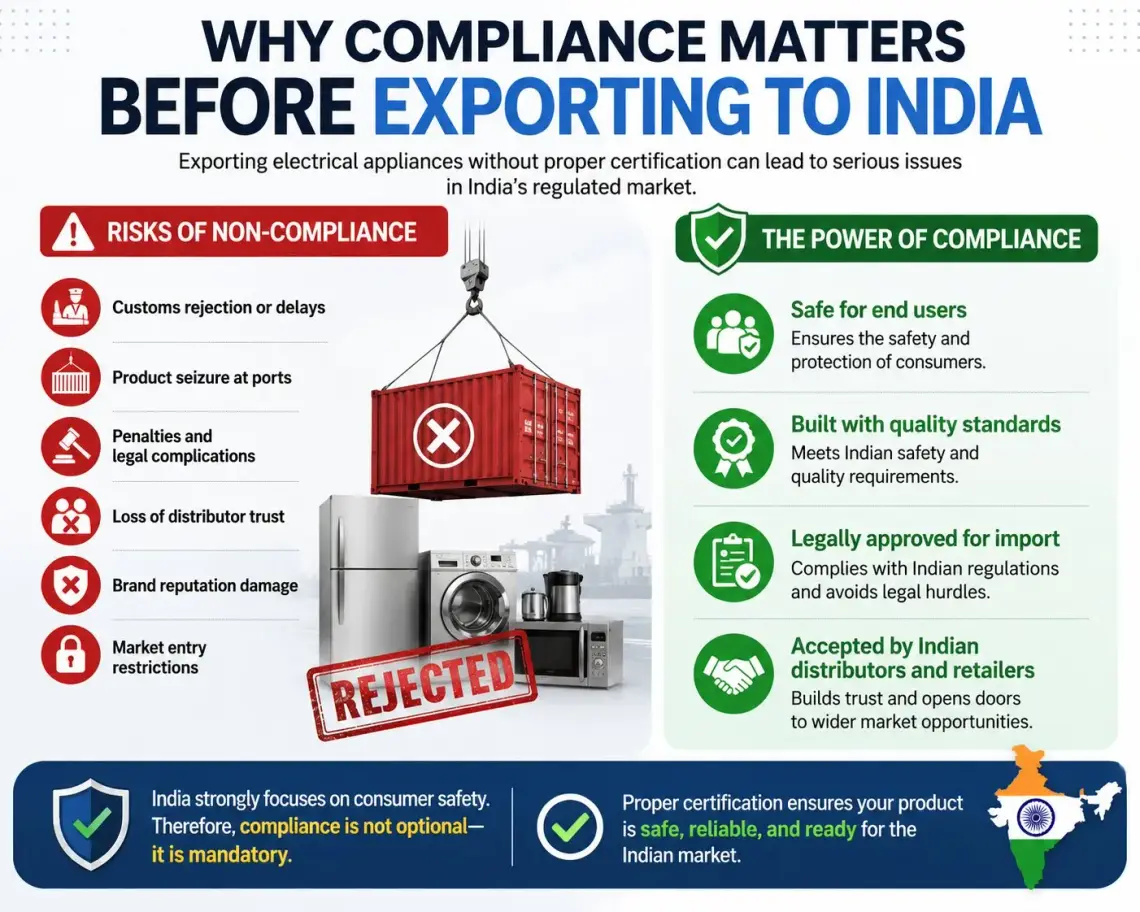
Proper certification ensures that your product is:
- Safe for end users
- Built with quality standards
- Legally approved for import
- Accepted by Indian distributors and retailers
Understanding IS 302 Part 1 – The Core Safety Standard
One of the most important standards for household electrical appliances in India is:
IS 302 Part 1
This standard defines the general safety requirements for electrical appliances used in households and similar environments.
It is aligned with international safety norms and focuses on preventing hazards such as:
- Electric shock
- Fire risks
- Mechanical injuries
- Excessive heating
- Insulation failure
- Abnormal operation risks
In simple words, IS 302 Part 1 ensures that an electrical product is safe for daily use in real-life conditions.
Scope of IS 302 Part 1 for Exporters
This standard applies to a wide range of appliances including:
- Kitchen appliances
- Food preparation machines
- Cleaning and washing appliances
- Heating and cooking devices
- Small domestic electrical equipment
For exporters, this means almost every household electrical product must comply with IS 302 safety requirements before entering India.
Products That Require Compliance
If you are exporting any of the following products, compliance with IS 302 Part 1 becomes highly important:
Kitchen & Cooking Appliances
- Electric Steam Cookers
- Electric Water Boilers
- Electric Coffee Makers
- Electric Hot Plates
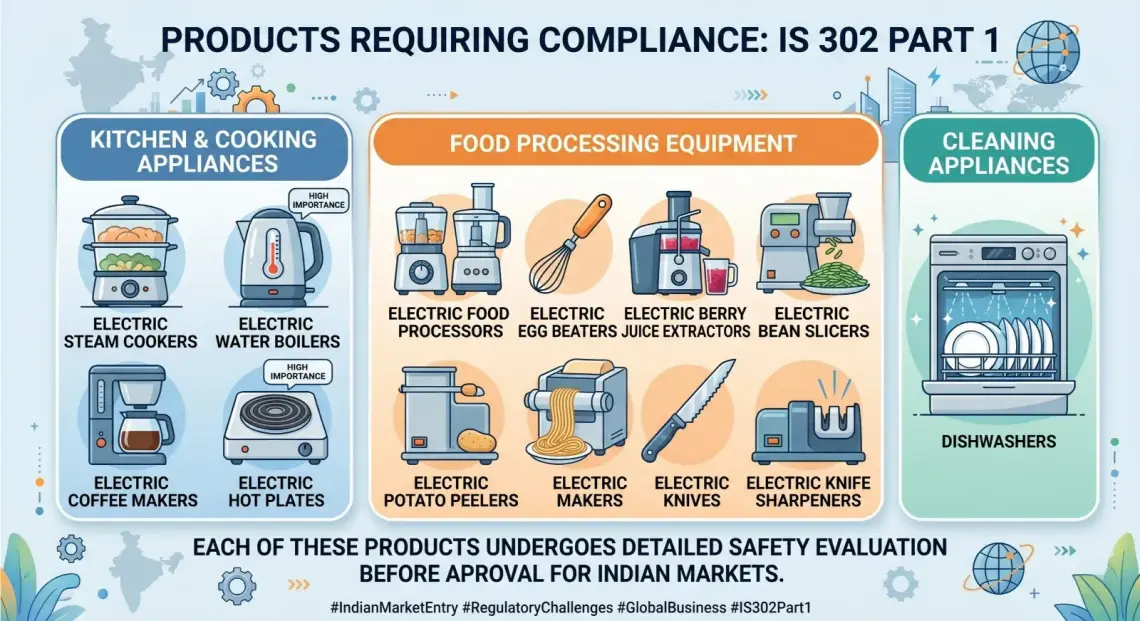
Food Processing Equipment
- Electric Food Processors
- Electric Egg Beaters
- Electric Berry Juice Extractors
- Electric Bean Slicers
- Electric Potato Peelers
- Electric Noodle Makers
- Electric Knives
- Electric Knife Sharpeners
Cleaning Appliances
- Dishwashers
Each of these products undergoes detailed safety evaluation before approval for Indian markets.
Key Safety Requirements Under IS 302 Part 1
To ensure product safety, IS 302 Part 1 includes several critical testing parameters:
1. Protection Against Electric Shock
The product must be designed in a way that users cannot accidentally touch live electrical parts.
2. Input Power & Current Testing
Ensures that the product operates within safe electrical limits under normal conditions.
3. Temperature Rise Test
Checks whether the appliance overheats during continuous usage.
4. Leakage Current Test
Ensures no harmful current escapes into the outer body of the appliance.
5. Dielectric Strength Test
Evaluates insulation strength under high voltage conditions.
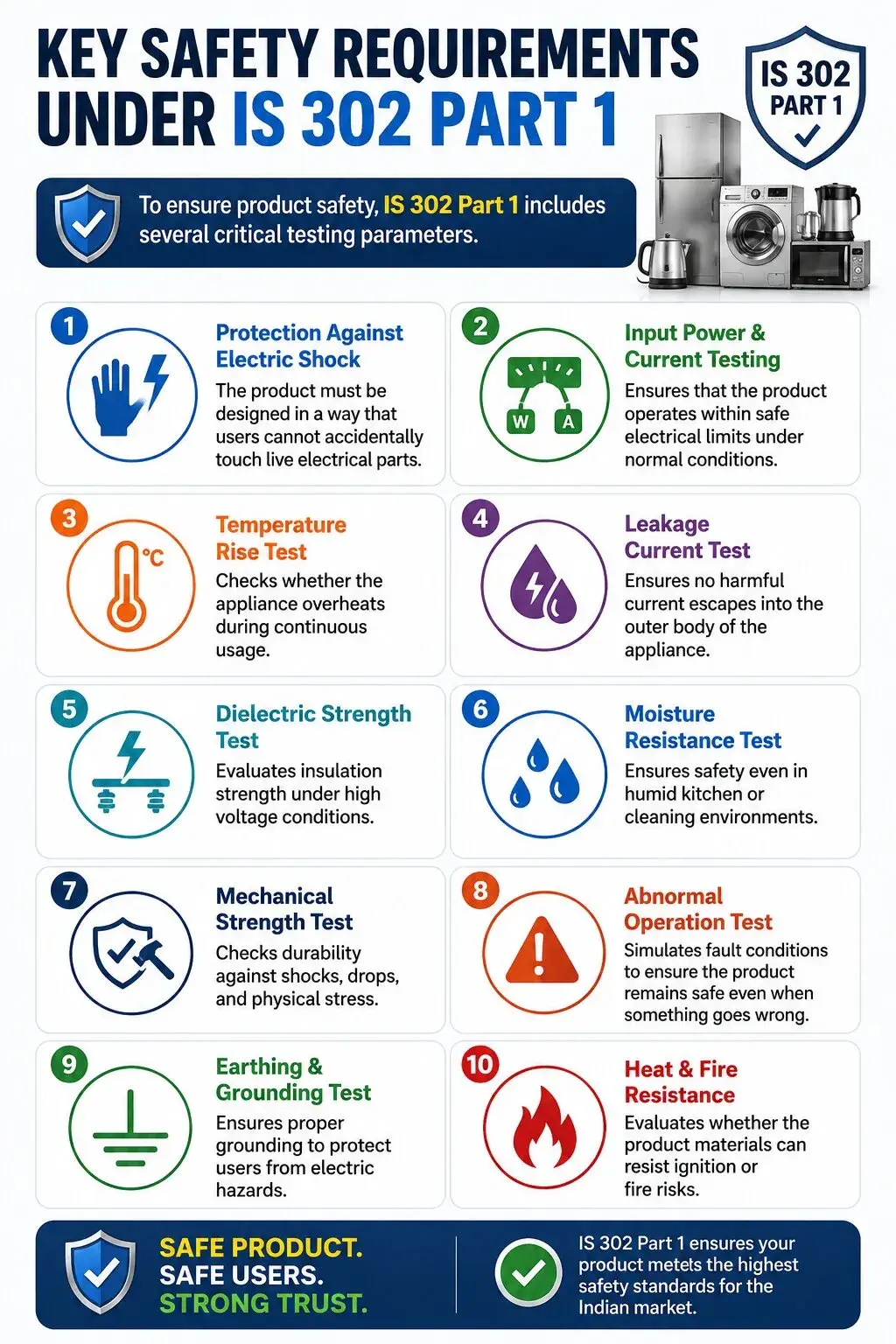
6. Moisture Resistance Test
Ensures safety even in humid kitchen or cleaning environments.
7. Mechanical Strength Test
Checks durability against shocks, drops, and physical stress.
8. Abnormal Operation Test
Simulates fault conditions to ensure the product remains safe even when something goes wrong.
9. Earthing & Grounding Test
Ensures proper grounding to protect users from electric hazards.
10. Heat & Fire Resistance
Evaluates whether the product materials can resist ignition or fire risks.
Labeling Requirements for Indian Market
Proper labeling is a mandatory requirement for imported electrical appliances in India.
Your product must include:
- Manufacturer name and address
- Model number
- Voltage rating
- Power consumption
- Country of origin
- Safety instructions
- Warning labels
Incorrect or incomplete labeling can delay customs clearance or lead to rejection.
Documentation Required for Compliance
Before exporting, manufacturers must prepare technical and regulatory documents such as:
- Product technical specifications
- User manuals
- Electrical circuit diagrams
- Bill of materials (BOM)
- Safety test reports
- Factory quality assurance documents
- Product photographs
- Declaration of conformity
These documents are essential for certification and approval processes.
Challenges Faced by International Manufacturers
Many exporters face difficulties when entering the Indian market, such as:
Understanding Indian regulations
Indian standards can be complex and frequently updated.
Identifying correct standards
Different appliances may fall under different testing categories.
Managing testing requirements
Coordinating with approved laboratories can be time-consuming.
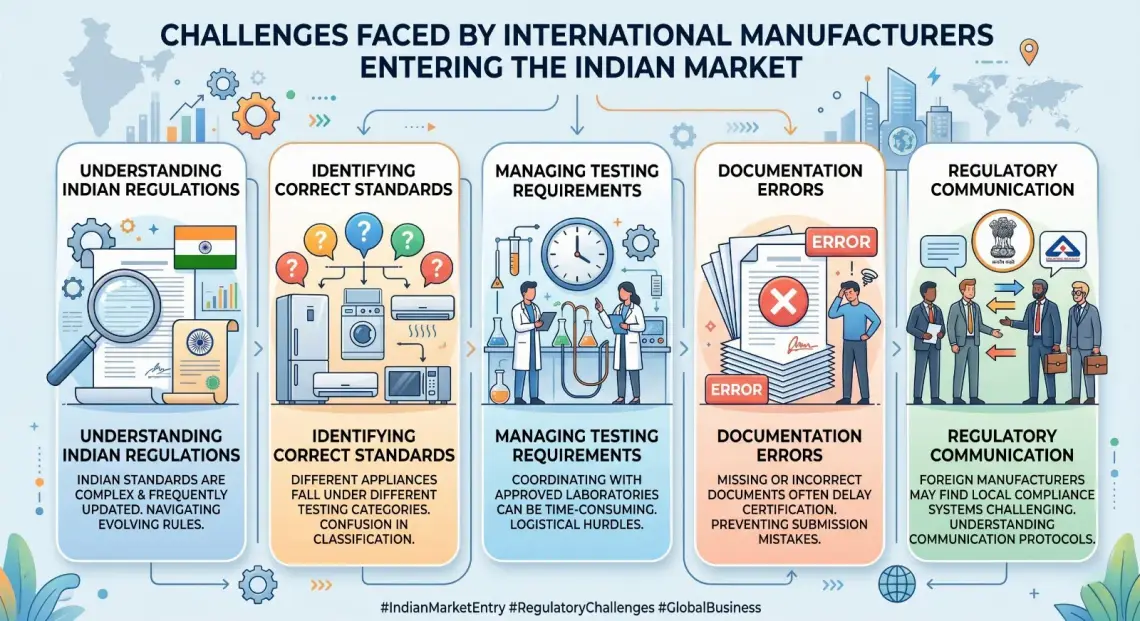
Documentation errors
Missing or incorrect documents often delay certification.
Regulatory communication
Foreign manufacturers may find local compliance systems challenging.
How Instacertify Helps You Enter India Smoothly
At Instacertify, we specialize in helping manufacturers and exporters navigate Indian compliance requirements with ease.
We provide complete support including:
- Product compliance assessment
- IS 302 Part 1 standard guidance
- BIS certification assistance
- Testing coordination with approved labs
- Documentation preparation support
- Regulatory advisory services
- End-to-end certification management
Our goal is simple: make your product ready for India without stress or delays.
Why Choose Instacertify?
Expert Compliance Knowledge
We understand Indian regulatory frameworks in depth.
Faster Approval Process
We help reduce delays by guiding correct documentation and testing.
End-to-End Support
From consultation to certification, we handle the entire process.
Global Client Experience
We support manufacturers across different countries entering India.
Reliable Market Entry Partner
We ensure your product meets Indian legal and safety expectations.
Final Thoughts
India offers massive opportunities for manufacturers of electrical appliances. But success in this market depends on one critical factor—compliance.
Whether you are exporting:
- Electric Steam Cookers
- Electric Water Boilers
- Electric Coffee Makers
- Electric Food Processors
- Electric Egg Beaters
- Electric Hot Plates
- Dishwashers
- Or any other kitchen appliance
you must ensure full compliance with Indian safety standards such as IS 302 Part 1.
With the right guidance and certification support, entering the Indian market becomes smooth, fast, and risk-free.
At Instacertify, we help you transform compliance challenges into business opportunities.
Planning to export to India? Let Instacertify guide your compliance journey from start to success.
Frequently asked questions
What is IS 302 Part 1 and why is it important for exports to India?
IS 302 Part 1 is the Indian safety standard for household electrical appliances. It ensures products are safe from electrical, mechanical, and thermal hazards. Compliance is mandatory for exporting appliances to India and gaining market approval.
Is IS 302 Part 1 mandatory for exporting electrical appliances to India?
Yes, IS 302 Part 1 compliance is mandatory for most household and kitchen electrical appliances. Without meeting this standard, products may face customs rejection, import delays, or even restrictions in the Indian market.
Which products fall under IS 302 Part 1 compliance requirements?
Products like steam cookers, water boilers, coffee makers, food processors, hot plates, dishwashers, and similar kitchen appliances fall under IS 302 Part 1. These devices must meet safety standards before being imported into India.
What are the main safety tests under IS 302 Part 1?
Key tests include electric shock protection, leakage current, temperature rise, dielectric strength, moisture resistance, mechanical strength, and fire safety. These tests ensure appliances are safe for everyday consumer use in Indian conditions.
What happens if a product does not comply with IS 302 Part 1?
Non-compliant products may be stopped at customs, rejected for import, or banned from sale. Companies may also face penalties, loss of business opportunities, and damage to brand reputation in the Indian market.
How does IS 302 Part 1 benefit manufacturers and exporters?
Compliance ensures product safety, legal approval, smoother customs clearance, and stronger trust among Indian distributors and consumers. It also improves brand credibility and increases chances of successful market entry in India.
How long does it take to get IS 302 Part 1 compliance?
The timeline depends on product type, testing requirements, and documentation readiness. On average, it may take a few weeks to a couple of months. Proper guidance from consultants like Instacertify helps reduce delays.
Can Instacertify help with IS 302 Part 1 certification?
Yes, Instacertify provides complete support including standard assessment, testing coordination, documentation, and certification guidance. We help manufacturers achieve compliance efficiently for smooth and hassle-free entry into the Indian market.