
Indian Compliance
Importing Energy-Efficient Products in India? Know BEE Rating Rules 2026
Buying an energy-efficient appliance in India often starts with one simple question: How much electricity will this product consume?
That is where the BEE Star Rating becomes important.
The familiar 1-to-5 star label on appliances is not just a marketing symbol. It is part of India's Standards & Labelling (S&L) Programme, administered by the Bureau of Energy Efficiency (BEE) under the Ministry of Power. The programme helps consumers compare the energy performance of similar products and encourages manufacturers and importers to bring more energy-efficient products to the Indian market.
For importers, however, BEE compliance goes beyond simply putting a five-star sticker on a product. Depending on the product category, an importer may need to obtain BEE permission, complete product testing, register models, follow the applicable product schedule, maintain records and ensure that the information displayed on the label matches the approved performance of the product.
With energy-efficiency requirements continuing to evolve, understanding the latest BEE Star Rating compliance requirements for importers in 2026 is becoming increasingly important.
What Is BEE Star Rating?
BEE Star Rating is an energy-efficiency rating system used under the Bureau of Energy Efficiency's Standards & Labelling Programme.
The rating generally ranges from 1 Star to 5 Star, with the star level increasing with the energy efficiency of the product. A five-star product is positioned as more energy-efficient than a lower-rated product within the same applicable product category and rating framework.
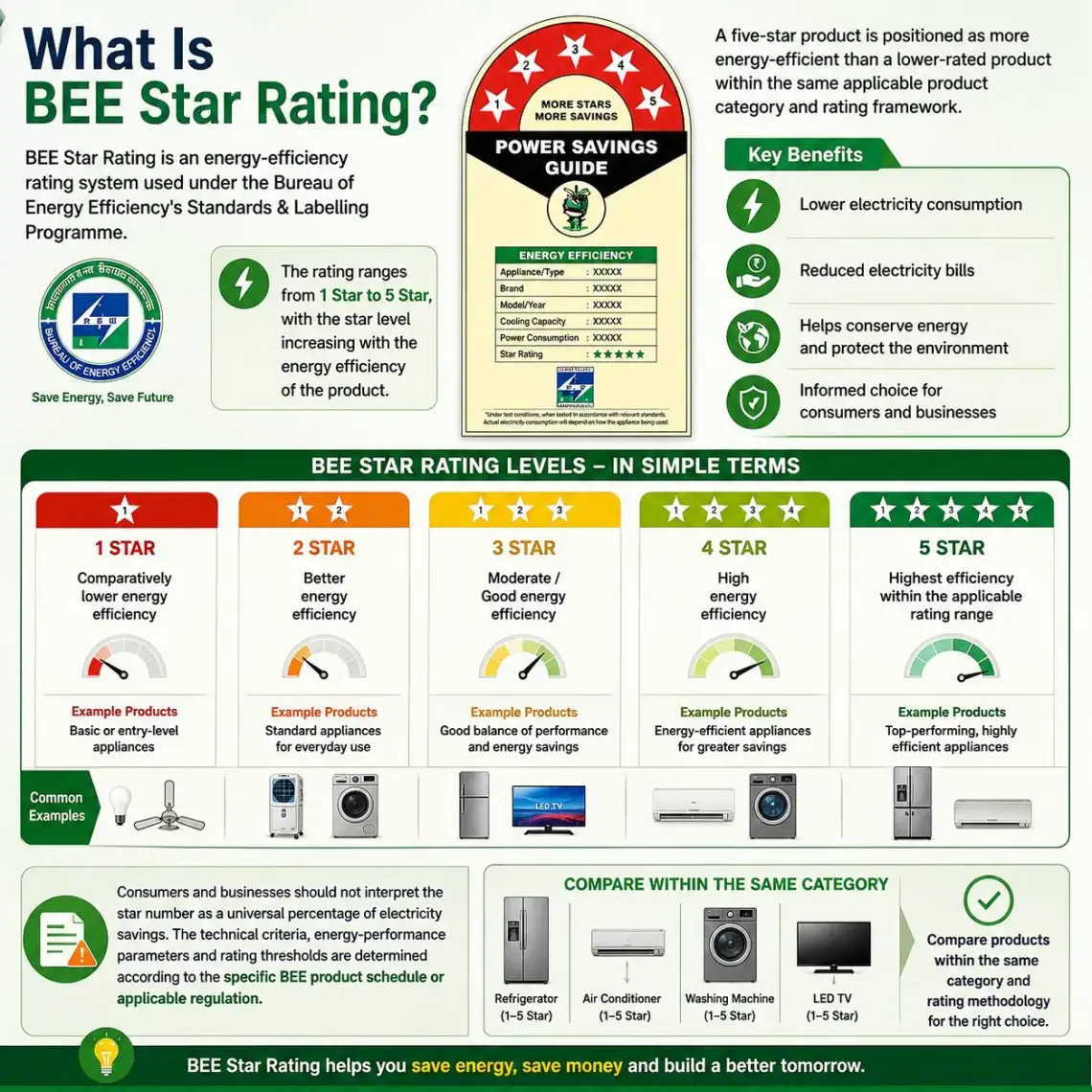
In simple terms:
1 Star → comparatively lower energy efficiency
2 Star → better efficiency
3 Star → moderate/good efficiency
4 Star → high efficiency
5 Star → highest efficiency within the applicable rating range
However, consumers and businesses should not interpret the star number as a universal percentage of electricity savings. The technical criteria, energy-performance parameters and rating thresholds are determined according to the specific BEE product schedule or applicable regulation.
This is why comparing two products should normally be done within the same product category and under the applicable rating methodology.
Is BEE Star Rating Mandatory for Importers?
This is one of the most important questions for businesses importing appliances.
The answer is:
It depends on the product and its applicable BEE programme status.
BEE's Standards & Labelling Programme includes products under mandatory as well as voluntary labelling frameworks. BEE's current Standards & Labelling information lists multiple appliance categories and identifies mandatory products separately from voluntary categories.
Therefore, an importer should not assume that every electrical or electronic product requires a BEE star label.
The first step should always be to determine:
- Whether the imported product is covered by the BEE Standards & Labelling Programme.
- Whether the relevant product category is mandatory or voluntary.
- Which BEE product schedule applies.
- What testing requirements apply.
- What star-rating methodology applies.
- What label information must be displayed.
- What registration or permission is required before the product is marketed in India.
For a product under mandatory labelling, importing or selling the product without meeting the applicable requirements can create a significant compliance risk.
Latest BEE Star Rating Updates for Importers in 2026
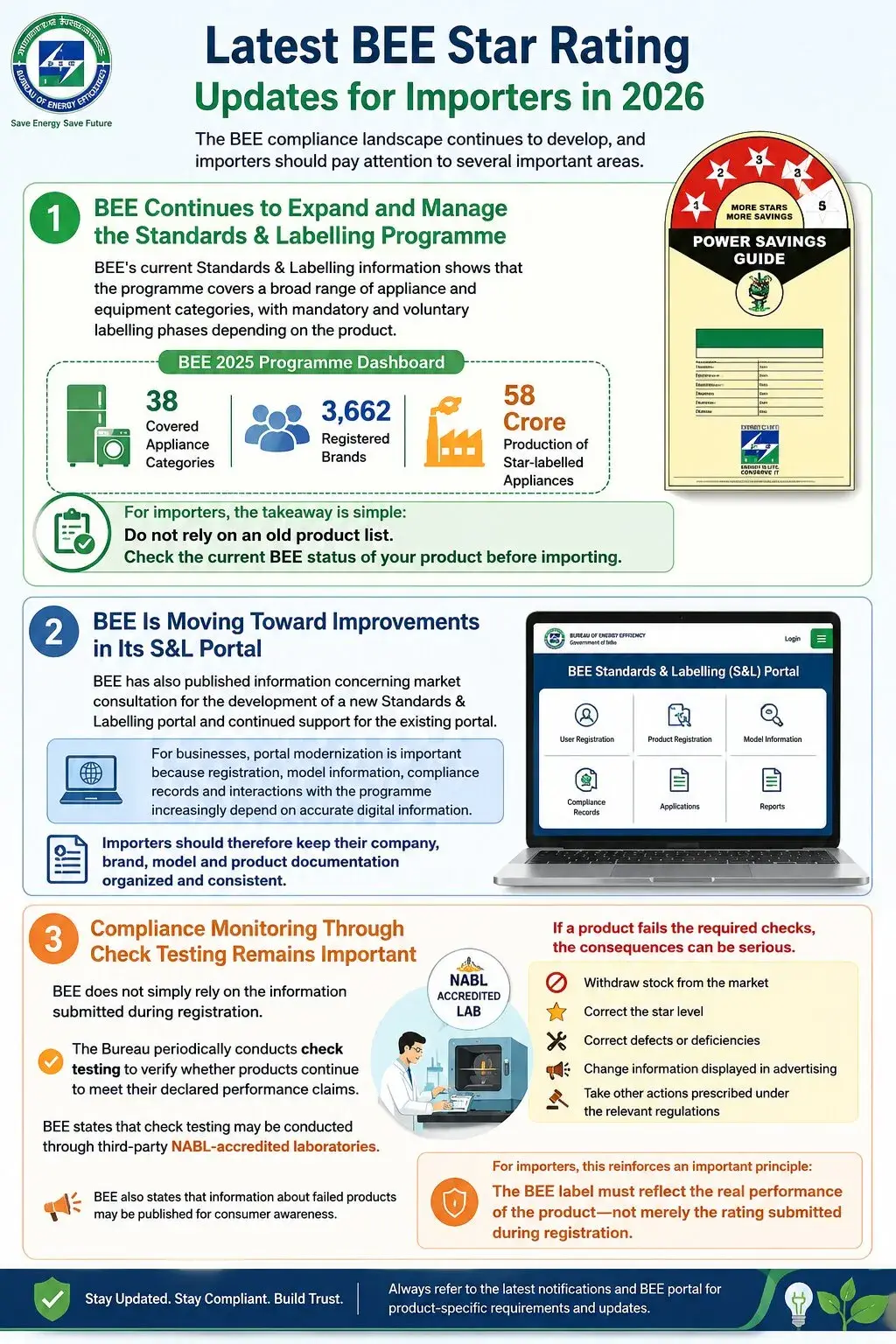
The BEE compliance landscape continues to develop, and importers should pay attention to several important areas.
1. BEE Continues to Expand and Manage the Standards & Labelling Programme
BEE's current Standards & Labelling information shows that the programme covers a broad range of appliance and equipment categories, with mandatory and voluntary labelling phases depending on the product. BEE's 2025 programme dashboard reports 38 covered appliance categories, 3,662 registered brands and 58 crore production of star-labelled appliances.
For importers, the takeaway is simple:
Do not rely on an old product list. Check the current BEE status of your product before importing.
2. BEE Is Moving Toward Improvements in Its S&L Portal
BEE has also published information concerning market consultation for the development of a new Standards & Labelling portal and continued support for the existing portal.
For businesses, portal modernization is important because registration, model information, compliance records and interactions with the programme increasingly depend on accurate digital information.
Importers should therefore keep their company, brand, model and product documentation organized and consistent.
3. Compliance Monitoring Through Check Testing Remains Important
BEE does not simply rely on the information submitted during registration.
The Bureau periodically conducts check testing to verify whether products continue to meet their declared performance claims. BEE states that check testing may be conducted through third-party NABL-accredited laboratories.
If a product fails the required checks, the consequences can be serious.
Depending on the applicable provisions, BEE may direct the permittee to:
- Withdraw stock from the market
- Correct the star level
- Correct defects or deficiencies
- Change information displayed in advertising
- Take other actions prescribed under the relevant regulations
BEE also states that information about failed products may be published for consumer awareness.
For importers, this reinforces an important principle:
The BEE label must reflect the real performance of the product—not merely the rating submitted during registration.
Why Should Importers Take BEE Compliance Seriously?
For an importer, BEE compliance is about more than regulatory paperwork.
It can influence:
Market Access
If a product falls under mandatory BEE labelling requirements, meeting the applicable requirements is an important part of legally marketing the product in India.
Consumer Trust
A genuine and correctly displayed star rating gives consumers meaningful information about energy performance.
Brand Reputation
Incorrect energy-efficiency claims can damage consumer confidence and create regulatory problems.
Inventory Management
Compliance failures can potentially result in corrective action involving products already in the market.
Long-Term Business Planning
Importers launching multiple models should consider BEE requirements during product selection rather than after the goods have already been manufactured or shipped.
How Can an Importer Prepare for BEE Compliance?
A smarter approach is to start compliance planning before placing the purchase order.
Begin by identifying the exact product model and intended Indian market.
Then:
- Check whether the product is covered by BEE.
- Confirm whether labelling is mandatory or voluntary.
- Identify the applicable BEE product schedule.
- Review the required test method and performance criteria.
- Check whether the overseas manufacturer can provide the required technical documentation.
- Arrange applicable testing.
- Prepare the BEE application and supporting documents.
- Complete registration/permission requirements.
- Verify the approved star level and label details.
- Ensure packaging and marketing materials match the approved information.
- Maintain records for future compliance checks.
- Monitor BEE notifications and product-specific updates.
This approach can prevent a common importer problem: discovering a compliance requirement only after the product has already been manufactured or shipped.
Final Takeaway The BEE Star Rating is one of India's most recognizable energy-efficiency labels, but behind those familiar stars is a structured regulatory framework. For consumers, the label makes it easier to compare energy performance. For manufacturers and importers, it represents a broader compliance responsibility involving product coverage, testing, registration, labelling, reporting and ongoing performance verification. In 2026, importers should pay particular attention to the current BEE product coverage, product-specific schedules, digital portal developments and continuing check-testing requirements. BEE's current programme information confirms that the Standards & Labelling programme remains an active and significant part of India's energy-efficiency framework. Most importantly, BEE 5 Star Rating should never be treated as simply a promotional claim. The rating needs to correspond with the applicable BEE requirements and the actual performance of the registered product. If you are planning to import an energy-consuming appliance into India, checking BEE applicability before shipment can save time, money and compliance headaches later. In short: check the product, check the schedule, test correctly, register the model, label accurately—and keep monitoring the rules.Frequently asked questions
What should importers check before importing BEE-covered products?
Importers should verify whether their product is covered by BEE, identify the applicable product schedule, review testing requirements, complete registration or permission procedures, and ensure that labels, packaging and marketing information accurately reflect the approved product rating.
Does BEE conduct testing after product registration?
Yes, BEE can conduct check testing to verify whether registered products continue meeting their declared performance requirements. Such testing may involve third-party NABL-accredited laboratories, and failures can lead to corrective actions under applicable regulations.
Can an importer use the manufacturer's overseas energy rating?
An importer should not automatically rely on an overseas energy rating. The product must meet applicable Indian BEE requirements, including relevant testing, performance criteria, documentation and registration conditions before the rating is used for Indian market sales.
Can the BEE Star Rating change for a product model?
Yes, the applicable rating can be affected if product specifications, components, performance characteristics or other relevant parameters change. Importers should review such changes against BEE requirements before continuing to use an existing registration or label.
Why is BEE Star Rating important for importers?
BEE compliance helps importers meet applicable energy-efficiency labeling requirements while providing consumers with reliable product information. Proper compliance can also reduce regulatory risks, prevent labeling issues and support smoother product entry into the Indian market.
What is BEE Star Rating?
BEE Star Rating is India’s energy-efficiency labeling system administered by the Bureau of Energy Efficiency. It rates eligible appliances from 1 to 5 stars, helping consumers compare energy performance and choose more efficient products.
Who needs BEE Star Rating registration?
Manufacturers and importers of products covered under BEE’s applicable mandatory labeling programme may need BEE Star Rating registration or permission before marketing products in India. Requirements depend on the product category and applicable BEE schedule.
Which products require BEE Star Rating?
Products covered under BEE’s Standards and Labelling Programme can include appliances and equipment such as air conditioners, refrigerators, televisions, electric water heaters, LED lamps and other notified categories, subject to current product-specific requirements.