
Indian Compliance
Understanding IS 302-2-6: The Safety Standard for Electric Stoves
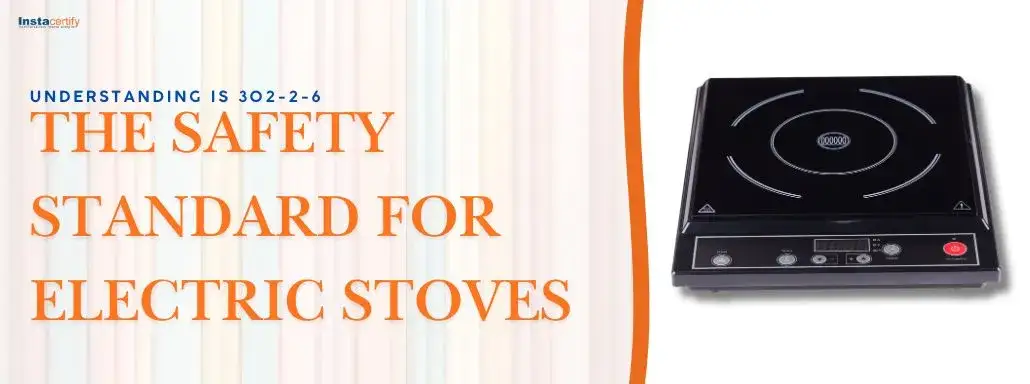
In the fast-evolving world of kitchen appliances, the Induction Stove has emerged as the clear winner. It’s sleek, energy-efficient, and modern. But for manufacturers and importers in India, the conversation has shifted from “design” to “compliance.”
As of 2025-2026, the Bureau of Indian Standards (BIS) has tightened the noose on electrical safety. If you are in the business of manufacturing, importing, or selling induction cooktops, you are no longer just selling a stove; you are selling a safety promise.
With the recent Quality Control Orders (QCOs) and the critical extension of the IS 302 Part 1 deadline to February 2027, the landscape has become a minefield of regulations. Here is everything you need to know to keep your business compliant and your products on the shelves.
Breaking News: The 2027 Deadline Extension
Let’s address the elephant in the room. The Bureau of Indian Standards recently issued a significant update regarding IS 302 Part 1, the “General Requirements” standard that governs the safety of all household electrical appliances, including induction stoves.
While the industry was bracing for an immediate overhaul, BIS has extended the implementation of the revised IS 302 Part 1:2024 until February 23, 2027.
What does this mean for you?
It means relief, but not relaxation.
- Good News: You have a grace period to align your manufacturing processes with the newer, stricter global safety norms aligned with IEC 60335-1.
- Bad News: The core standard for induction stoves, IS 302-2-6:2009, remains mandatory. The government is actively conducting market surveillance to catch non-compliant products. If your product doesn’t have the Standard Mark with a valid Registration Number, it can be seized immediately.
Decoding IS 302-2-6: The Bible of Induction Safety
To sell an induction stove in India, you must comply with IS 302-2-6:2009 under the Compulsory Registration Scheme (CRS). This isn’t a suggestion; it is the law.
This specific standard deals with the “Particular Requirements” for cooking ranges, hobs, and ovens. Unlike a generic electrical device, an induction stove handles high power, generates intense electromagnetic fields, and is used in close proximity to liquids and human touch.
Why is BIS Obsessed with This Standard?
The government’s crackdown is driven by consumer safety. Poorly made induction stoves are ticking time bombs. The IS 302-2-6 standard tests for:
- Protection Against Electric Shock: Ensuring the user cannot accidentally touch live parts, even if liquids spill on the surface.
- Temperature Rise: Ensuring the stove’s body doesn’t get dangerously hot during operation.
- Mechanical Strength: The glass top must withstand the weight of heavy pots and accidental impacts.
- Abnormal Operation: What happens if the fan fails? What happens if an empty pot is left on the heat? The stove must fail safely (i.e., shut down) rather than catch fire.
“Hidden” Business Risk: Non-Compliance
Many importers assume that having a CE certificate or an FCC mark is enough. It is not. In the eyes of Indian Customs and BIS, a foreign certificate is just a piece of paper.
Without a valid BIS Registration (CRS) for your specific model:
- Customs Blockage: Your shipment will be halted at the port. Demurrage charges will pile up while you scramble for a solution that doesn’t exist.
- Market Raids: BIS officers frequently raid warehouses and retail outlets.
- The “Stop Sale” Order: You will be forced to recall all sold units, a financial and PR nightmare that bankrupts smaller players.
Human Cost
Beyond the fines, ask yourself: Do you want to be the brand responsible for a kitchen fire? Compliance isn’t just about avoiding fines; it’s about building a brand that Indian families trust.
Inside the Lab: What Actually Happens?
Clients often ask us at Instacertify, “What happens to my product during testing?” It’s a rigorous process designed to push your product to its limits.
When you send your sample to a BIS-recognized lab, it undergoes:
- The Spill Test: Saline solution is poured over the appliance to simulate a boiling pot overflowing. The liquid must not penetrate the casing or cause a short circuit.
- The Endurance Test: The stove is operated at full power for extended periods to ensure internal components (like the IGBT and capacitors) don’t melt or degrade.
- Electromagnetic Compatibility (EMC): While primarily a safety standard, the testing ensures the magnetic field is focused on the cookware and doesn’t emit hazardous radiation to the user.
Passing these tests requires not just a “working” product, but a robustly engineered one. This is where pre-compliance consulting saves the day—identifying potential failures before you pay the official lab fees.
If You want to more for information please visit our service: BIS ISI Mark
Certification Roadmap: Simplified
Getting your CRS Mark doesn’t have to be a bureaucratic headache. Here is the streamlined process:
- Digital Application: We generate a test request on the BIS portal.
- Sample Submission: Your induction stove samples are sent to a BIS-approved lab in India.
- Testing Phase (10-15 Days): The lab performs the IS 302-2-6 tests and issues a report.
- Submission & Scrutiny: The test report and documents (brand authorization, factory details) are submitted to BIS.
- Grant of License: BIS reviews the data and grants the R-Number (e.g., R-XXXXXXXX).
- Labeling: You must now print the “Standard Mark” and your R-Number on the product packaging and the device itself.
Pro Tip: Registration is granted based on “Series Guidelines.” You may be able to group multiple models into a single series if they share the same technical design (PCB layout, power rating), saving you massive testing costs.
Frequently asked questions
What is the IS 302-2-6 safety standard?
IS 302-2-6 is a mandatory Indian safety standard for household cooking appliances, including electric and induction stoves. It ensures these devices meet strict electrical safety, thermal performance, and mechanical strength requirements to protect users from potential hazards.
Why is BIS certification important for electric stoves?
The Bureau of Indian Standards mandates this certification to verify that stoves comply with rigorous quality benchmarks. This legally required process prevents dangerous electric shocks, overheating, and fire risks while ultimately building vital consumer trust in modern kitchen appliances.
Who must apply for BIS registration under this standard?
Any entity involved in manufacturing, importing, or selling electric induction stoves in India must obtain this specific certification. The official BIS license is granted strictly to the product manufacturers, ensuring the actual production facilities meet all required safety protocols.
What types of tests are conducted during certification?
Specialized laboratories execute multiple demanding tests on the appliances. These essential evaluations include checking dielectric strength, verifying insulation resistance, measuring potential leakage current, confirming earth continuity, and monitoring overall temperature rise during maximum power operation.
Does IS 302-2-6 cover all types of cooking appliances?
While it specifically governs electric ranges, hobs, and stationary cooking ovens, it operates alongside general safety guidelines. Manufacturers must follow both the primary household electrical standards and these particular appliance requirements to achieve full compliance before market release.
What are the main benefits of obtaining this BIS certification?
Earning this certification ensures legal market entry within India while boosting brand reputation. It significantly reduces product recall risks, prevents costly legal penalties, and assures buyers that your cooking appliances are completely safe for everyday household use.
What happens if manufacturers ignore the IS 302-2-6 standard?
Selling uncertified electric stoves in India is completely illegal and carries severe consequences. Violators face heavy financial penalties, immediate product seizures, and potential imprisonment. Furthermore, non-compliant brands suffer massive reputational damage and lose crucial consumer trust permanently.
How does a manufacturer apply for this BIS license?
The process requires registering on the official BIS portal, submitting detailed factory documents, and sending product samples to authorized labs for rigorous testing. Once the test report is approved, officials grant the mandatory license for market distribution.