
Indian Compliance
Product Compliance Before Exporting Electrical Appliances to India Guide
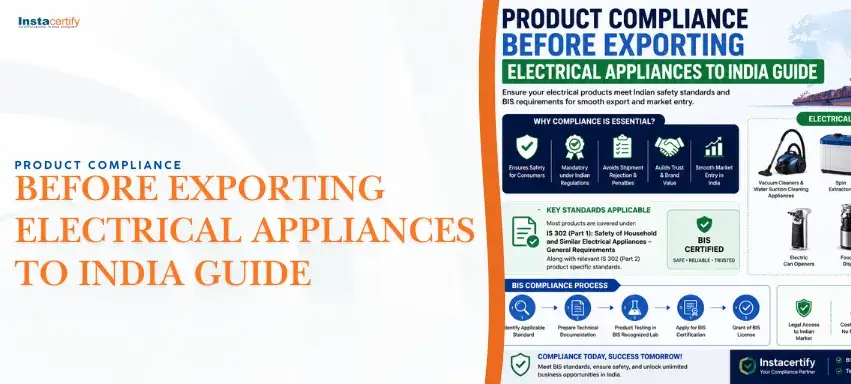
India has become one of the world's fastest-growing markets for household electrical appliances. With millions of consumers purchasing modern appliances every year, international manufacturers see India as a lucrative destination for their products. However, entering the Indian market isn't just about shipping products and finding distributors—it starts with product compliance and regulatory approvals.
If you're planning to export products such as Vacuum Cleaners, Water Suction Cleaning Appliances, Spin Extractors, Electrical Shavers, Hair Clippers, Massage Appliances, Insect Killers, Electric Call Bells, Food Waste Disposers, Flexible Heating Appliances, and Toilet Appliances, understanding India's compliance requirements is essential.
At Instacertify, we help manufacturers, importers, and brand owners navigate the complex regulatory landscape and ensure their products meet all mandatory standards before entering the Indian market.
Why Product Compliance Matters Before Exporting to India
India has established strict safety and quality regulations to protect consumers from unsafe and substandard products. Non-compliant products can lead to:
- Customs clearance delays
- Product rejection at ports
- Financial penalties
- Import restrictions
- Brand reputation damage
- Legal complications
Therefore, obtaining the necessary certifications before shipping products to India is not just recommended—it's a critical business requirement.
Understanding BIS Compliance for Household Electrical Appliances
The Bureau of Indian Standards (BIS) is India's national standards body responsible for ensuring product safety and quality.
Many household electrical appliances fall under mandatory registration or certification requirements under various Quality Control Orders (QCOs) issued by the Government of India.
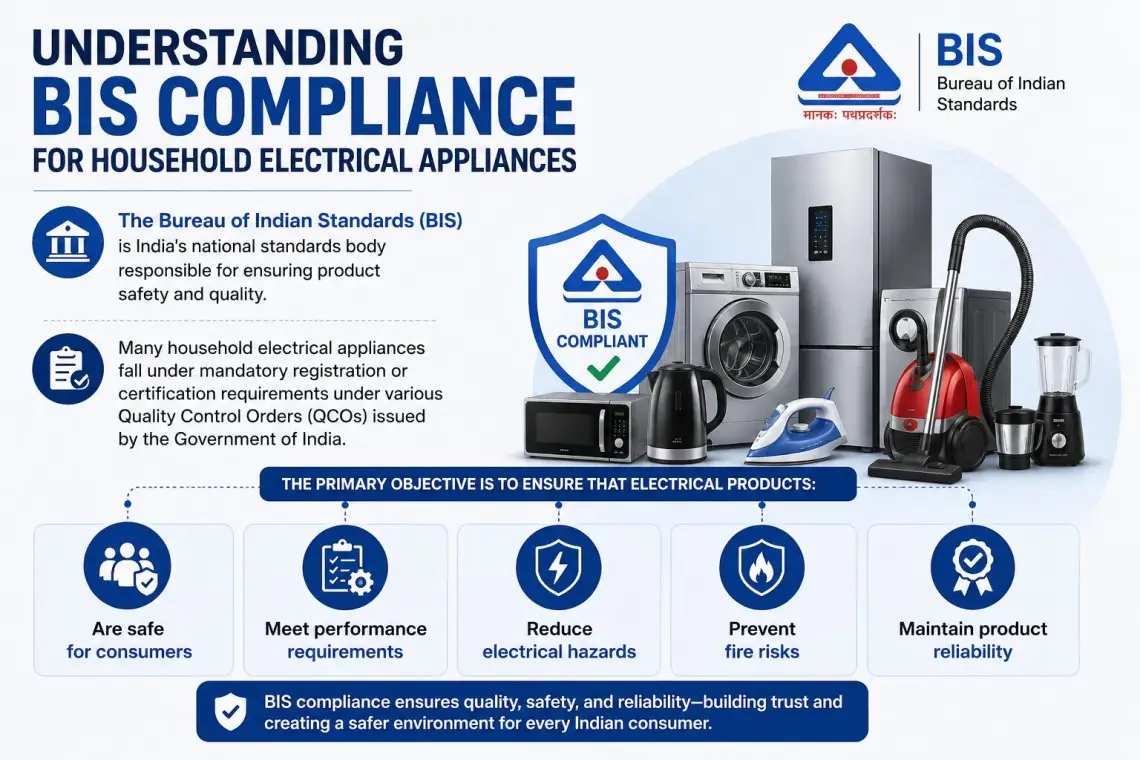
The primary objective is to ensure that electrical products:
- Are safe for consumers
- Meet performance requirements
- Reduce electrical hazards
- Prevent fire risks
- Maintain product reliability
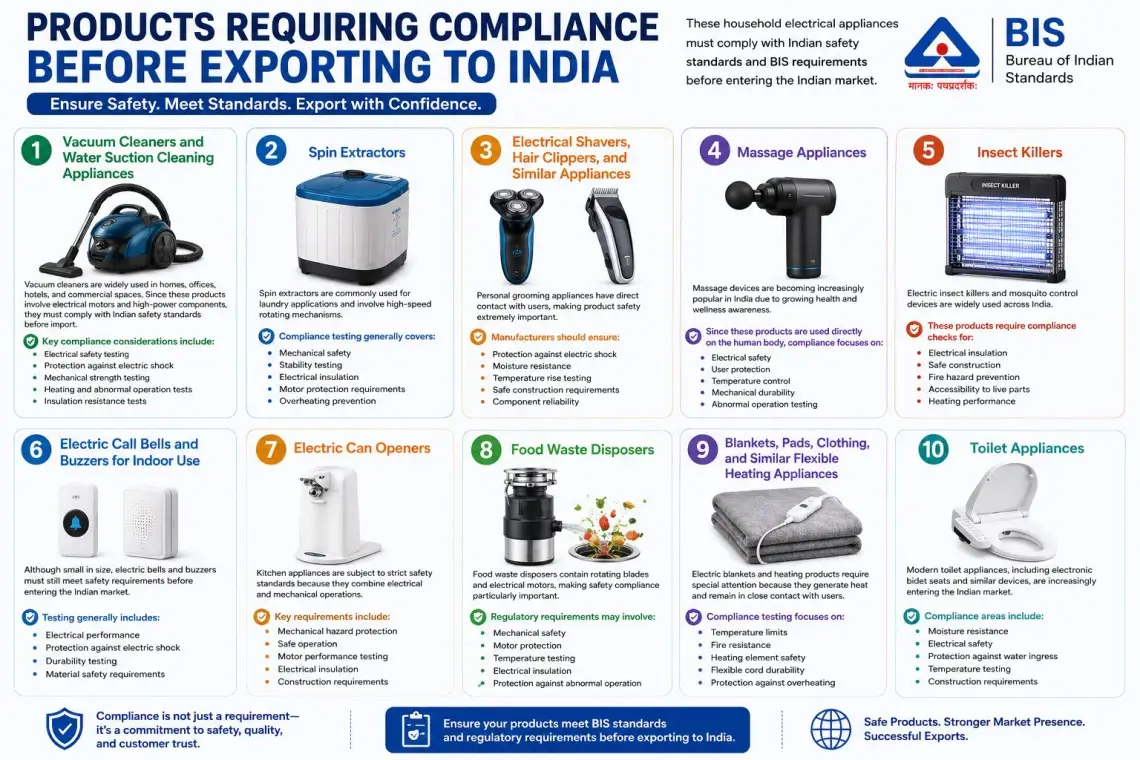
Products Requiring Compliance Before Exporting to India
Vacuum Cleaners and Water Suction Cleaning Appliances
Vacuum cleaners are widely used in homes, offices, hotels, and commercial spaces. Since these products involve electrical motors and high-power components, they must comply with Indian safety standards before import.
Key compliance considerations include:
- Electrical safety testing
- Protection against electric shock
- Mechanical strength testing
- Heating and abnormal operation tests
- Insulation resistance tests
Spin Extractors
Spin extractors are commonly used for laundry applications and involve high-speed rotating mechanisms.
Compliance testing generally covers:
- Mechanical safety
- Stability testing
- Electrical insulation
- Motor protection requirements
- Overheating prevention
Electrical Shavers, Hair Clippers, and Similar Appliances
Personal grooming appliances have direct contact with users, making product safety extremely important.
Manufacturers should ensure:
- Protection against electric shock
- Moisture resistance
- Temperature rise testing
- Safe construction requirements
- Component reliability
Massage Appliances
Massage devices are becoming increasingly popular in India due to growing health and wellness awareness.
Since these products are used directly on the human body, compliance focuses on:
- Electrical safety
- User protection
- Temperature control
- Mechanical durability
- Abnormal operation testing
Insect Killers
Electric insect killers and mosquito control devices are widely used across India.
These products require compliance checks for:
- Electrical insulation
- Safe construction
- Fire hazard prevention
- Accessibility to live parts
- Heating performance
Electric Call Bells and Buzzers for Indoor Use
Although small in size, electric bells and buzzers must still meet safety requirements before entering the Indian market.
Testing generally includes:
- Electrical performance
- Protection against electric shock
- Durability testing
- Material safety requirements
Electric Can Openers
Kitchen appliances are subject to strict safety standards because they combine electrical and mechanical operations.
Key requirements include:
- Mechanical hazard protection
- Safe operation
- Motor performance testing
- Electrical insulation
- Construction requirements
Food Waste Disposers
Food waste disposers contain rotating blades and electrical motors, making safety compliance particularly important.
Regulatory requirements may involve:
- Mechanical safety
- Motor protection
- Temperature testing
- Electrical insulation
- Protection against abnormal operation
Blankets, Pads, Clothing, and Similar Flexible Heating Appliances
Electric blankets and heating products require special attention because they generate heat and remain in close contact with users.
Compliance testing focuses on:
- Temperature limits
- Fire resistance
- Heating element safety
- Flexible cord durability
- Protection against overheating
Toilet Appliances
Modern toilet appliances, including electronic bidet seats and similar devices, are increasingly entering the Indian market.
Compliance areas include:
- Moisture resistance
- Electrical safety
- Protection against water ingress
- Temperature testing
- Construction requirements
Key Standards Applicable for Household Electrical Appliances
Most household electrical appliances exported to India are assessed under:
IS 302 (Part 1): Safety of Household and Similar Electrical Appliances – General Requirements
This standard establishes the fundamental safety requirements for household electrical appliances and covers:
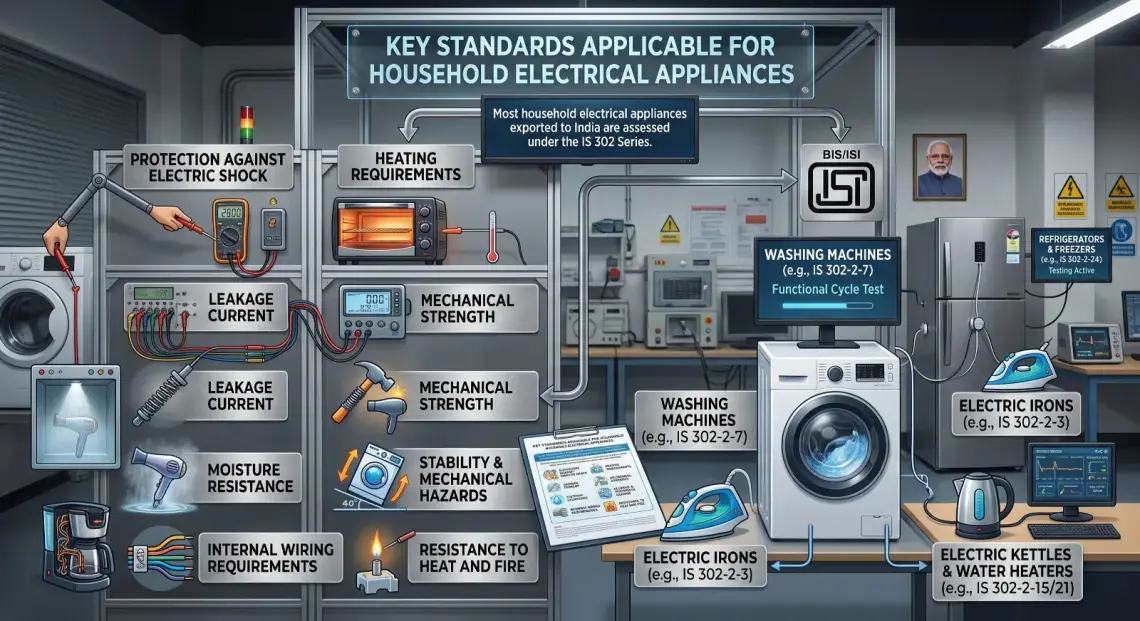
- Protection against electric shock
- Heating requirements
- Leakage current
- Mechanical strength
- Moisture resistance
- Stability and mechanical hazards
- Internal wiring requirements
- Resistance to heat and fire
In many cases, manufacturers also need to comply with the relevant IS 302 Part 2 standards, which are product-specific requirements applicable to individual appliance categories.
Common Challenges Faced by Exporters
Many foreign manufacturers underestimate India's compliance requirements and face unexpected challenges such as:
Incorrect product classification
Selecting the wrong standard can delay certification significantly.
Incomplete technical documentation
Missing reports and product information can slow down approvals.
Laboratory testing failures
Products may need modifications to meet Indian safety requirements.
Delays in regulatory submissions
Incomplete applications often result in repeated queries and extended timelines.
Why Early Compliance Planning Is Essential
Starting the compliance process before production or shipment offers several benefits:
Faster Market Entry
Products can be launched without customs delays.
Reduced Business Risks
Avoid penalties and product rejection.
Improved Customer Trust
Certified products inspire confidence among distributors and consumers.
Cost Savings
Early compliance prevents expensive redesigns and repeated testing.
How Instacertify Helps Manufacturers Export to India
At Instacertify, we simplify the entire compliance journey for manufacturers and exporters.
Our services include:
- Product compliance assessment
- Applicable standard identification
- BIS certification guidance
- Documentation support
- Testing coordination
- Regulatory consulting
- End-to-end certification management
- Post-certification assistance
With our expertise, businesses can focus on growth while we handle the complexities of regulatory compliance.
Final Thoughts
India presents enormous opportunities for manufacturers of household electrical appliances. However, success in the Indian market begins with one critical step—ensuring product compliance before export.
Whether you manufacture Vacuum Cleaners, Spin Extractors, Electrical Shavers, Massage Appliances, Insect Killers, Electric Can Openers, Food Waste Disposers, Flexible Heating Appliances, or Toilet Appliances, understanding and meeting Indian regulatory requirements is essential for a smooth market entry.
Proper planning, timely testing, and expert guidance can help you avoid delays, reduce costs, and accelerate your product launch in India.
Need Help with Product Compliance for India?
Instacertify provides comprehensive consulting services for product testing, BIS ISI Mark certification, and regulatory approvals, helping global manufacturers confidently export their products to the Indian market.
Frequently asked questions
What is product compliance before exporting electrical appliances to India?
Product compliance ensures that electrical appliances meet Indian safety and quality standards before import. It involves testing, certification, and approval under BIS regulations to ensure products are safe, reliable, and suitable for consumer use in the Indian market.
Why is BIS certification required for household electrical appliances?
BIS certification is mandatory for many electrical appliances to ensure safety, performance, and quality. It protects consumers from electrical hazards, fire risks, and substandard products while ensuring imported goods meet Indian regulatory and safety requirements before market entry.
Which products require compliance before exporting to India?
Products like vacuum cleaners, spin extractors, hair clippers, massage appliances, insect killers, electric can openers, food waste disposers, heating blankets, and toilet appliances require compliance. These products must meet BIS standards and applicable Quality Control Orders before import.
What standards are used for electrical appliance compliance in India?
Most household appliances follow IS 302 (Part 1) safety standards along with relevant Part 2 product-specific standards. These standards define requirements for electrical safety, insulation, heating control, mechanical strength, and protection against hazards.
What tests are conducted for vacuum cleaners before import?
Vacuum cleaners undergo electrical safety, insulation resistance, heating tests, mechanical strength evaluation, and abnormal operation testing. These checks ensure protection against electric shock, overheating risks, and mechanical failure during regular and extreme usage conditions.
Are personal grooming appliances like shavers and clippers regulated in India?
Yes, electrical shavers, hair clippers, and similar appliances must comply with BIS safety standards. They undergo testing for moisture resistance, temperature rise, electrical insulation, and safe construction to ensure user safety during direct body contact usage.
Why do massage appliances require strict compliance?
Massage appliances directly contact the human body, making safety critical. Compliance ensures electrical safety, temperature control, mechanical durability, and protection against abnormal operation to prevent injuries and ensure safe wellness usage.
Do small appliances like electric bells need certification?
Yes, even small appliances such as electric call bells and buzzers require compliance. They must pass electrical safety, durability, insulation, and material safety tests to ensure safe operation and prevent electrical hazards in indoor environments.
What safety checks are required for food waste disposers?
Food waste disposers undergo mechanical safety, motor protection, insulation testing, temperature control checks, and abnormal operation testing. These evaluations ensure safe handling of rotating blades and electrical components during continuous kitchen use.
Are electric blankets and heating products regulated?
Yes, electric blankets and heating appliances require strict compliance due to heat generation. They are tested for temperature limits, fire resistance, overheating protection, flexible cord safety, and electrical insulation to ensure safe long-term human use.