
Indian Compliance
Massive Update: BIS Makes IS 16718:2021 Mandatory for Crop Covers
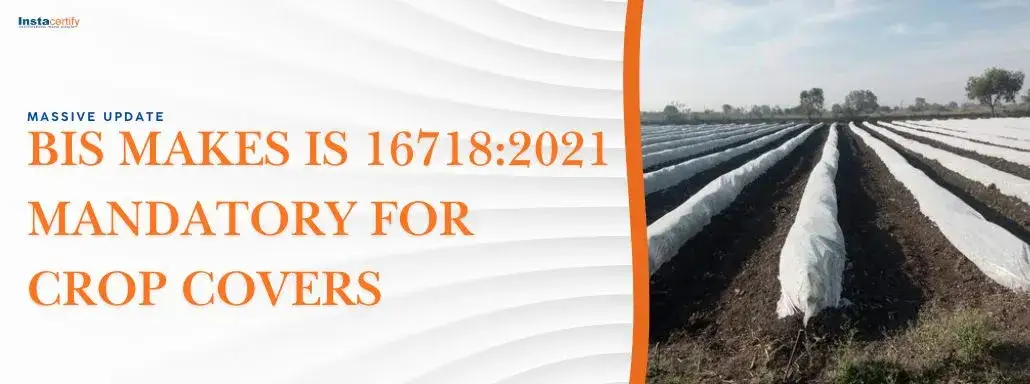
If you are in the business of manufacturing or importing agricultural textiles, there is a massive update you cannot afford to ignore. In a landmark move this January 2026, the Bureau of Indian Standards (BIS) officially granted the All India First Licence for “Agro Textiles – Polypropylene Spun Bonded Non-Woven Crop Covers and Fruit Skirting Bags” as per the IS 16718:2021 standard.
This isn’t just another regulatory bulletin; it is a clear signal that the Indian agricultural sector is rapidly modernizing, and the government is strictly enforcing quality standards to protect our farmers and our environment.
With the Ministry of Textiles’ Quality Contro`l Order (QCO) now actively regulating this space, getting your products certified is no longer optional—it is the legal gateway to the Indian market. Let’s break down exactly what this news means, what the IS 16718:2021 standard entails, and how your brand can smoothly navigate the path to compliance.
What Exactly is IS 16718:2021?
To understand the hype, we need to look at the product itself. Indian Standard IS 16718:2021 lays out the precise specifications for Polypropylene Spun Bonded Non-Woven Crop Covers and Fruit Skirting Bags.
But what does that mean in plain English?
These are highly specialized, engineered fabrics used by modern farmers and horticulturists. Instead of traditional plastic sheets that suffocate plants, these non-woven agro textiles act as a breathable, protective shield.
- Crop Covers: These are draped over rows of crops to protect them from frost, heavy rains, and pests, acting like a mini-greenhouse that micro-manages the climate around the plant.
- Fruit Skirting Bags: Think of these as individual armor for high-value fruits (like mangoes, pomegranates, or apples). They prevent sunburn, block insect attacks, and stop bruising during the crucial ripening and harvesting phases.
Because these textiles directly impact the nation’s food supply and agricultural output, their quality is paramount. A cheap, substandard crop cover could tear in the first storm, degrade under the sun, or leak harmful chemicals into the soil. That is exactly what IS 16718:2021 is designed to prevent.
Ripple Effect: Why This “First Licence” Matters Right Now
When BIS grants an “All India First Licence” for a specific standard, it officially opens the floodgates. It proves that the testing infrastructure is fully operational, the parameters are set, and the precedent has been established.
Under the recent Agro Textiles Quality Control Order (QCO), the government made it mandatory that no person shall manufacture, import, distribute, sell, or even store these specific agro textiles unless they bear the coveted ISI Mark under a valid BIS license.
For manufacturers, the clock is officially ticking. The grace periods are over. If your crop covers and fruit skirting bags do not meet the IS 16718:2021 specifications, your inventory could be seized, and your business could face severe legal penalties under the BIS Act, 2016.
On the flip side, this is a golden opportunity. Being among the first batch of manufacturers to proudly display the ISI mark on your agro textiles instantly positions your brand as a premium, trustworthy market leader. Farmers and distributors will actively seek out your certified products because they guarantee crop safety.
Key Quality Parameters: What is BIS Looking For?
So, what does it take to pass the IS 16718:2021 test? BIS doesn’t just hand out licenses; products are subjected to rigorous laboratory testing to ensure they can survive harsh agricultural environments.
Here are the critical parameters your textiles will be judged on:
- Tensile Strength & Durability: Can the fabric withstand high winds, heavy rain, and the physical stress of being stretched over agricultural frames without tearing?
- UV Resistance: Indian summers are notoriously harsh. The polypropylene fabric must be treated to resist degradation from prolonged exposure to ultraviolet rays.
- Permeability: The fabric must strike a perfect balance—it needs to block pests and extreme weather while allowing the exact right amount of air, sunlight, and moisture to pass through so the plant can breathe and photosynthesize.
- Biodegradability & Environmental Impact: Modern standards demand eco-friendly solutions. The material must align with environmental safety guidelines so it doesn’t leave toxic residue in the farming soil.
Step-by-Step Compliance Journey
Securing your BIS certification might seem like navigating a maze of red tape, but the process generally follows a structured path:
- Step 1: Gap Assessment: Before you even apply, you must ensure your manufacturing process and raw materials meet the IS 16718:2021 criteria.
- Step 2: Application Submission: Filing the detailed application with the Bureau of Indian Standards, accompanied by all necessary corporate and technical documentation.
- Step 3: Factory Inspection: A BIS officer will visit your manufacturing facility to audit your production capabilities, quality control infrastructure, and in-house testing labs.
- Step 4: Sample Testing: Samples of your crop covers or fruit bags will be sealed by the auditor and sent to a BIS-recognized, independent laboratory for exhaustive physical and chemical testing.
- Step 5: Grant of License: Once the lab confirms your product passes all IS 16718 tests and the factory audit is cleared, BIS will grant you the license to use the Standard Mark (ISI).
Seamless Certification with Instacertify
Let’s be honest: while the steps sound straightforward on paper, the reality of tracking applications, coordinating with government auditors, handling lab delays, and deciphering technical jargon can be a massive drain on your company’s time and resources. You are in the business of manufacturing top-tier agro textiles, not chasing paperwork.
That is exactly where Instacertify steps in.
We take the complex, headache-inducing process of regulatory compliance entirely off your plate. From the moment you decide to get your IS 16718:2021 certification, our team of experts handles everything—from the initial documentation and pre-audit readiness to coordinating with BIS-accredited labs and ensuring a smooth factory inspection. We ensure that your application is flawless, drastically reducing the turnaround time so you can get your products to market faster than your competitors.
Final Verdict
The granting of the All India First Licence for IS 16718:2021 is a massive milestone for India’s agro textile industry. It marks a shift towards uncompromising quality and agricultural safety.
With the QCO enforcement fully active, the market will quickly weed out uncertified, substandard products. Don’t let your business get left behind. Embrace the standard, secure your ISI mark, and show your buyers that your crop covers are the absolute best in the business.
Ready to fast-track your BIS certification and dominate the agro textile market? Reach out to the team at Instacertify today, and let’s get your products officially approved and ready for sale!