Others
How BIS is Shaping the Future of Technical Textiles with 90 Mandatory QCOs
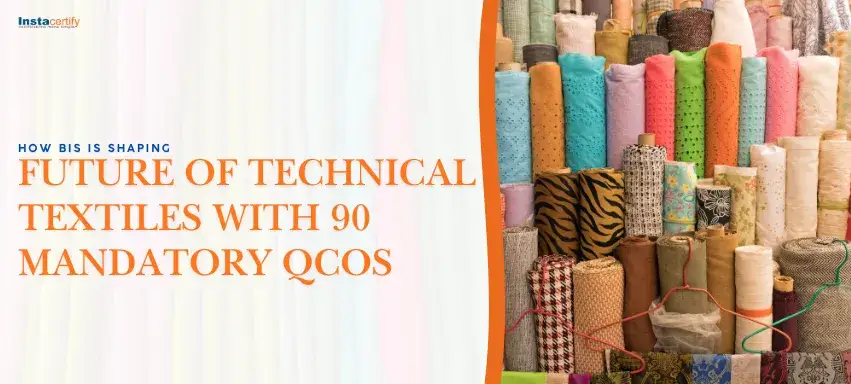
When we hear the word "textiles," most of us immediately think of the clothes in our closets, the curtains in our living rooms, or the sheets on our beds. But the textile industry has evolved far beyond basic apparel and home furnishings. Welcome to the era of technical textiles—highly specialized fabrics engineered for performance, safety, and functionality rather than just aesthetics.
As these advanced materials become increasingly integrated into critical sectors like healthcare, agriculture, and automotive engineering, ensuring their quality and reliability is absolutely essential. That is precisely where the Bureau of Indian Standards (BIS) steps in.
Recently, the industry gathered to discuss exactly what the future holds for this booming sector, and the regulatory updates are something every manufacturer, importer, and industry professional needs to know.
Inside the 2026 Technical Textiles Conclave
On May 15, 2026, the vibrant city of Surat hosted a highly anticipated event: the Technical Textiles Conclave 2026. Jointly organized by the Indian Technical Textile Association (ITTA) and the Southern Gujarat Chamber of Commerce and Industry (SGCCI), the event was appropriately themed "Innovating Textiles for a Smarter Tomorrow".
This wasn't just a standard networking event. It was a crucial gathering where industry representatives, academic minds, policymakers, and various other stakeholders came together to brainstorm and deliberate on the massive developments and emerging opportunities within the technical textiles sector.
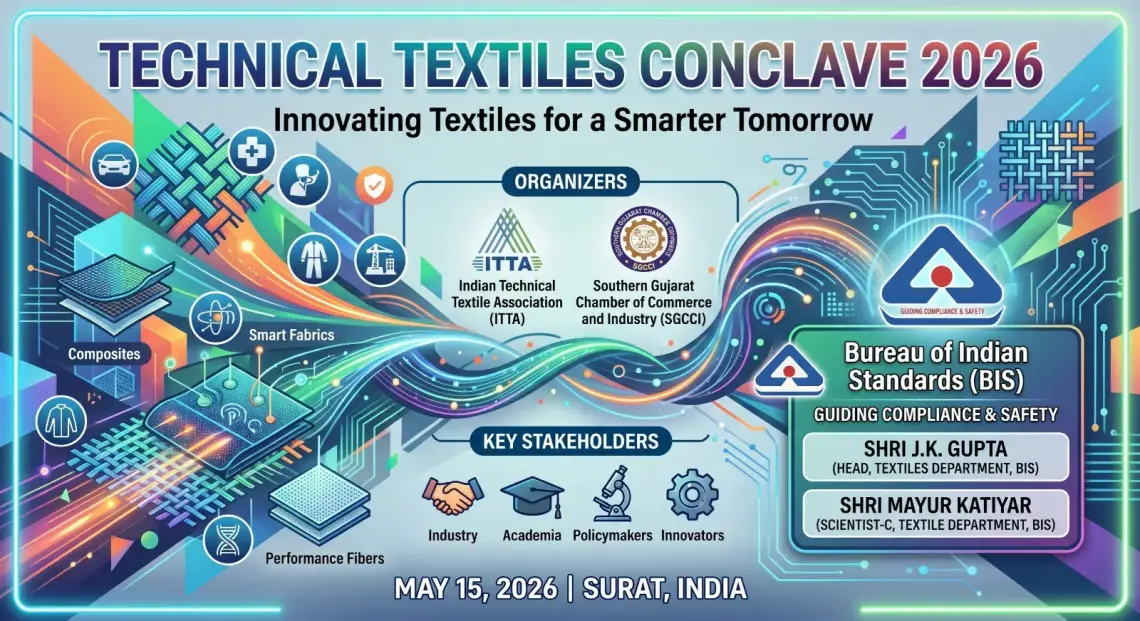
Crucially, the Bureau of Indian Standards (BIS) was present to guide the conversation on compliance and safety. Representing BIS were Shri J.K. Gupta, Head of the Textiles department, alongside Shri Mayur Katiyar, Scientist-C from the Textile Department (TXD).
BIS’s Vision for a Standardized Ecosystem
During the conclave, Shri J.K. Gupta took the stage to deliver a highly informative presentation titled "Status of Standardization in the Field of Technical Textiles". The core message was clear: for the technical textile ecosystem to thrive and grow sustainably, it must be deeply rooted in rigorous standards development and uncompromising quality assurance.
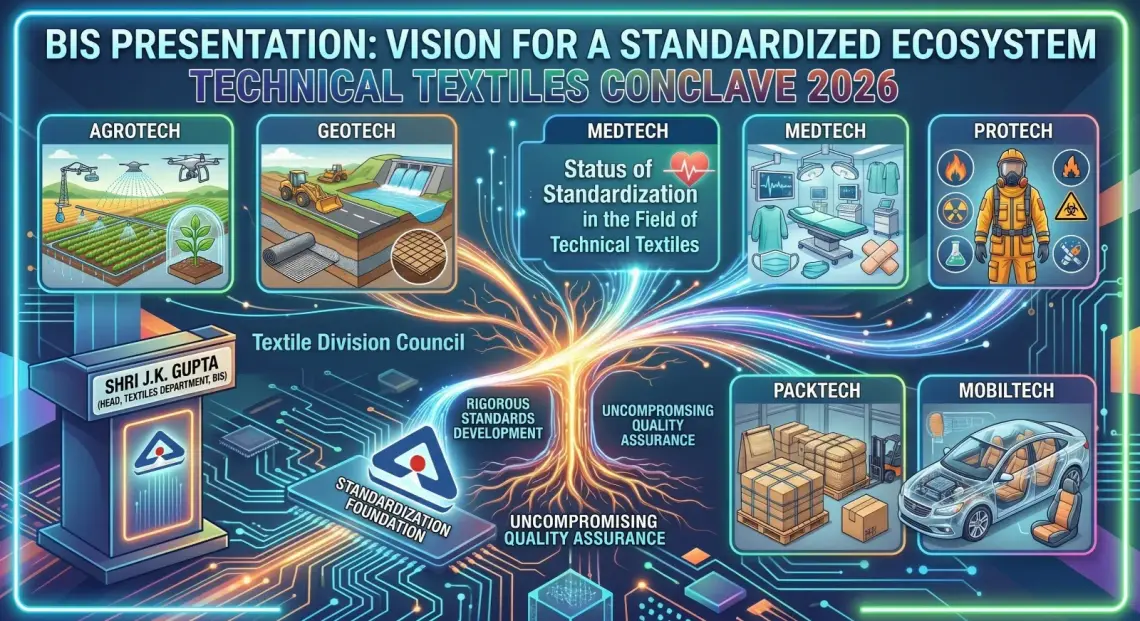
The presentation provided a deep dive into the current status of standardization activities managed under the Textile Division Council. If you are wondering just how vast this sector is, Shri Gupta highlighted that BIS has been actively developing standards across a wide array of specialized categories, including:
- Agrotech: Textiles designed to improve agricultural efficiency and crop protection.
- Geotech: Heavy-duty fabrics used in civil engineering and construction.
- Medtech: Medical-grade textiles where hygiene and safety are literally matters of life and death.
- Protech: Protective clothing designed to shield workers from extreme hazards.
- Packtech: Advanced materials utilized in industrial packaging.
- Mobiltech: Specialized textiles utilized in the automotive and transportation sectors.
Modernizing the Standardization Process
BIS isn't just creating rules; they are upgrading how they create them. To keep pace with rapid technological advancements, Shri Gupta outlined several forward-thinking initiatives that BIS has undertaken to strengthen their standardization activities.
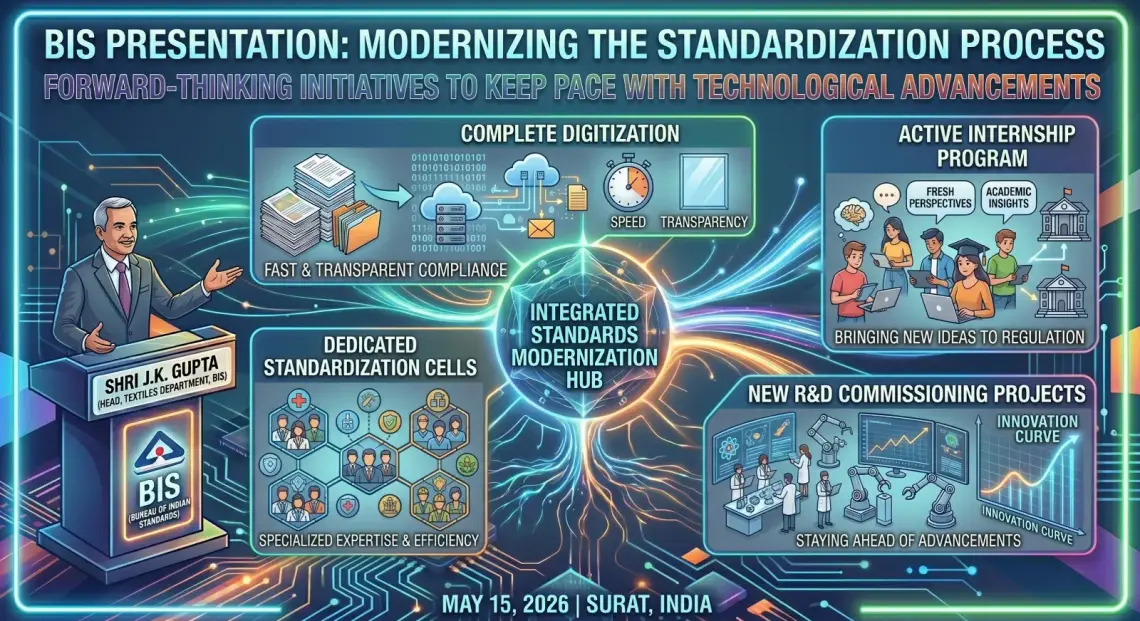
These exciting modernizations include:
- The complete digitization of standardization processes to make compliance faster and more transparent.
- The strategic establishment of dedicated standardization cells.
- The active engagement of interns to bring fresh, academic perspectives into the regulatory framework.
- The commissioning of new Research and Development (R&D) projects to stay ahead of the innovation curve.
Big Update: 90 Quality Control Orders (QCOs)
For manufacturers and businesses navigating regulatory compliance, the most critical takeaway from the conclave was the update on Quality Control Orders (QCOs). Shri Gupta apprised all attendees of the current regulatory landscape, officially noting that QCOs have now been issued for a massive 90 different textile products.
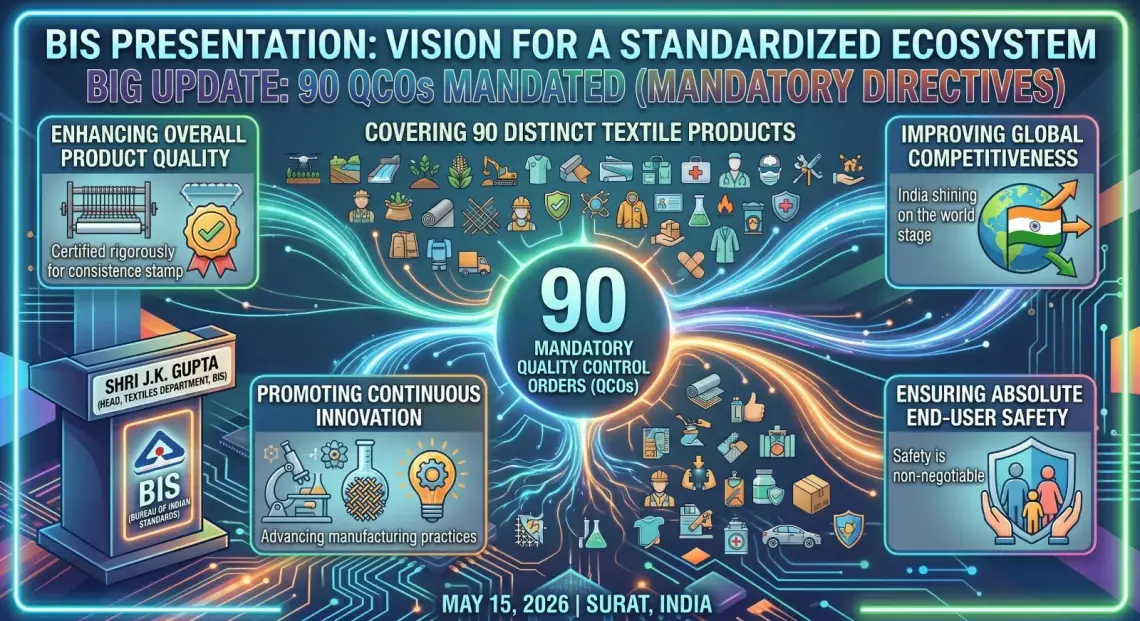
Why does this matter? Because QCOs are not mere suggestions—they are mandatory directives. Shri Gupta placed heavy emphasis on the vital role these QCOs play in the broader market. They are the foundational tools used for:
- Enhancing overall product quality across the board.
- Ensuring the absolute safety of the end-user.
- Promoting continuous innovation within manufacturing practices.
- Improving the global competitiveness of India's technical textiles sector, allowing domestic manufacturers to shine on the world stage.
Moving Forward Together
The transition into stricter compliance frameworks can sometimes cause apprehension in the manufacturing community. However, the conclave prioritized open communication. During the interactive sessions, various concerns and specific issues raised by different industry stakeholders were directly addressed by the BIS representatives.
As we look toward a "smarter tomorrow," it is clear that technical textiles will play a foundational role in building a safer, more efficient world. For businesses operating in this space, staying ahead of these BIS standards and understanding the scope of the 90 issued QCOs is no longer just about avoiding penalties—it is about positioning your brand as a globally competitive leader in quality and innovation.