Did you Know
Is Your Cement Legal? Why the BIS ISI Mark is Non-Negotiable in 2026

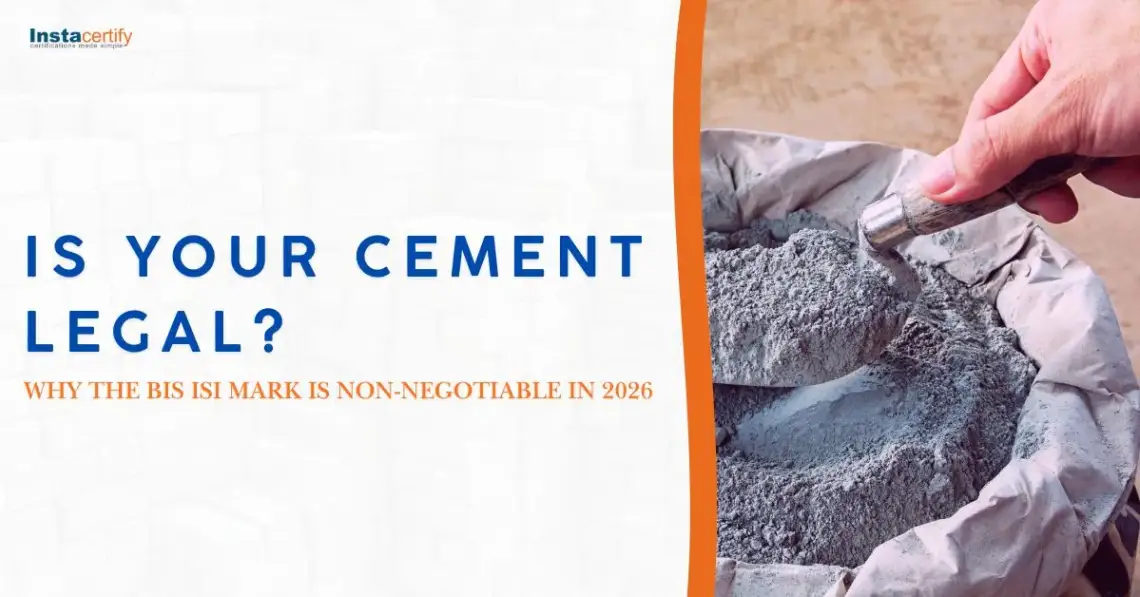
The ISI mark is the most well-known indication of safety and quality in India. The Cement (Quality Control) Order, 2003, from the Bureau of Indian Standards (BIS) controls this certification for the cement sector. This directive says that no one can make, sell, or give out cement without a valid ISI mark. The certification guarantees that the cement is put through strict tests for its physical and chemical qualities before it is sold.
What is Cement for Manufacturer?
For a producer, cement isn’t just a product; it’s a chemically formulated binding agent made by heating up a mix of clay and limestone. To get an ISI mark cement licence, a company must have everything it needs to make cement, from grinding raw materials and processing them in a kiln to having a fully stocked in-house lab. BIS gives the manufacturer a “Scheme of Inspection and Testing” (SIT) that they must follow for every batch they make.
What is Cement Indian Standards?
BIS writes Indian Standards (IS) to set the quality standards for products. These criteria for cement include things like:
- Compressive Strength: The ability to withstand loads.
- Setting Time: How quickly the cement hardens.
- Soundness: Resistance to volume change after setting.
- Chemical Composition: Limits on magnesia, sulfuric anhydride, and loss on ignition.
How Many Types of Cements and Indian Standards?
There are more than a dozen types of cement, and each one is made for a different type of structure. Here are some of the most prevalent types and their codes:
- Ordinary Portland Cement (OPC): Grades 33, 43, and 53 (IS 269).
- Portland Pozzolana Cement (PPC): Fly-ash based (IS 1489 Part 1) and Calcined clay based (IS 1489 Part 2).
- Portland Slag Cement (PSC): (IS 455).
- Composite Cement: (IS 16415 cement grade), which is gaining popularity for its eco-friendly properties.
- Specialty Cements: Sulphate Resisting (IS 12330), Low Heat (IS 12600), and White Cement (IS 8042).
Why is it Mandatory?
The requirement for BIS certification is due to public safety. Cement is a structural substance, and if its quality is not good enough, buildings might fall down and people can die. The government made the ISI mark on cement required so that:
- Ensures uniformity in construction quality across India.
- Protects consumers from sub-standard or adulterated products.
- Empowers authorities to take legal action against non-compliant producers.
What is the Latest Update in the Cement Industry?
The rules and regulations are always changing. The most important recent change is Cement Packaging (QCO 2024). The Ministry has sent out new Quality Control Orders for the bags that hold cement. Starting on December 6, 2024, all 50kg cement bags must meet IS 11652 (HDPE/PP weaved sacks) or IS 17399. This means that not only do producers need to certify the cement, but they also need to make sure that the companies that package it are BIS-certified.
Important Information for Manufacturer
To successfully apply for a BIS license, manufacturers must prepare:
- In-house Lab: You must have all equipment necessary to test the parameters mentioned in your specific IS code.
- Documentation: Factory layout, machinery details, raw material test reports, and a detailed manufacturing process flow.
- The Process: After you apply, a BIS officer travels to the factory to see it and takes samples to send to a lab that is not part of the factory. The licence is only given out after all the samples have passed all the tests.
Legal Challenges Facing Manufacturer
Navigating BIS compliance can be complex. Common legal and operational hurdles include:
- Non-Conformity During Audits: If a sample fails, the license can be rejected or suspended, halting production.
- Documentation Errors: Almost 80% of application delays are due to improper record-keeping.
- Packaging Compliance: With the new modifications for 2024, producers have to find certified sacks on time.
- Strict Penalties: If you make or sell something without an ISI mark, you could go to jail for up to two years or pay a fine that is up to ten times the value of the items.
Summary
Getting a BIS ISI Mark Certification for Cement is a sign of quality and a legal means to get into the Indian market. Whether you use standard grade or specialised is 16415 cement grade, the only way to develop a long-lasting and trustworthy brand is to be compliant.
Frequently asked questions
Why is the BIS ISI mark mandatory for cement?
The Government of India mandates the BIS ISI mark on all cement types to ensure structural safety and quality control. Selling or manufacturing cement without this certification is illegal and poses severe risks to construction integrity.
How can I verify the authenticity of an ISI mark?
You can easily verify the ISI mark using the official BIS Care mobile application. Enter the unique seven-digit CM/L license number printed on the cement bag to instantly check the manufacturer's credentials and license validity.
What happens if a manufacturer sells uncertified cement?
Selling cement without a valid BIS ISI mark is a serious criminal offense. Offenders face strict legal actions, including heavy financial penalties, potential imprisonment, and immediate confiscation of all non-compliant cement stock by authorities.
Does the ISI mark guarantee the cement's physical strength?
Yes, the ISI mark guarantees that the cement has passed rigorous laboratory tests for compressive strength, setting time, and chemical composition. It ensures the product meets national standards required for safe and durable construction.
Are imported cement brands also required to have it?
Absolutely, all imported cement must comply with the exact same BIS standards as domestic products. Foreign manufacturers must obtain a license under the Foreign Manufacturers Certification Scheme before their cement legally enters the Indian market.
What new BIS rules apply to cement packaging in 2026?
Starting in late 2026, the government mandates that all cement packaging, like woven sacks, must also carry the ISI mark under IS 11652. This ensures bags resist moisture and prevent dangerous spillages during heavy transport.
How long is a BIS ISI certification valid for cement manufacturers?
An initial BIS ISI license is valid for one year. Manufacturers can subsequently renew their certification for up to five years, provided they maintain consistent quality compliance, pass surveillance audits, and promptly pay necessary renewal fees.
Does one ISI license cover a cement company's multiple factories?
No, a single license does not cover multiple locations. The Bureau of Indian Standards issues certifications specifically per manufacturing unit. If a company operates several cement plants, each individual facility requires its own separate application and audit.