Global Compliance
What is IMEI Registration? A Complete Guide for Manufacturers & Importers in India (2026)
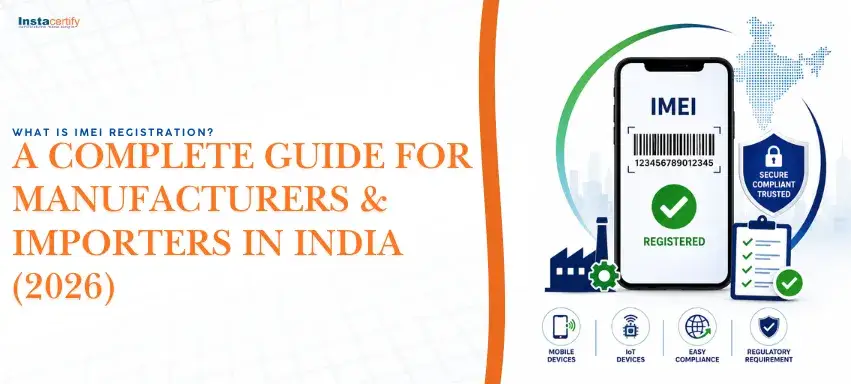
The rapid growth of India's mobile and IoT ecosystem has increased the need for secure and traceable communication devices. To strengthen device security, eliminate counterfeit products, and improve consumer protection, the Government of India has made IMEI Registration an essential compliance requirement for manufacturers and importers of mobile devices.
Whether you manufacture smartphones in India or import mobile handsets, cellular modules, IoT devices, or wireless communication equipment, understanding the IMEI registration process is crucial before introducing products into the Indian market.
In this comprehensive guide, we explain what IMEI Registration is, who requires it, the registration process, required documents, benefits, compliance requirements, and the latest regulatory developments in India.
Note: Your request mentioned "latest update regarding PESO." Since this article is about IMEI Registration, the relevant regulatory updates relate to the Department of Telecommunications (DoT), CEIR, and the Device Setu (ICDR) portal, not PESO. The content below reflects the latest IMEI-related compliance guidance.
What is IMEI Registration?
IMEI Registration is the process of registering the International Mobile Equipment Identity (IMEI) numbers of eligible mobile communication devices with the Government of India's Device Setu (Indian Counterfeited Device Restriction – ICDR) portal before they are manufactured for sale or imported into India, as applicable under the regulatory framework.
Every cellular-enabled device is assigned a unique 15-digit IMEI number, which enables telecom operators and authorities to identify the physical device on mobile networks.
The IMEI registration framework helps ensure that only genuine devices with valid IMEI numbers are introduced into the Indian market, supporting anti-counterfeit efforts, device traceability, and network security. The Device Setu (ICDR) workflow includes company onboarding, model registration, IMEI registration, and IMEI certificate generation.
What Does IMEI Mean?
IMEI stands for:
International Mobile Equipment Identity
It is a globally recognized identification number assigned to every mobile device capable of connecting to a cellular network.
Unlike a SIM card number, which identifies the subscriber, an IMEI uniquely identifies the hardware device itself.
Latest IMEI Registration Updates (2025–2026)
The Government of India has continued strengthening enforcement around IMEI compliance. Recent official communications emphasize that manufacturers, importers, and resellers dealing with IMEI-bearing equipment should comply with mandatory registration through the Device Setu (ICDR) portal before applicable products are manufactured for sale or imported, as required.
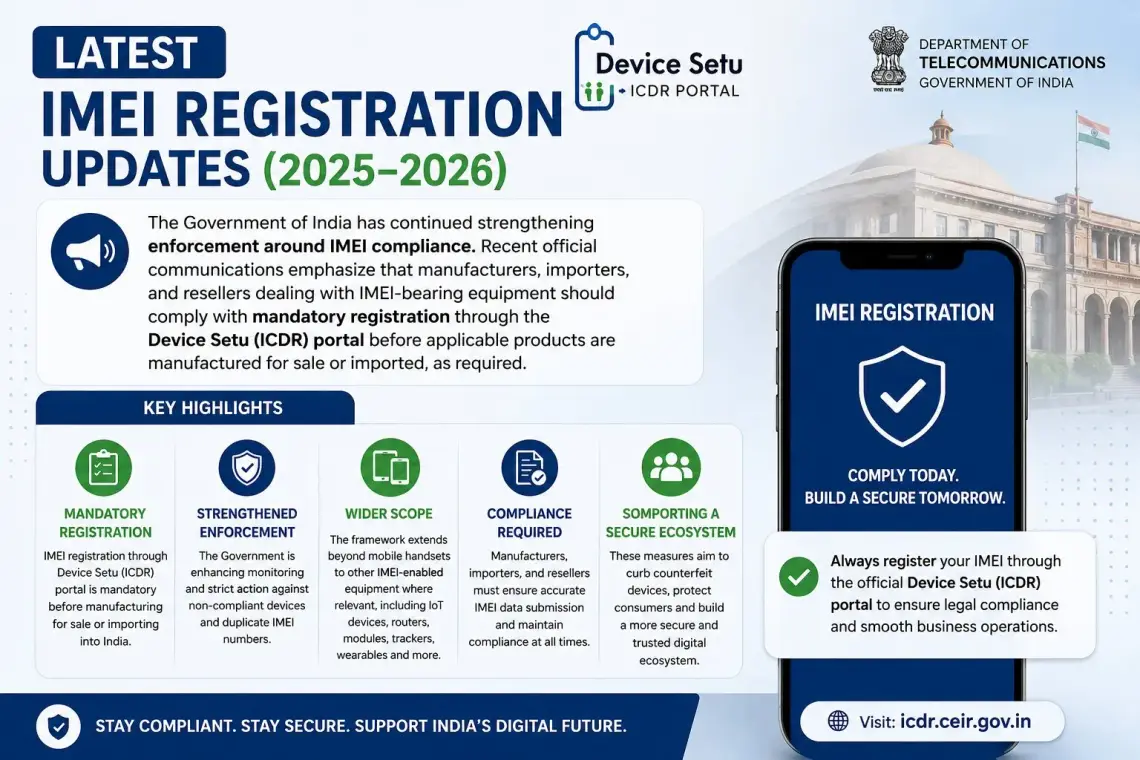
Guidance has also highlighted that the framework extends beyond mobile handsets to other IMEI-enabled equipment where relevant.
Why is IMEI Registration Important?
IMEI registration is important because it helps:
- Prevent counterfeit mobile devices
- Eliminate duplicate or cloned IMEI numbers
- Improve national telecom security
- Support law enforcement investigations
- Protect consumers from illegal devices
- Enhance customs and import compliance
- Enable blocking of stolen devices through CEIR
The IMEI registration ecosystem works alongside India's Central Equipment Identity Register (CEIR), which helps identify, verify, and where appropriate block devices reported as lost, stolen, or non-compliant.
Who Needs IMEI Registration in India?
IMEI Registration is generally applicable to businesses involved with cellular-enabled equipment, including:
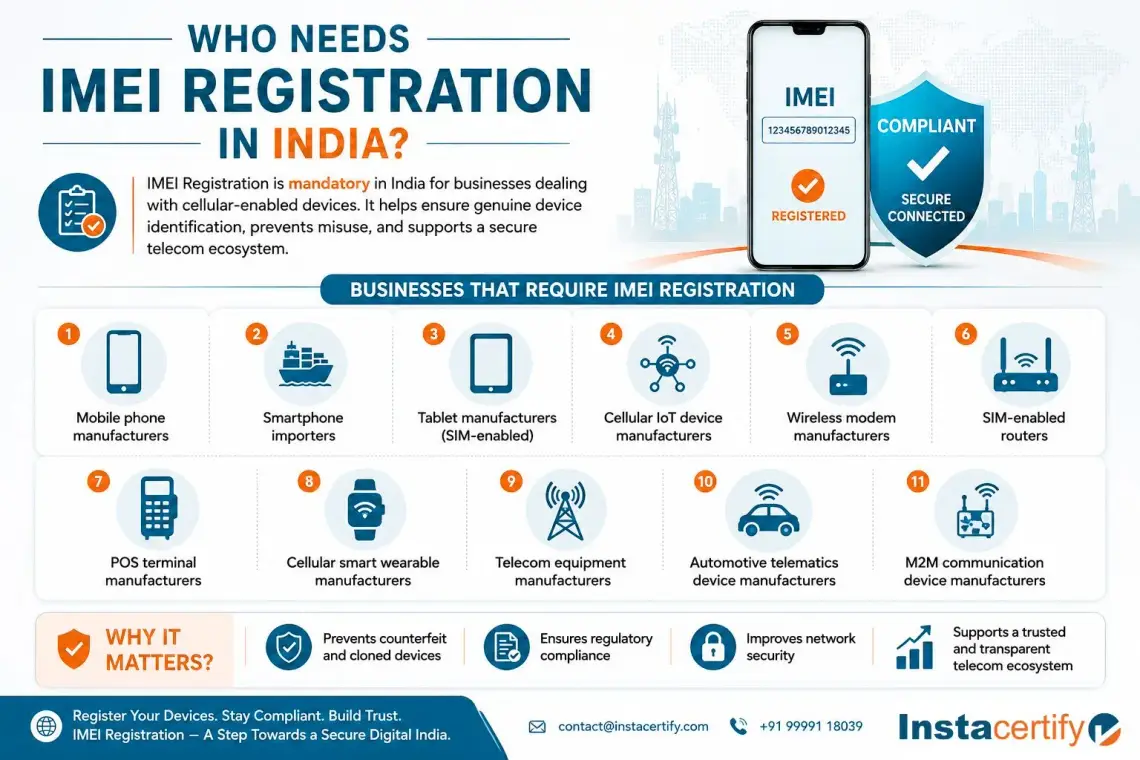
- Mobile phone manufacturers
- Smartphone importers
- Tablet manufacturers (SIM-enabled)
- Cellular IoT device manufacturers
- Wireless modem manufacturers
- SIM-enabled routers
- POS terminal manufacturers
- Cellular smart wearable manufacturers
- Telecom equipment manufacturers
- Automotive telematics device manufacturers
- M2M communication device manufacturers
Which Products Require IMEI Registration?
Examples include:
- Smartphones
- Feature phones
- Cellular tablets
- 4G routers
- 5G routers
- LTE modules
- NB-IoT devices
- CAT-M devices
- Vehicle tracking systems
- GPS tracking devices with cellular communication
- Smartwatches with eSIM
- POS terminals
- Cellular gateways
- SIM Box devices (where applicable)
- Other telecom devices carrying IMEI numbers
Regulatory Authority for IMEI Registration
In India, IMEI Registration is administered under the Department of Telecommunications (DoT) using the Device Setu (ICDR) platform, which integrates with the country's device identity management ecosystem.
The objective is to create a transparent and secure framework for registering IMEI-bearing devices before they reach the Indian market.
What is Device Setu (ICDR)?
Device Setu, also known as the Indian Counterfeited Device Restriction (ICDR) portal, is the official online platform where eligible manufacturers and importers:
- Register their company
- Create importer and OEM profiles
- Register device models
- Upload IMEI information
- Generate IMEI certificates
The platform is designed to simplify regulatory compliance while helping reduce counterfeit and illegally imported devices.
IMEI Registration vs CEIR
Many businesses confuse IMEI Registration with CEIR.
| IMEI Registration | CEIR |
|---|---|
| Registers eligible device IMEIs | Maintains a national equipment identity database |
| Used by manufacturers and importers | Used to manage device identity and support blocking/verification functions |
| Conducted before eligible devices enter the market | Used throughout the device lifecycle for network identity management |
Common Mistakes During IMEI Registration
Avoid these common errors:
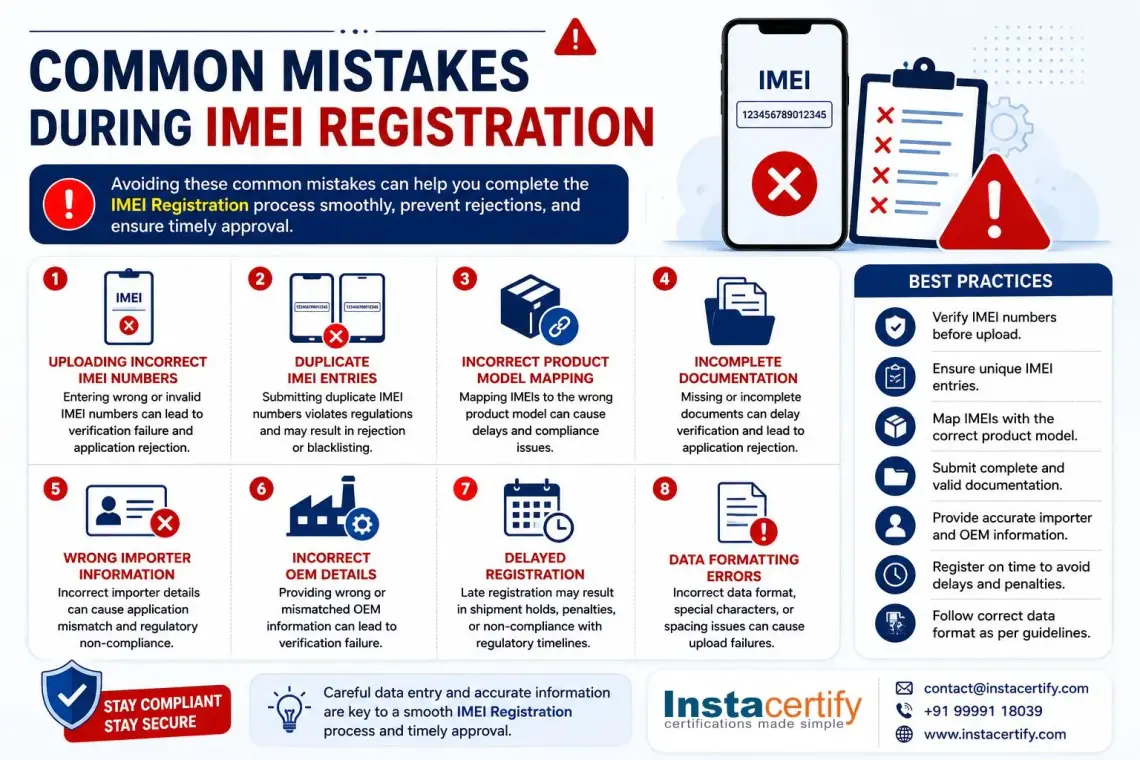
- Uploading incorrect IMEI numbers
- Duplicate IMEI entries
- Incorrect product model mapping
- Incomplete documentation
- Wrong importer information
- Incorrect OEM details
- Delayed registration
- Data formatting errors
Careful validation before submission can help prevent delays.
SummaryIMEI Registration has become an essential regulatory requirement for eligible mobile and cellular-enabled devices entering the Indian market. By registering IMEI numbers through the Device Setu (ICDR) portal, manufacturers and importers contribute to a more secure telecom ecosystem, reduce the circulation of counterfeit devices, and support regulatory compliance.
As India's digital infrastructure continues to expand, businesses should integrate IMEI Registration into their product launch and import planning to avoid delays and maintain compliance.
If your business plans to manufacture or import cellular-enabled products into India, partnering with an experienced compliance consultant such as Instacertify can help streamline the registration process and keep your products market-ready.
Frequently asked questions
How can I check my device's IMEI number?
You can check your device's IMEI by dialing *#06#, viewing the device settings under "About Phone," checking the product packaging, or locating it on the SIM tray for supported models. Every cellular-enabled device has a unique IMEI.
What is the difference between IMEI and a serial number?
An IMEI identifies a cellular-enabled device on mobile networks, while a serial number is assigned by the manufacturer for production and warranty purposes. Both are unique identifiers but serve different technical and regulatory functions.
Does every mobile device require an IMEI number?
No. Only devices capable of connecting to cellular networks require an IMEI number. Products such as Wi-Fi-only tablets, laptops without cellular connectivity, or Bluetooth-only devices generally do not require IMEI registration.
Can duplicate IMEI numbers be used legally?
No. Each cellular-enabled device must have a unique IMEI number. Using duplicate, cloned, or unauthorized IMEI numbers is prohibited and may lead to regulatory action, network restrictions, or rejection during the registration process.
What is Device Setu (ICDR)?
Device Setu (Indian Counterfeited Device Restriction – ICDR) is the official portal used for registering eligible IMEI-bearing devices in India. It enables company onboarding, device model registration, IMEI uploads, and certificate generation for compliant manufacturers and importers.
Is IMEI Registration required for IoT devices?
Yes, if an IoT device uses a cellular communication module and is assigned an IMEI number, it may require IMEI registration before being manufactured for sale or imported into India, depending on the applicable regulatory requirements.
Is IMEI Registration different from BIS Certification?
Yes. IMEI Registration identifies eligible cellular-enabled devices within the telecom ecosystem, whereas BIS Certification verifies that applicable products meet Indian quality and safety standards. Depending on the product category, businesses may need both approvals before market entry. 19. Does IMEI Registration expire?
What are the benefits of completing IMEI Registration?
IMEI Registration helps improve device traceability, supports anti-counterfeit measures, strengthens telecom network security, simplifies regulatory compliance, and enhances consumer trust. It also reduces the risk of customs delays and regulatory issues for manufacturers and importers.