Electronics & Electrical
Breaking Down IS/IEC 62368-1:2023: The Future of Electronics Safety in India
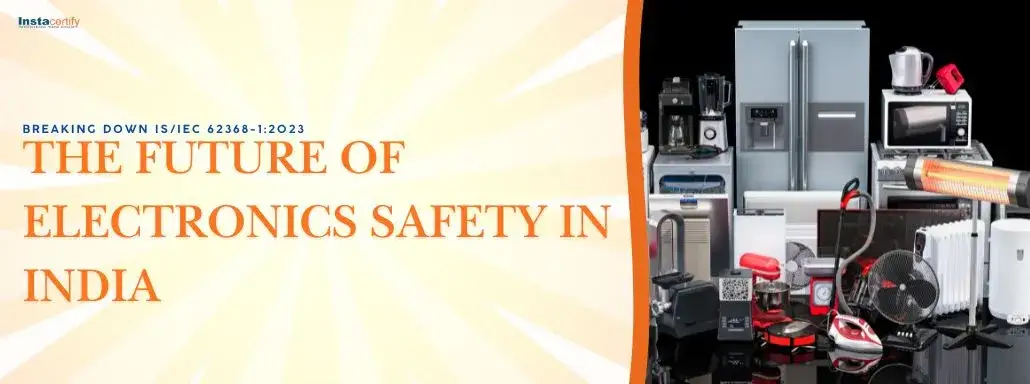
The technology sector is evolving at a breakneck pace. From the smartphones we carry in our pockets to the immersive Virtual Reality (VR) headsets reshaping the gaming and corporate training industries, modern electronics are becoming increasingly complex. With this rapid convergence of audio, video, and information technology, the old rules of product safety simply can no longer keep up.
Enter the latest mandate from the Ministry of Electronics and Information Technology (MeitY) and the Bureau of Indian Standards (BIS): the implementation of IS/IEC 62368-1:2023.
This isn’t just a routine regulatory update or a minor tweak to existing paperwork. It is a fundamental paradigm shift in how electronic products are designed, tested, and certified for the Indian market. Whether you are an electronics manufacturer, an importer, or a product designer, understanding this new standard is no longer optional—it is critical for your survival in the market. Let’s dive deep into what this new news means for your business, the deadlines you need to circle on your calendar, and how to stay ahead of the curve.
Goodbye Legacy Rules: Why the Change?
For years, the electronics industry relied on two separate, highly prescriptive safety standards. If you manufactured Information Technology (IT) equipment, you followed IS 13252 (Part 1):2010. If you were in the Audio/Video (A/V) space, you adhered to IS 616:2017.
The problem? These legacy standards were reactive and incident-based. They relied on strict, prescriptive design rules—dictating exactly how a product should be built based on past failures. But today, the lines between IT and A/V equipment are completely blurred. A modern smart TV is essentially a powerful computer; a smartphone is a high-end audio and video device. Maintaining two separate standards for converging technologies created confusion, redundant testing, and regulatory bottlenecks.
IS/IEC 62368-1:2023 solves this by completely replacing both outdated standards with a single, unified framework.
Core Philosophy: Hazard-Based Safety Engineering (HBSE)
The most revolutionary aspect of IS/IEC 62368-1:2023 is its shift away from prescriptive rules toward a concept known as Hazard-Based Safety Engineering (HBSE).
Instead of telling engineers how to build a product, HBSE asks them to focus on what could go wrong. It is a proactive, performance-oriented approach that identifies potential hazards early in the product design phase. Under the HBSE framework, manufacturers must evaluate their products based on a simple, logical flow:
- Identify the Energy Source: Does the product generate hazardous electrical energy (shock risk), thermal energy (burn risk), kinetic energy (moving parts), or radiation (lasers/screens)?
- Classify the Energy Level: Is the energy level high enough to cause pain or injury to a user?
- Identify the Safeguard: What physical or electrical barrier is in place to prevent that hazardous energy from reaching the user?
- Test the Safeguard: Is the safeguard robust enough to withstand normal use, abnormal use, and single-fault conditions?
Because HBSE focuses on the underlying physics of hazards rather than specific component designs, it is entirely technology-agnostic. This gives product designers the ultimate freedom to innovate and use cutting-edge materials, knowing that as long as the safety safeguards are effective, the product will comply.
New Additions to the Compulsory Registration Scheme (CRS)
With the introduction of this new standard, MeitY is also casting a wider regulatory net. For the first time, Extended Reality (XR) products have been officially brought under the BIS Compulsory Registration Scheme (CRS).
This includes:
- Augmented Reality (AR) devices
- Virtual Reality (VR) headsets
- Mixed Reality (MR) equipment
As these immersive technologies become mainstream in consumer entertainment, medical training, and industrial design, ensuring their safety—particularly regarding eye strain, thermal output near the face, and battery safety—has become a top priority for Indian regulators.
Crucial Migration Deadlines You Cannot Ignore
To prevent market disruption, BIS and MeitY are allowing a concurrent running period. During this time, both the legacy standards and the new IS/IEC 62368-1:2023 standard will be valid. However, the clock is officially ticking. Here are the hard deadlines by which you must migrate your certifications:
- For Extended Reality (XR) Products: The deadline for mandatory compliance is May 1, 2026.
- For All Other Covered Products: This includes laptops, mobile phones, televisions, printers, power adapters, and networking gear. The legacy standards will be entirely withdrawn on November 1, 2028.
After these dates, any product attempting to enter the Indian market using the old IS 13252 or IS 616 standards will be rejected. Existing BIS license holders must proactively submit their products to a BIS-recognized laboratory to be re-tested against the new standard to maintain their active licensing status.
Why This is a Massive Win for the Electronics Industry
While transitioning to a new standard requires an investment of time and resources, IS/IEC 62368-1:2023 is ultimately a massive win for manufacturers.
By aligning India’s safety regulations with the international IEC equivalent, it drastically simplifies global trade. Indian manufacturers looking to export their goods will find it much easier to meet foreign compliance requirements, while global brands importing into India will face fewer hurdles and redundant localized testing. It streamlines the supply chain, accelerates time-to-market for new innovations, and ultimately ensures a higher standard of safety for the end consumer.
Seamlessly Transition Your Products Today
Migrating to a fundamentally different safety engineering standard can feel overwhelming. Conducting gap analyses, updating product designs, and securing lab testing time requires meticulous planning. Waiting until the final months before the deadline is a risky strategy that could result in supply chain halts and lost revenue.
At Instacertify, our team of regulatory experts specializes in taking the friction out of BIS compliance. We understand the technical nuances of the HBSE approac h and have direct channels with premier testing laboratories across the country. Whether you need to transition an existing catalog of legacy electronics or you are bringing a brand-new VR headset to the Indian market, we provide end-to-end guidance to ensure your certification process is fast, efficient, and fully compliant with the new MeitY mandates.
Don’t let regulatory shifts slow down your innovation. Keep your products moving and your business growing. Contact our compliance specialists today to start your smooth transition to IS/IEC 62368-1:2023!