Chemicals
What the New IS 5175 BIS Draft Means for Polypropylene Rope Markets
If you are manufacturing, importing, or selling Polypropylene (PP) ropes in India, the regulatory landscape is shifting right beneath your feet. As the Ministry of Textiles tightens its grip through mandatory Quality Control Orders (QCOs), the Bureau of Indian Standards (BIS) is working behind the scenes to update the very foundation of rope manufacturing.
Recently, on May 26, 2026, the Textiles Department of BIS hosted a crucial virtual stakeholder consultation. The topic of the hour? The Wide Circulation Draft for the Revision of IS 5175 – Polypropylene Ropes. With over 60 industry leaders, testing laboratories, certification bodies, and technical experts in attendance, the webinar shed light on exactly where the future of PP rope manufacturing is headed.
If you missed the session, don't worry. We have broken down the most critical updates from the official BIS report so you can stay ahead of the compliance curve.
Why Revise IS 5175 Now? The Shift in Everyday Usage
To understand why a revision is necessary, we have to look at how the market has evolved. The current standard, IS 5175:2022, was primarily designed with high-risk, heavy-duty industrial applications in mind.
However, Polypropylene ropes have become the versatile workhorses of the modern economy. Today, they are extensively used across low-to-moderate load-bearing sectors. You will find them in commercial fisheries, agriculture, light goods packaging, and as net border ropes.
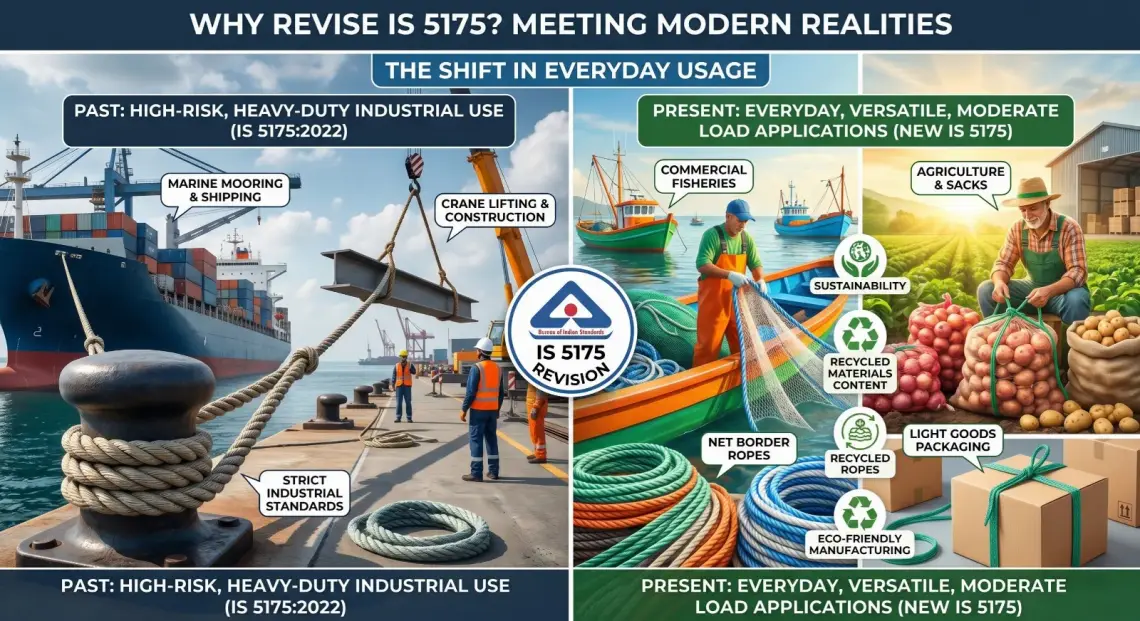
Because the everyday use-case of PP ropes has expanded, the BIS recognized that applying strict, heavy-industrial standards to agricultural or packaging ropes was no longer practical. Furthermore, with the global push toward eco-friendly manufacturing, the standard desperately needed to incorporate modern sustainability practices.
Major Changes Proposed in the Draft
During the technical presentation led by BIS Scientist-B Shri Amit Pandey, several game-changing modifications were proposed. Here is what manufacturers need to prepare for:
1. Introduction of New Rope Varieties
The draft introduces much-needed flexibility by bringing additional varieties of 3-strand and 4-strand Polypropylene ropes under the standard’s umbrella. This expansion ensures that manufacturers catering to niche markets (like agriculture and fisheries) can achieve ISI certification without being forced to meet the oversized specs of heavy industrial ropes.
2. The Green Shift: Using Recycled Materials
Perhaps the most highly anticipated update is the push for sustainability. For the first time, the revised standard proposes provisions that permit the use of recycled and "own-reprocessed" materials in rope manufacturing, provided they meet specific structural conditions. This is a massive win for manufacturers looking to reduce material costs and lower their carbon footprint, aligning the Indian rope industry with global circular-economy trends.
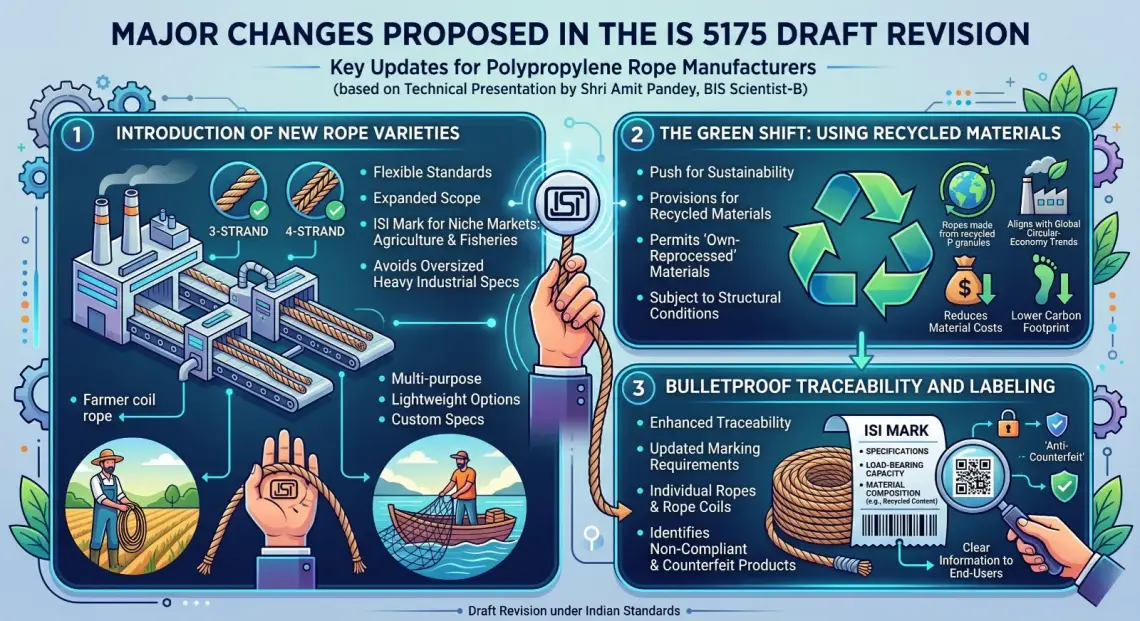
3. Bulletproof Traceability and Labeling
With the Ropes and Cordages QCO actively being enforced, identifying non-compliant or counterfeit products is a top priority for the government. The revised draft introduces highly updated marking and labeling requirements for both individual ropes and rope coils. This enhanced traceability ensures that end-users know exactly what load-bearing capacity and material composition they are purchasing.
Hot Topics from the Industry Debate
A standard is only as good as its practical application, which is why the stakeholder debate during the webinar was so intense. Industry veterans raised several critical points that the BIS technical committee (TXD 09) is currently reviewing for the final draft:
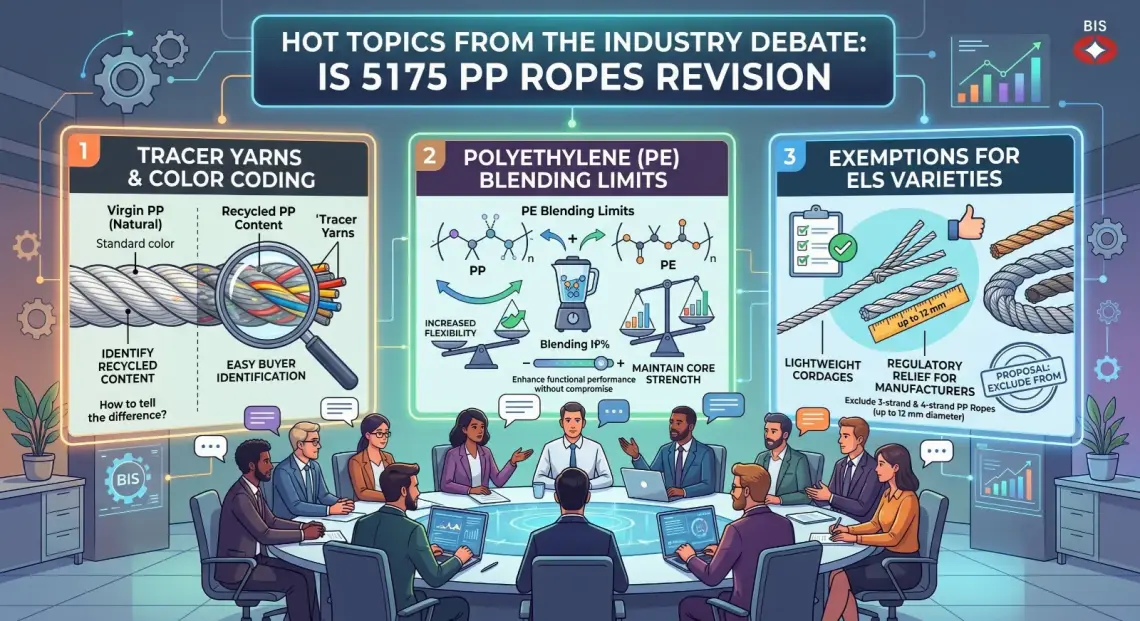
- Tracer Yarns and Color Coding: If manufacturers are now allowed to use recycled materials, how do buyers tell the difference between virgin PP ropes and recycled ones? The industry heavily debated the implementation of specific color-coding mechanisms and "Tracer Yarns" woven into the ropes to easily identify recycled content.
- Polyethylene (PE) Blending Limits: Pure polypropylene can sometimes lack the flexibility needed for certain applications. Stakeholders actively discussed the permissible percentage of Polyethylene that can be blended into PP ropes to enhance their functional performance and flexibility without compromising the core strength mandated by the standard.
- Exemptions for ELS Varieties: A major proposal on the table is the exclusion of 3-strand and 4-strand PP ropes of the ELS variety (up to 12 mm in diameter) from the strict scope of this standard, which could provide significant regulatory relief for manufacturers of very lightweight cordages.
Navigating the QCO and MSME Compliance
Beyond just the technical specifications, the webinar heavily focused on the business side of compliance. With the Ministry of Textiles finalizing mandatory QCO deadlines, obtaining your ISI mark is no longer optional.
Shri Harish Meena from the BIS Conformity Assessment department addressed the elephant in the room: the ease of doing business for MSMEs. The BIS is actively streamlining the licensing and renewal processes. From digitalizing standards development to offering surveillance flexibilities for smaller enterprises, the goal is to ensure that transitioning to the new IS 5175 standard does not bankrupt small manufacturers.
What Should Manufacturers Do Next?
The transition from IS 5175:2022 to the newly revised standard is approaching fast. The comments and suggestions from this webinar are currently being finalized by the technical committee, meaning the official publication of the revised standard is imminent.
For manufacturers and importers, the mandate is clear:
- Audit your supply chain: If you plan to use recycled or reprocessed materials, start tracking your sourcing to ensure it meets the proposed BIS traceability conditions.
- Review your labeling: Prepare to overhaul your packaging and coil labeling to meet the incoming stringent identification requirements.
- Get Expert Help: Navigating the intersection of a newly revised IS standard and an active Quality Control Order can be overwhelming.
At InstaCertify, we specialize in helping businesses seamlessly transition through these complex regulatory shifts. Whether you need help understanding how the new tracer yarn requirements affect your production line, or you need to expedite your BIS registration before the Ministry of Textiles enforces the final QCO deadlines, our expert team is here to help.