Electronics & Electrical
Out with the Old: Navigating the Switch from IS 13252 to IS/IEC 62368-1
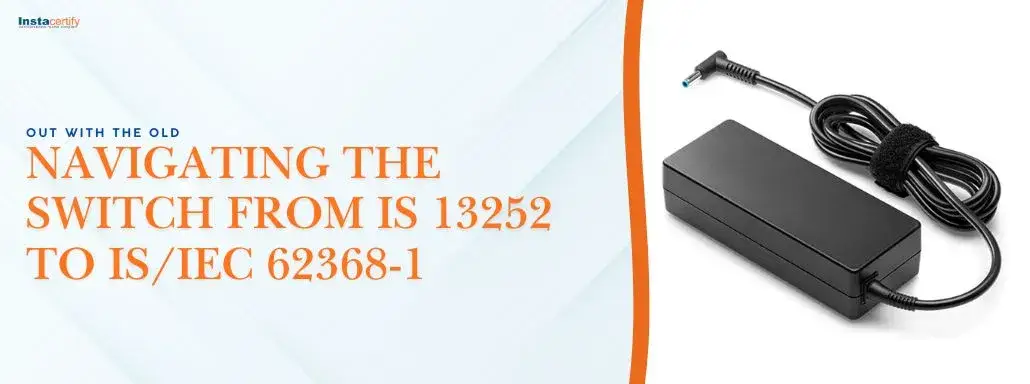
The Indian regulatory landscape is undergoing one of its most significant transformations to date. For manufacturers, importers, and global brands eyeing the booming Indian market, navigating the Bureau of Indian Standards (BIS) Compulsory Registration Scheme (CRS) has always been a critical step. However, 2026 is shaping up to be a monumental year of transition.
We are witnessing a massive overhaul in how electronics and IT gear are evaluated for safety. The old, familiar rulebooks are officially on their way out, making room for globally harmonized, modern frameworks. If your business manufactures, imports, or sells electronics in India, understanding these upcoming 2026 deadlines is no longer optional—it is a critical business imperative to prevent supply chain halts, customs rejections, and lost market share.
Here at Instacertify, we understand that keeping track of shifting government mandates can be overwhelming. To help you prepare your product roadmaps, we have broken down the latest, most critical updates regarding the shift to the new safety standards, strictly focusing on the definitive deadlines you need to mark on your calendar right now.
Big Shift: Understanding IS/IEC 62368-1:2023
For years, the electronics industry has relied on two primary safety standards in India: IS 13252 (for Information Technology equipment) and IS 616 (for Audio, Video, and similar electronic apparatus). These standards served their purpose well, but as technology has evolved—blurring the lines between a television, a computer, and a communication device—a new approach was desperately needed.
Enter IS/IEC 62368-1:2023.
This is not just a minor update; it is a fundamental shift in compliance philosophy. India is moving away from the prescriptive, older rules to this modern, hazard-based safety standard. But what does “hazard-based” actually mean for your products? Instead of merely checking off a list of required components or design elements, this standard focuses on identifying potential energy sources within a device (like electrical power or thermal heat) that could cause pain or injury, and ensuring that proper safeguards are built in to protect the end-user.
The most profound benefit of IS/IEC 62368-1:2023 is that it aligns India with the standards already being used in many other major international markets. This harmonization is incredible news for global trade, as it streamlines the design process for manufacturers selling across borders. However, the transition period requires meticulous planning.
Critical 2026 Deadlines: When Do Different Products Have to Switch?
The transition to new BIS standards is not happening overnight. The government has strategically staggered the rollout based on product categories. Below is the definitive timeline of exactly when different products must comply with the new rules.
1. AR/VR/MR Headsets and Extended Reality (XR) Devices
The Deadline: May 1, 2026
The world of Extended Reality (XR)—which encompasses Augmented Reality (AR), Virtual Reality (VR), and Mixed Reality (MR)—is exploding in popularity, moving from niche gaming peripherals to mainstream enterprise and consumer tools. Because these devices are worn directly on the body and close to the eyes, safety is paramount.
Manufacturers of XR devices have until May 1, 2026, to ensure their products meet the new IS/IEC 62368-1:2023 standard. This is a hard deadline. After this date, there will be absolutely no more selling or importing these devices into India under the old regulatory rules. Brands operating in the spatial computing space must begin their testing and certification processes immediately to avoid product launch delays in Q2 of 2026.
2. Home Refrigerators and Freezers
The Deadline: May 12, 2026
Moving beyond IT gear, heavy consumer appliances are also seeing major regulatory updates. For manufacturers of home refrigerators and freezers, the regulatory landscape is shifting to a newly revised standard: IS 17550 (Part 1):2024.
Compliance with this updated standard is mandatory no later than May 12, 2026. The Indian consumer durables market is highly competitive and relies on high-volume sales. Missing this mid-year deadline could mean entire shipments being stalled at ports during peak summer demand, making early compliance testing a massive competitive advantage.
3. Uninterruptible Power Supplies (UPS)
The Deadline: November 19, 2026
Uninterruptible Power Supplies (UPS) are the backbone of both consumer electronics setups and massive enterprise data centers. To ensure the safety and reliability of these critical power backup systems, the BIS has introduced the revised IS 16242 (Part 1):2025.
Brands manufacturing or importing UPS systems must fully update their certifications to this 2025 revision by November 19, 2026. Given the complex electrical engineering involved in UPS systems, the testing cycles can be lengthy. It is highly recommended to initiate the transition protocol well before the Q4 2026 deadline approaches.
4. Digital TV Receivers
The Deadline: Immediate (Enforcement Throughout 2026)
If you are dealing with Digital TV receivers, the runway has already run out. The grace period for these products officially ended in late 2025. Therefore, moving into 2026, full and strict compliance is an absolute requirement. Any digital TV receivers entering the Indian market or currently being manufactured must be fully aligned with the updated BIS mandates. Non-compliance here carries immediate risks of market removal or penalties.
5. Everyday Tech: Laptops, Phones, Speakers, and Monitors
The Deadline: November 1, 2028 (With 2026 Tweaks)
For the vast majority of traditional consumer electronics—including laptops, smartphones, Bluetooth speakers, desktop monitors, and similar everyday IT and AV gear—the regulatory bodies have provided a much longer runway. The absolute final switchover deadline to the new IS/IEC 62368-1:2023 standard is November 1, 2028.
This means that, for now, you can still use the old IS 13252 and IS 616 standards to certify and sell these products. However, do not let this 2028 deadline lull you into a false sense of security. The regulatory environment is dynamic. Even though the final mandatory switch is a few years away, many new product sub-types and specific regulatory tweaks are going to roll out step-by-step throughout 2026. Forward-thinking manufacturers are already adopting the new standard for their current product designs. Why? Because designing a product today to meet the hazard-based requirements of tomorrow ensures longevity in the market, prevents the need for costly mid-lifecycle redesigns, and future-proofs your entire product portfolio.
Why Proactive Compliance is Your Best Business Strategy
Regulatory transitions are often viewed as a hurdle, but they should be viewed as an opportunity. When massive shifts like the move to IS/IEC 62368-1:2023 occur, the certification laboratories experience massive bottlenecks. As deadlines like May 1st (for AR/VR) and May 12th (for refrigerators) approach, testing queues will inevitably stretch from weeks into months.
By treating 2026 as your year of proactive compliance, you protect your supply chain. Humanizing this process means understanding that behind every certification delay is a delayed product launch, frustrated retail partners, and impacted bottom lines.
Here is what you should be doing right now:
- Audit Your Portfolio: Identify which of your products fall under the 2026 deadlines (XR, UPS, Refrigerators) versus the 2028 deadlines (Laptops, Phones).
- Consult the Experts: Do not try to interpret hazard-based engineering requirements alone. Partner with regulatory experts who can map your current product schematics against the new IS/IEC 62368-1:2023 standard.
- Book Lab Time Early: Avoid the rush. Secure your testing slots at BIS-approved laboratories months in advance of your specific deadline.