Manufacturing Practices
Importing Sewing Machines to India? Here is Your BIS Certification Guide
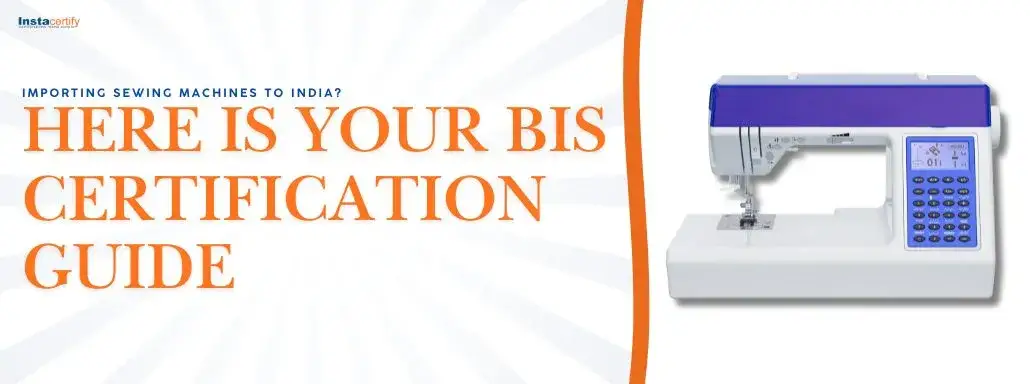
Whether you are a seasoned tailor, a boutique fashion designer, or a hobbyist crafting garments on the weekend, a sewing machine is the beating heart of the creative process. But behind every flawless stitch and smoothly running motor lies a rigorous system of quality and safety standards. In India, that standard is the BIS ISI Mark.
With the Indian government strictly enforcing quality control across consumer goods, securing Bureau of Indian Standards (BIS) certification for sewing machines is no longer just a badge of honor—it is a strict legal requirement.
If you are a manufacturer, importer, or seller of sewing machines, navigating the regulatory landscape can feel like untangling a massive knot of thread. This guide breaks down everything you need to know about the mandatory BIS ISI Mark for sewing machines, the latest regulatory updates, and how to seamlessly achieve compliance.
Understanding IS 15449 (Part 1): The Standard for Sewing Machines
Under the BIS framework, sewing machines—specifically Household Zig-Zag Sewing Machine Heads—are governed by the Indian Standard IS 15449 : Part 1 : 2004.
This comprehensive standard lays down the blueprint for what makes a sewing machine safe, durable, and efficient. It evaluates the machine across several critical parameters:
- Sewing Mechanism & Accuracy: Ensuring consistent stitch quality without skipped stitches or thread breakage.
- Durability: Testing the machine’s ability to withstand prolonged, heavy use over time.
- Lubrication: Verifying that the internal mechanisms are properly lubricated to prevent friction and overheating.
- Safety Requirements: Ensuring electrical components (if applicable) and moving parts do not pose a hazard to the user.
- Packaging and Accessories: Mandating that the product is safely packed and comes with the necessary service box accessories.
Any sewing machine head falling under this category must undergo rigorous testing in a BIS-approved laboratory to prove it meets these exact specifications.
Latest Update: Strict Enforcement of the Quality Control Order (QCO)
The landscape of product compliance in India is evolving rapidly. The Sewing Machines (Quality Control) Order, 2021, issued by the Department for Promotion of Industry and Internal Trade (DPIIT), officially brought sewing machines under the compulsory certification regime.
What is the latest update for 2025/2026?
As we move deeper into 2026, the Bureau of Indian Standards has significantly ramped up its market surveillance and enforcement of existing QCOs.
- Zero Tolerance for Non-Compliance: The grace periods for older inventory have expired. BIS officials are actively conducting market raids and border checks. Selling, manufacturing, or importing household zig-zag sewing machines without the ISI mark now leads to immediate seizure of goods, heavy financial penalties, and potential cancellation of business licenses.
- Tighter Import Norms: For foreign manufacturers, Customs authorities are strictly verifying BIS Registration before clearing consignments. Foreign manufacturers must obtain certification through the Foreign Manufacturers Certification Scheme (FMCS) before their products can enter Indian ports.
- Digital Integration: BIS has enhanced its digital tracking via the BIS Care App, allowing everyday consumers to scan the ISI mark and instantly verify the authenticity of a sewing machine. This consumer-led vigilance makes it impossible for uncertified or counterfeit products to survive in the market.
Why is BIS Certification Vital for Your Business?
Obtaining the ISI mark might seem like a bureaucratic hurdle, but it is actually a powerful business asset:
- Legal Unhindered Market Access: It is illegal to manufacture, import, or sell these specific sewing machines in India without the ISI mark. Certification ensures your business operations run smoothly without legal disruptions.
- Consumer Trust and Brand Equity: The ISI mark is instantly recognizable to the Indian consumer. It serves as a visual guarantee of safety, quality, and longevity, drastically improving brand loyalty and sales conversions.
- Competitive Advantage: Certified products automatically stand out against cheaper, unverified imports, allowing you to command a premium for guaranteed quality.
- Government Tenders: If you plan to supply sewing machines to government institutions, schools, or empowerment programs, having the ISI mark is a mandatory prerequisite for tender eligibility.
Step-by-Step BIS Certification Process
Achieving BIS certification involves a systematic procedure of documentation, factory audits, and rigorous laboratory testing. Here is how the journey unfolds:
1. Identify the Standard and Prepare
Confirm that your specific product model falls under IS 15449: Part 1. Ensure your manufacturing facility is equipped with the necessary in-house testing equipment required by BIS for routine quality checks.
2. Application Submission
Compile all required documents—including business licenses, manufacturing process flowcharts, machinery details, and a list of testing equipment—and submit the formal application to the Bureau of Indian Standards.
3. Factory Inspection by BIS
A designated BIS auditing officer will visit your manufacturing premises. They will inspect the production process, verify the competence of your quality control personnel, and check the calibration of your in-house testing equipment.
4. Sample Testing
During the factory audit, the BIS officer will draw random product samples. These samples are then sealed and sent to an independent, BIS-recognized laboratory to be tested against all the parameters of IS 15449.
5. Grant of License
If the factory audit is successful and the laboratory test report shows that the sample conforms to the standard, BIS will grant the license. You are then officially authorized to engrave or print the ISI mark on your sewing machines.
Essential Documents Required
To ensure a smooth application process, keep the following documents ready:
- Certificate of Incorporation / Business Registration.
- MSME/SSI certificate (if applicable).
- Detailed manufacturing process flowchart.
- List of manufacturing machinery and in-house testing equipment.
- Calibration certificates for the testing equipment.
- Details of the authorized signatory and quality control personnel.
- Layout plan of the factory premises.
Navigating Compliance with Ease
The road to BIS compliance involves highly technical documentation, coordination with government bodies, and strict adherence to testing protocols. A single error in the application or a failed lab test can result in massive delays and lost revenue.
At Instacertify, we eliminate the guesswork from regulatory compliance. Our team of expert consultants manages the entire BIS isi mark certification lifecycle for your sewing machines—from the initial documentation and pre-audit factory checks to coordinating with testing labs and ensuring the timely grant of your license. We ensure that your products hit the market swiftly, legally, and profitably.
Final Thoughts
The sewing machine industry is built on precision, and your approach to product compliance should be no different. With the government’s uncompromising stance on the Quality Control Order, obtaining the BIS ISI Mark under IS 15449 is the only way forward. By embracing these standards, you aren’t just complying with the law—you are committing to delivering excellence to every tailor and creator who relies on your product.
Ready to secure your BIS ISI Mark and bring your sewing machines to the Indian market? Get in touch with our experts at Instacertify today for a seamless, hassle-free certification experience.
Frequently asked questions
Is BIS certification mandatory when importing sewing machines to India?
Yes, BIS certification is absolutely mandatory for importing sewing machines to India. The government requires this to ensure imported products meet strict quality, safety, and durability benchmarks before they can legally enter the Indian commercial market.
Which Indian Standards (IS) apply to imported sewing machines?
The applicable standards depend on the specific machine type. Household sewing machines fall under IS 1610, zigzag sewing machine heads follow IS 15449, and sewing machine needles must strictly adhere to the IS 2181 quality guidelines.
What scheme must foreign manufacturers use for BIS certification?
Foreign manufacturers must apply through the Foreign Manufacturers Certification Scheme. Under this specific framework, officials evaluate your production facility abroad, conduct rigorous testing, and ensure full regulatory compliance before granting the required ISI mark license.
Do foreign companies need a local representative for BIS approval?
Yes, foreign manufacturers must appoint an Authorized Indian Representative. This designated local liaison handles all necessary documentation, coordinates directly with regulatory officials, and ensures your imported sewing machines maintain continuous compliance with mandatory Indian standards.
How long does it take to get BIS certification?
The complete certification process typically takes between thirty and ninety days. This exact timeline heavily depends on the specific machine type, lab testing requirements, scheduling of the factory inspection, and overall accuracy of your submitted documentation.
What happens if I import sewing machines without BIS certification?
Importing sewing machines without valid BIS certification is illegal. Indian Customs will immediately seize your shipment at the port. You will face heavy financial penalties, and the goods will be either confiscated, destroyed, or deported at your expense.
Are industrial sewing machines also covered under mandatory BIS certification?
Yes, industrial sewing machines are increasingly being brought under mandatory quality control orders. You must check the latest HSN codes against the Directorate General of Foreign Trade notifications to ensure your specific industrial model requires mandatory BIS compliance.
What primary documents are needed for the BIS certification process?
You must submit detailed factory layout plans, a list of manufacturing machinery, complete testing equipment details, product drawings, a letter appointing your Authorized Indian Representative, and comprehensive technical specifications for the exact sewing machine models being imported.