Manufacturing Practices
How to Start a Profitable Leather Belt Manufacturing Business in India
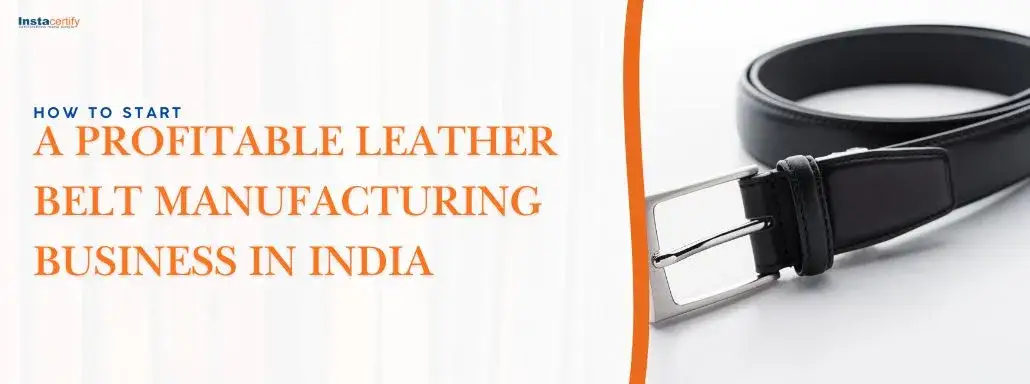
Have you ever looked at a premium leather belt and wondered about the journey it took to get to a retail store display? A leather belt is much more than just a functional accessory designed to hold up a pair of trousers; it is a global fashion staple, a symbol of corporate professionalism, and a highly lucrative business venture.
India currently contributes to a massive 13% of the world’s total leather production, standing as a titan in this industry alongside manufacturing giants like China and Italy. For aspiring entrepreneurs and investors, stepping into the leather belt manufacturing business presents an incredible opportunity. It perfectly blends traditional craftsmanship with modern, scalable manufacturing processes to meet an ever-growing global demand.
Market Potential: Why Start Now?
If you are observing the latest retail news and market trends, you will notice a distinct, unstoppable surge in the demand for customized and premium leather goods. The global appetite for genuine leather accessories is expanding at an impressive 8% to 9% annually. But why are belts leading the charge? Because a leather belt transcends mere utility. It is an essential component of formal corporate uniforms, an evergreen and elegant gifting option, and a cornerstone of both high-street and luxury fashion.
Currently, India’s robust leather sector employs over 4.4 million skilled artisans and industrial workers. For a new business owner, this means tapping into a rich, pre-existing ecosystem of skilled labor, highly accessible raw materials, and incredibly strong export networks. Markets in the United States, the United Kingdom, and Germany are constantly importing high-quality Indian leather products. Whether you plan to establish a boutique small-scale unit or a massive export-oriented factory, the international market is incredibly receptive.
Essential Raw Materials: The Foundation of Quality
You simply cannot build a premium fashion brand on subpar materials. The quality, durability, and visual appeal of your final product rely entirely on what goes into it. To start production, you will need to source high-grade leather—primarily full-grain, top-grain, or split leather, depending on your target price point.
However, a well-crafted belt requires a symphony of components. You will need industrial-grade nylon or polyester threads for durable, fray-resistant stitching. You must source premium dyes, edge paints, and colors to achieve that perfect, uniform finish. Robust metal alloy buckles are non-negotiable for longevity. Additionally, do not overlook the smaller, critical details like brass rivets, decorative studs, comfortable cloth lining materials, and high-quality packaging materials. Custom-branded boxes and elegant tags are what ultimately elevate the unboxing experience for your retail customers.
Setting Up the Machinery
While traditional, artisanal belts are often handcrafted, scaling a profitable business requires investing in modern machinery to ensure precision, rapid production speed, and strict standardization. A well-equipped modern manufacturing unit will typically house a few core pieces of equipment:
- Strap Cutting Machine: Used to cleanly and rapidly slice large, heavy leather hides into perfectly measured, uniform strips.
- Skiving and Splitting Machines: Essential for shaving down the thickness of the leather, ensuring the belt sits comfortably around the waist without feeling overly rigid.
- Hole Punching Machine: To accurately space and punch out the sizing holes in a fraction of a second.
- Edge Creasing and Finishing Machines: Designed to smooth out the rough, raw edges for a polished, premium aesthetic.
- Heavy-Duty Sewing Machines: Specialized industrial machines built specifically to stitch effortlessly through thick, tough leather materials.
Investing in automated or semi-automated machinery right out of the gate significantly boosts your daily production capacity and drastically minimizes costly human errors.
10-Step Manufacturing Process
Understanding the factory floor workflow is critical for maintaining strict quality control. The production process generally unfolds in these sequential steps:
- Selection and Inspection: Carefully examining the raw animal hide for natural blemishes, deep scars, or inconsistencies before processing.
- Strap Cutting: Feeding the approved leather through automated cutting machines to yield uniform, straight strips.
- Splitting and Skiving: Adjusting the internal thickness so the resulting belt is flexible, comfortable, and aesthetically pleasing.
- Edge Beveling: Rounding off the sharp, freshly cut edges to prevent fraying and ensure a smooth feel.
- Hole Punching: Creating standard, perfectly aligned sizing holes—usually standardizing at 5 to 7 holes per belt.
- Tip Shaping: Styling the tail end of the belt. Brands can choose a classic pointed tip, a soft rounded edge, or a modern, blunt square cut.
- Buckle Attachment: Securing the metal buckle using strong brass rivets, heavy-duty stitching, or a combination of both.
- Stitching and Embossing: Adding reinforced decorative borders or utilizing a heated press to emboss the brand’s custom logo directly into the leather grain.
- Quality Inspection: A rigorous, final manual check of the stitching integrity, leather finish, and buckle strength.
- Packaging: Carefully cleaning, rolling, and placing the finished belt into its branded retail packaging, ready to be shipped to retail outlets or exported overseas.
Navigating Crucial Licenses and Registrations
Setting up the physical machinery is only half the battle; navigating the corporate regulatory landscape is where many manufacturing businesses stumble. Operating a legally compliant manufacturing unit ensures you avoid heavy penalties, prevent sudden shutdowns, and build verifiable trust with major international buyers.
To get your business legally off the ground, start with standard Company Registration (such as a Private Limited or LLP structure) and GST Registration (note that leather belts generally attract a standard 12% GST rate in India). Because leather processing and industrial manufacturing can have significant environmental impacts, securing a Pollution Control Board NOC (Consent to Establish and Consent to Operate) is absolutely non-negotiable for keeping your factory doors open.
Furthermore, getting your MSME (Udyam) Registration is highly recommended, as it will open doors to various government subsidies, lower interest business loans, and trademark fee reductions. Speaking of intellectual property, securing a Trademark Registration is vital to protect your unique brand identity from counterfeiters. Finally, if you are eyeing the highly lucrative export market, obtaining an Import Export Code (IEC) and relevant ISO Certifications (like ISO 9001 for Quality Management) will prove to international buyers that your manufacturing processes adhere strictly to global quality and safety standards.
If you want a ISI Mark Certificate please visit: BIS ISI Mark
Conclusion
Starting a leather belt manufacturing business is an exciting journey that requires a keen eye for fashion details, a solid understanding of global market trends, and strict adherence to regulatory compliances. With the right mix of premium raw materials, efficient industrial machinery, and a legally compliant operational strategy, you can successfully turn raw leather into a highly profitable, scalable enterprise. The global fashion market is always searching for the next big name in premium accessories—are you ready to step up to the production line and deliver?