Did you Know
Indian Government Permits Sale of Chinese Goods: A Comprehensive Guide for Businesses
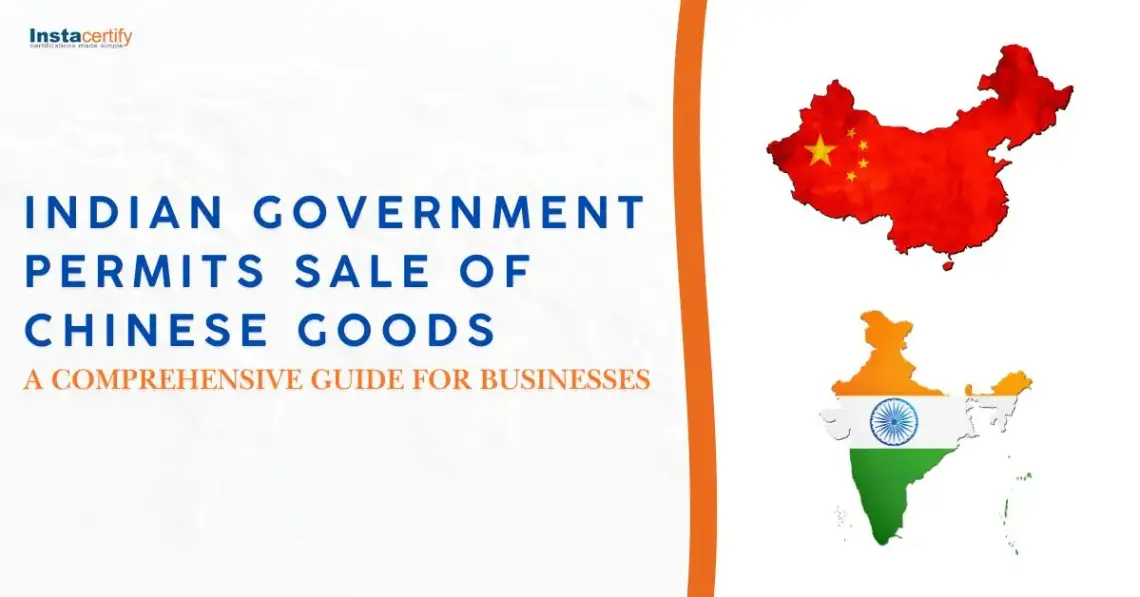
Over the past few years, trade between India and China has changed a lot. After tensions between India and China at the border in mid-2020, the Indian government took a number of strict steps that essentially stopped the import and sale of many Chinese goods. But new rules that came out in late 2024 and early 2025 show that these economic ties are starting to “thaw” strategically. The doors are opening again, but they aren’t swinging wide open for everyone. Instead, the Indian government has set up a structured, compliance-heavy framework to find a balance between the country’s economic requirements, national security, and quality control. For businesses, knowing these new guidelines can be the difference between a successful shipment and one that gets stopped at customs.
The Context: From a Five-Year Freeze to Strategic Re-entry
After the Galwan Valley hostilities in 2020, India put up non-tariff obstacles on Chinese goods. This included a “silent” hold on Bureau of Indian Standards (BIS) certificates for Chinese factories, which made it hard for electronics, shoes, and industrial raw materials to get to where they needed to go. By late 2025, the narrative shifted. Rising consumer demand, combined with recent GST rate reductions, created a vacuum that domestic production alone could not fill. Consequently, the Indian government has resumed issuing and renewing licenses for Chinese suppliers, prioritizing sectors like electronics, steel, and household essentials.
Is Sale of Chinese Goods Allowed? (The Current Status)
Yes, India does allow the selling of Chinese goods, but only under certain conditions. Many people thought that the “blanket ban” meant a complete ban on all products, although it was really just a bureaucratic bottleneck. The government has made it clear today that Chinese goods can be marketed legally in the domestic market as long as they follow:
- Mandatory Quality Standards (BIS/ISI)
- National Security Clearances (for specific sectors)
- Legal Metrology (Packaging & Labeling) Requirements
Core Requirement: BIS Certification
The Bureau of Indian Standards (BIS) is now the last line of defence for Chinese goods coming into India. Without a valid BIS licence, you can’t import or sell a product that is covered by a Quality Control Order (QCO). The Two Major Schemes:
- The Compulsory Registration Scheme (CRS) mostly applies to electrical and IT items such laptops, cell phones, LED lights, and adapters.
- The Foreign Manufacturers Certification Scheme (FMCS) covers things that aren’t electronic, like steel, chemicals, tyres, and appliances for the home.
What is different now that it’s 2025? Because of visa restrictions and diplomatic freezes, BIS officers weren’t able to do the required physical inspections of Chinese enterprises before. The government has started these inspections again, which lets new manufacturers get certified and old ones renew their licences that have already expired.
Legal Compliance and Documentation
To sell Chinese goods in India, you need more than simply a supplier; you need a strong legal system.
Step 1: Legal Entity Registration
To be the importer of record, you need to have a registered firm in India, like a Private Limited Company, LLP, or Partnership.
Step 2: Import-Export Code (IEC)
The DGFT gives out the IEC, which is a 10-digit code that everyone who does business across borders must have. Every year between April and June, it needs to be updated.
Step 3: Appointment of an Authorized Indian Representative (AIR)
To achieve BIS certification, Chinese companies must hire an AIR. The Indian government can contact this person or group in the area, and they are legally accountable for making sure the product meets Indian criteria.
Step 4: Legal Metrology Compliance
According to the Legal Metrology (Packaged Commodities) Rules, any Chinese product that comes in a package must have certain information on it:
- Country of Origin (Made in China)
- Name and address of the Importer
- Month and year of import/packing
- Maximum Retail Price (MRP) inclusive of all taxes
High-Focus Sectors and Opportunities
India is trying to improve its own manufacturing by using “plug-and-play” parts, which is speeding up the approval process in some industries:
- Electronics: Solar cells, lithium-ion batteries, and semiconductor parts. India wants to make the “final product,” but it still needs a lot of raw materials from China.
- Industrial Inputs: Steel materials and hefty rare-earth magnets, which are very important for electric vehicles (EVs) and renewable energy, are once again available.
- Consumer Goods: Toys and footwear, which are now under strict QCOs to ensure they are non-toxic and durable.
Challenges: Anti-Dumping Duties and Scrutiny
Businesses still have to deal with Anti-Dumping Duties (ADD) even if they have a valid BIS certificate. The Indian government often puts extra taxes on Chinese goods that are sold for “less than fair value” to safeguard small and medium-sized businesses (MSMEs) in India.
- More than 70% of ADD investigations in 2024–2025 were about Chinese goods, including as vacuum flasks, aluminium foil, and some chemicals.
- To find out the real “landed cost,” always compare your product’s HSN code to the most recent CBIC (Central Board of Indirect Taxes and Customs) notifications.
Strategic Recommendations for Indian Businesses
To successfully trade in Chinese goods in this new era, follow these best practices:
- Verify the Supplier’s BIS Status: Don’t believe anything a provider says. Check the BIS portal to make sure their licence is still valid and not “under suspension.”
- Ensure Transparency: Be honest about where you came from. Indian consumers and regulators are becoming more aware of “grey market” imports.
- Factor in Delays: The government is “fast-tracking” applications, but there is still a lot of work to do because of the backlog from the prior four years. Plan your inventory schedules based on this.
- Diversify Sourcing: Even if Chinese goods are cheap, the “China Plus One” strategy is still very important. In India, you can make items that add value by using Chinese parts.
Conclusion
The reopening of the Indian market to Chinese goods is a smart measure to help the economy recover and keep the supply chain stable. The “gold rush” that businesses experienced before 2020 is over. Now, there is a “compliance rush.” Indian importers may use high-quality Chinese manufacturing to satisfy the expanding needs of Indian consumers by putting BIS certification first, following Legal Metrology, and keeping up with trade tariffs.
Frequently asked questions
Why has the Indian government permitted the sale of Chinese goods?
The government approved these imports to stabilize domestic supply chains, address severe inventory shortages, and meet rising consumer demand. This decision follows easing diplomatic relations, ensuring local manufacturers can efficiently access essential raw materials and specialized electronic components.
What is the mandatory compliance requirement for importing Chinese products?
Every imported product must rigorously comply with Indian quality standards by securing mandatory Bureau of Indian Standards certification. This strict process involves thorough documentation, rigorous product testing, and mandatory physical factory inspections by official authorities before granting final clearance.
How will this policy change impact domestic businesses in India?
While domestic manufacturers will face increased competition from competitively priced imports, businesses will gain significant relief through stabilized supply chains. Retailers and importers who strictly follow quality regulations can expand their offerings while significantly reducing overall operational production costs.
Which specific sectors will benefit most from this policy update?
The electronics, automotive, and pharmaceutical sectors will see the most immediate benefits. These industries heavily rely on specialized Chinese machinery, raw materials, and active pharmaceutical ingredients to maintain their domestic production targets and overall global competitiveness.
What are the steps for foreign manufacturers to get certified?
Chinese manufacturers must appoint a local Authorized Indian Representative (AIR) to manage their compliance. The AIR applies to the Bureau of Indian Standards, submits product samples for local laboratory testing, and coordinates mandatory factory audits to obtain clearance.
What are the consequences of importing non-compliant Chinese goods?
Importing goods without proper Bureau of Indian Standards (BIS) certification leads to severe penalties. Authorities will immediately confiscate the non-compliant shipments at customs, impose heavy financial fines on the importer, and may initiate criminal proceedings against the business.
How long does it typically take to obtain BIS certification?
The certification process usually takes between three to six months to complete. This timeline heavily depends on the specific product category, laboratory testing schedules, and the availability of official auditors to conduct the mandatory factory inspection.
What does this policy shift mean for Indian consumers?
Consumers will likely experience a wider variety of accessible products and stabilized retail prices. The strict adherence to mandatory quality standards ensures that while these imported goods remain affordable, they also meet essential safety and performance benchmarks.