
Global Compliance
How to Register Your MAC Addresses With the IEEE for Global Compliance
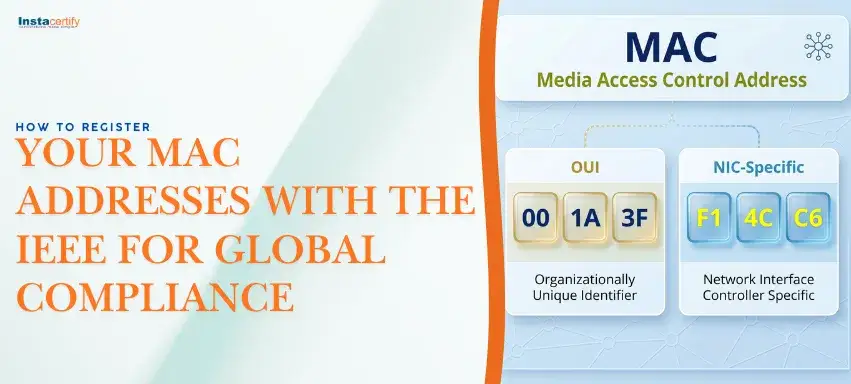
As the IoT and telecommunications manufacturing sectors rapidly expand, ensuring your hardware connects seamlessly to global networks is non-negotiable. Every internet-capable device—from smart home appliances to enterprise routers—requires a unique digital fingerprint to function correctly.
This fingerprint is the MAC (Media Access Control) address, and if your manufacturing pipeline is gearing up to launch a new connected product, securing your own registered MAC address block is a crucial technical and regulatory step.
Here is everything you need to know about MAC Address Registration and how to get your devices market-ready.
What is MAC Address Registration?
While an IP address changes depending on a device's location, a MAC address is permanently burned into the device's Network Interface Card (NIC) during manufacturing.
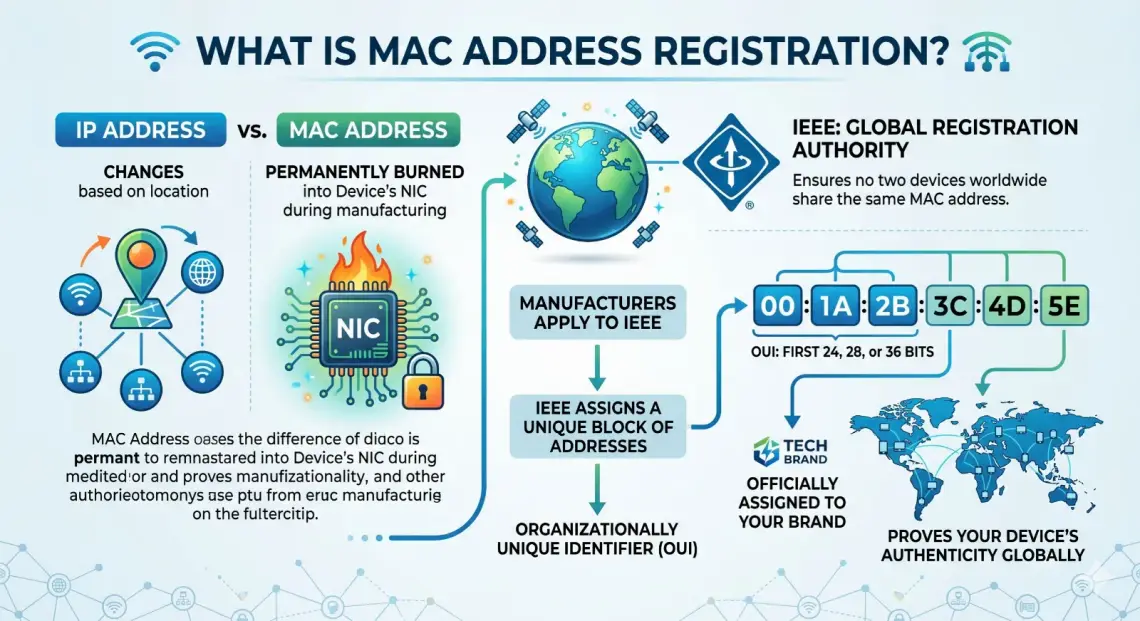
To ensure no two devices in the world share the same MAC address, the IEEE (Institute of Electrical and Electronics Engineers) acts as the global Registration Authority. Manufacturers must apply to the IEEE to purchase a unique block of addresses, known as an Organizationally Unique Identifier (OUI). This 24-bit, 28-bit, or 36-bit prefix is officially assigned to your brand, proving your device's authenticity globally.
Why is it Mandatory for Manufacturers?
Securing your own MAC address block isn't just a technical best practice; it is often a strict requirement for doing business.
- Global Uniqueness: Without a registered OUI, your devices will cause IP conflicts and network crashes, rendering them unusable on standard networks.
- Brand Identity: A registered MAC address allows network administrators and security protocols to instantly recognize your hardware by its brand name during network lookups.
- Prerequisite for Further Compliance: In many markets, having a valid MAC address structure is required before you can apply for crucial telecommunications and wireless certifications (such as WPC ETA and TEC MTCTE).
Two Types of Mac Addresses
Types Based on Data Transmission
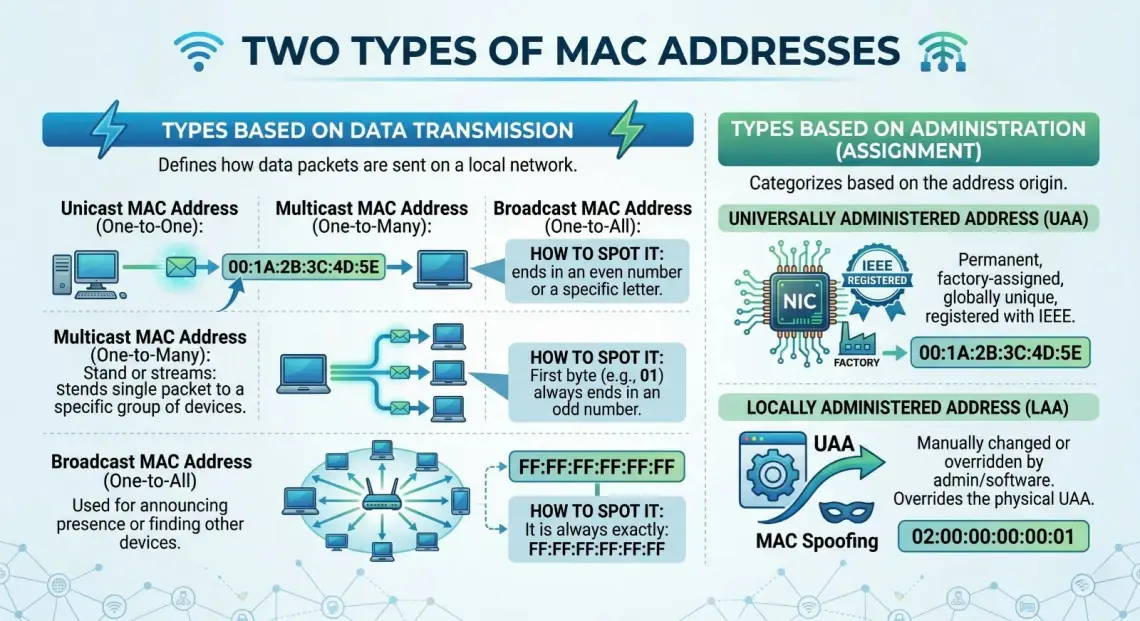
This is the most common way to classify MAC addresses. It defines how data packets are sent from one device to others on the local network.
Unicast MAC Address (One-to-One): This is the standard MAC address assigned to your specific device. When data is sent to a Unicast address, it is intended for that single, specific device and no other.
How to spot it: The first byte (the first two characters) of the address always ends in an even number or a specific letter.
Multicast MAC Address (One-to-Many): This address is used to send a single data packet to a specific group of devices simultaneously, rather than just one. It is highly efficient for things like streaming live video, where multiple computers need the exact same data at the same time.
How to spot it: The first byte always ends in an odd number.
Broadcast MAC Address (One-to-All): This is a special address used when a device needs to send a message to every single device on the local network at the same time. Routers often use this to announce their presence or find other devices.
How to spot it: It is always exactly the same:
Types Based on Administration (Assignment)
This categorizes MAC addresses based on where the address originated.
- Universally Administered Address (UAA): This is the permanent, "burned-in" address assigned by the manufacturer at the factory. It is registered with the IEEE to ensure it is globally unique.
- Locally Administered Address (LAA): This is a MAC address that has been manually changed or overridden by a network administrator or software. Even though the device has a physical UAA, the software tells the network to use the LAA instead. Changing this is often referred to as "MAC spoofing."
Navigating the Registration Process
Registering with the IEEE involves determining exactly how many addresses your production line will need to avoid overpaying or running out of identifiers. The IEEE offers three tiers of MAC address blocks:
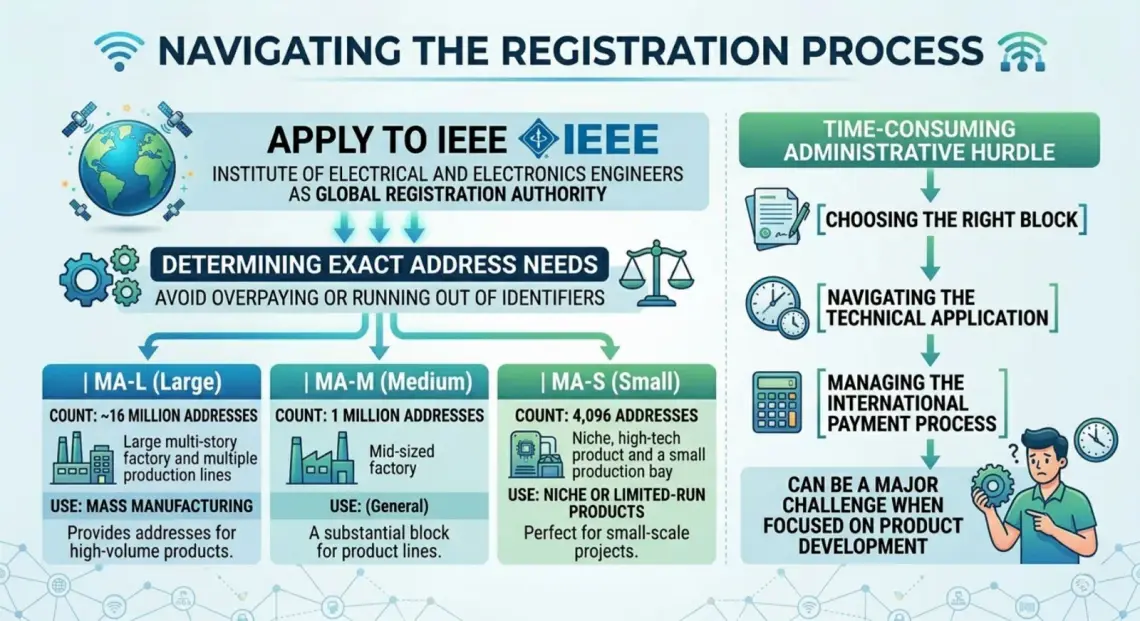
- MA-L (Large): Provides ~16 million addresses for mass manufacturing.
- MA-M (Medium): Provides exactly 1 million addresses.
- MA-S (Small): Provides 4,096 addresses for niche or limited-run products.
Choosing the right block, navigating the technical application, and managing the international payment process with the IEEE can be a time-consuming administrative hurdle when you are focused on product development.
Get Expert Assistance
You don't have to navigate the IEEE application alone. Our compliance experts handle the entire lifecycle of the application—from evaluating your production volume to securing your unique identifier directly from the global registry.
If you want expert MAC Registration services, please visit us today. We ensure your application is processed quickly and accurately so you can keep your manufacturing timelines on track.
Frequently asked questions
What exactly is MAC Address Registration?
MAC Address Registration is the process of applying to the IEEE to secure a unique Organizationally Unique Identifier (OUI) for your manufacturing brand. This guarantees your networking devices have globally recognized, conflict-free hardware addresses for seamless internet connectivity.
Why do manufacturers need to buy a MAC address block?
Manufacturers must purchase a block to ensure their devices function properly on global networks without causing IP conflicts. Having a registered identifier is also a mandatory prerequisite for passing crucial international telecommunications and wireless hardware certifications.
Can multiple devices share the same MAC address?
No, every single internet-capable device requires an entirely unique, permanent MAC address burned into its hardware. If two devices share the identical identifier, it will cause severe network routing errors and prevent both from connecting successfully.
What are the different sizes of IEEE address blocks?
The IEEE offers three distinct tiers tailored to your production volume. You can choose the Large tier (sixteen million addresses), Medium tier (one million addresses), or Small tier (four thousand addresses) depending on your manufacturing requirements.
How long does the IEEE registration process take?
The timeline can vary depending on application accuracy and international payment processing. Partnering with compliance experts ensures your technical paperwork is submitted flawlessly, significantly accelerating the approval process so your production line stays completely on schedule.
What is the difference between a MAC address and an IP address?
A MAC address is a permanent hardware identifier assigned during manufacturing, acting as your device's physical fingerprint. In contrast, an IP address is a temporary software address that changes depending on your current network location.
Can a MAC address be changed or modified later?
While the physical address burned into the hardware cannot be erased, software can temporarily override it. This practice, known as MAC spoofing, is frequently used by modern smartphones to protect user privacy on public Wi-Fi.
What happens if a manufacturer skips the IEEE registration?
Skipping registration leads to severe network conflicts, rendering the devices unusable. Furthermore, unregistered devices will fail mandatory regulatory certifications, preventing you from legally selling your hardware in most global and regional telecommunications markets.
