Manufacturing Practices
What Happens If You Ignore the New Aluminium QCO? (Fines, Raids & More)
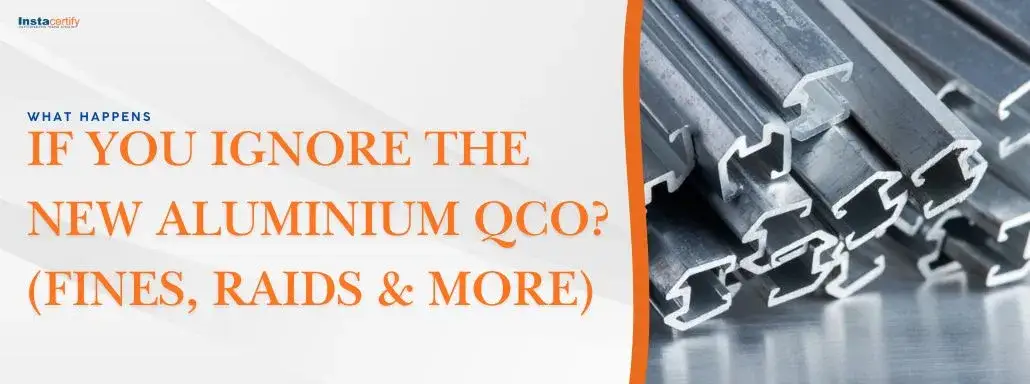
If you are a manufacturer, importer, or trader of aluminium products in India, the ground beneath your feet has just shifted. The days of voluntary compliance are over. The Ministry of Commerce and Industry, through the Department for Promotion of Industry and Internal Trade (DPIIT), has aggressively pushed the Aluminium and Aluminium Alloy Products (Quality Control) Order into full effect.
This isn’t just another bureaucratic circular; it is a fundamental overhaul of how aluminium is produced, traded, and consumed in one of the world’s fastest-growing economies. The message from the government is clear: No ISI Mark, No Market.
For stakeholders in the aluminium sector, this development triggers a race against time. Whether you produce basic sheets for roofing or high-grade alloys for aerospace, understanding this mandate is no longer optional—it is a survival skill.
Decoding the Mandate: What Just Happened?
The Government of India has been systematically tightening quality norms across sectors to curb the influx of substandard goods and boost the brand globally. The Aluminium and Aluminium Alloy Products (Quality Control) Order, 2025, is the latest enforcement in this series.
Under this order, a wide spectrum of aluminium products—ranging from general engineering sheets to electrical conductors—must now bear the Standard Mark (ISI Mark). This certification is granted under a license from the Bureau of Indian Standards (BIS) as per Scheme-I of Schedule-II of the BIS (Conformity Assessment) Regulations, 2018.
The Golden Rule:
You cannot manufacture, import, store, sell, or distribute these specific aluminium products without a valid BIS License. If your warehouse is stocked with non-certified material after the implementation date, you are legally vulnerable.
Critical Deadlines: Mark Your Calendar
The government has provided a phased implementation timeline to allow businesses to adapt. However, waiting until the last minute is a recipe for operational disaster.
Standard Implementation (Large & Medium Enterprises):
- Deadline: October 1, 2025
- Status: The clock is ticking. If you haven’t started the testing and application process, you are already behind.
Small Enterprises:
- Deadline: January 1, 2026
- Status: You have a slight buffer, but lab slots fill up fast as the general deadline approaches.
Micro Enterprises:
- Deadline: April 1, 2026
- Status: Use this extra time to streamline your quality control systems before the audit.
“Hit List”: Which Products Now Require an ISI Mark?
This QCO is comprehensive. It casts a wide net over the most commercially traded aluminium categories. Here is the breakdown of the key Indian Standards (IS) that are now mandatory:
1. General Engineering & Structural Use
- IS 733: Wrought Aluminium and Aluminium Alloy Bars, Rods, and Sections. (Crucial for construction and heavy engineering).
- IS 737: Wrought Aluminium and Aluminium Alloy Sheet and Strip. (One of the most widely used standards for general manufacturing).
- IS 1285: Extruded Round Tube and Hollow Sections.
- IS 734: Forging Stock and Forgings.
2. Industrial & Electrical Applications
- IS 5082: Wrought Aluminium and Aluminium Alloy Bars, Rods, Tubes, and Sections for Electrical Purposes. (Critical for the power sector).
- IS 5484: EC Grade Aluminium Rod produced by continuous casting and rolling.
- IS 2067: Wrought Aluminium Wire for Electrical Purposes.
3. Consumer & Packaging Goods
- IS 21: Wrought Aluminium and Aluminium Alloys for Manufacture of Utensils. (If you make cookware, this is your bible).
- IS 16011: Aluminium and Aluminium Alloy Foil for Pharmaceutical Packaging. (Pharma compliance is non-negotiable).
- IS 1254: Corrugated Aluminium Sheet. (widely used in roofing and cladding).
Note: This list is not exhaustive. The QCO covers 17+ standards, including specific alloys for aerospace and irrigation tubes.
Why Is The Government Doing This?
It’s easy to view this as just “more paperwork,” but the strategic intent is three-fold:
- Safety & Structural Integrity: Aluminium is the backbone of modern infrastructure. Substandard alloy sheets in a high-rise building or poor-quality electrical rods in a power grid can lead to catastrophic failures. The ISI mark is a guarantee of physical and chemical integrity.
- Blocking Dumping: India has long been a dumping ground for low-quality, cheap aluminium imports. This QCO acts as a non-tariff barrier, ensuring that foreign manufacturers must meet the same rigorous standards as domestic players if they want to sell to India.
- Global Competitiveness: For Indian manufacturers to become global exporters, the domestic baseline quality must rise. Mandatory certification forces the entire ecosystem to upgrade its technology and testing capabilities.
Consequences of Non-Compliance
Ignoring this order is not a risk; it’s a liability. The Bureau of Indian Standards Act, 2016, empowers authorities to take stringent action against violators.
- Stop Work Orders: BIS enforcement officers can raid factories and seal warehouses holding non-compliant stock.
- Criminal Liability: Violations can attract imprisonment of up to two years.
- Heavy Fines: Penalties s`ing: Large OEMs and government contractors will instantly drop suppliers who cannot provide a BIS license number.
Are There Any Exemptions?
Yes, but they are specific and strict:
- Export-Only: Products manufactured domestically solely for export are exempt. However, you must maintain strict segregation of export stock from domestic stock.
- R&D Imports: Manufacturers can import small quantities (up to 200 kg per year) strictly for research and development, provided these goods are not sold commercially and are eventually scrapped.
How to Get Certified: Your Roadmap to Compliance
Obtaining a BIS license is a rigorous process involving documentation, factory audits, and lab testing. Here is the simplified workflow:
- Identify Your Standard: Pinpoint the exact IS code relevant to your product grade.
- Internal Lab Setup: You must have an in-house laboratory capable of conducting the core tests defined in the standard.
- Application Submission: Submit the application with all legal and technical documents to the BIS portal.
- Factory Audit: A BIS officer will visit your factory to verify your manufacturing process and quality control capabilities.
- Sample Testing: Samples drawn during the audit are sent to third-party BIS-approved labs.
- Grant of License: Once the test reports clear and the audit is satisfactory, the license is granted.
Don’t Navigate This Alone
The aluminium industry is complex, with hundreds of alloy grades and temper conditions. A slight error in selecting the correct “Grouping Guidelines” during your application can lead to rejection or unnecessary testing costs.
This is where Instacertify steps in.
We don’t just fill out forms; we engineer your compliance strategy. From setting up your in-house lab to handling the BIS officer’s queries during the audit, we ensure you get your ISI Mark before the deadline hits.
Is your business ready for the October deadline? Don’t wait for the enforcement notice. Contact Instacertify today and secure your market position.