Indian Compliance
Tungsten Filament Lamps IS 418:2004: BIS Certification Guide for Manufacturers (2026)
Although LED lighting dominates today's market, tungsten filament lamps continue to serve several domestic, decorative, industrial, and specialized lighting applications. If you manufacture or import tungsten filament lamps in India, ensuring compliance with the applicable Indian Standard is essential for product quality, safety, and market acceptance.
The Bureau of Indian Standards (BIS) has established IS 418:2004 – Tungsten Filament Lamps for Domestic and Similar General Lighting Purposes to define the quality and performance requirements for these products. This standard helps manufacturers produce reliable lamps while giving consumers confidence in the products they purchase.
In this guide, we'll explain everything you need to know about IS 418:2004, including its scope, product requirements, testing parameters, BIS certification process, required documents, and the latest compliance considerations for 2026.
What is IS 418:2004?
IS 418:2004 is an Indian Standard issued by the Bureau of Indian Standards (BIS) for tungsten filament lamps intended for domestic and similar general lighting purposes. The standard specifies performance requirements, testing methods, dimensions, marking requirements, sampling procedures, and quality parameters that manufacturers must follow. It also aligns many technical provisions with international practices while referring safety requirements to a separate standard.
The primary objective of this standard is to ensure that every certified lamp delivers:
- Consistent illumination
- Reliable operating life
- Uniform quality
- Safe performance
- Standardized dimensions
- Proper electrical characteristics
What Are Tungsten Filament Lamps?
A tungsten filament lamp is an incandescent lamp that produces light by passing electric current through a thin tungsten wire (filament). As the filament heats to a very high temperature, it emits visible light through the principle of incandescence. These lamps are valued for instant illumination, warm light, and excellent color rendering.
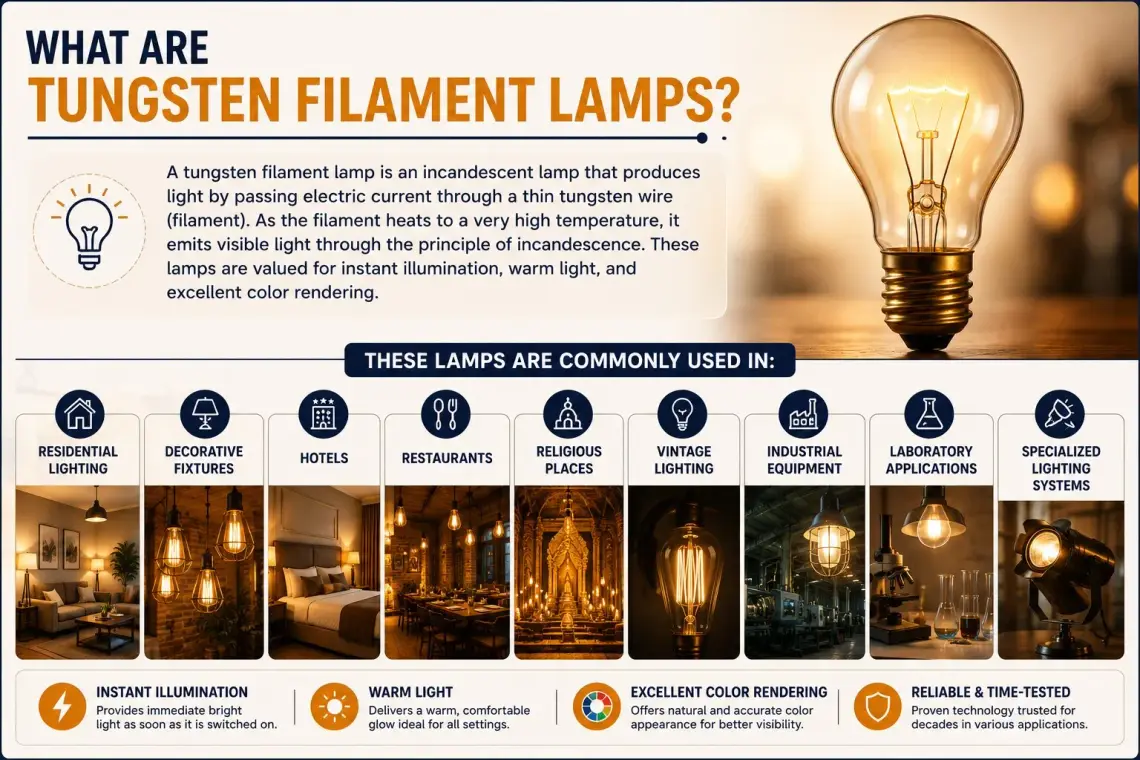
These lamps are commonly used in:
- Residential lighting
- Decorative fixtures
- Hotels
- Restaurants
- Religious places
- Vintage lighting
- Industrial equipment
- Laboratory applications
- Specialized lighting systems
Why is BIS Certification Important?
BIS certification demonstrates that a tungsten filament lamp complies with the applicable Indian Standard and has been evaluated for quality and performance.
Some major benefits include:
- Improves product credibility
- Builds customer trust
- Ensures consistent manufacturing quality
- Supports regulatory compliance
- Reduces product defects
- Enhances brand reputation
- Facilitates acceptance in the Indian market
For manufacturers, BIS certification also reflects a commitment to producing products that meet recognized national quality benchmarks.
Scope of IS 418:2004
The standard generally applies to tungsten filament lamps designed for domestic and similar general lighting purposes.
It covers important product characteristics such as:
- Rated voltage
- Rated wattage
- Bulb designation
- Cap type
- Lamp finish
- Initial luminous flux
- Lamp dimensions
- Operating characteristics
- Life requirements
- Performance testing
- Marking requirements
- Sampling procedures
Major Technical Requirements
Manufacturers must ensure that their lamps satisfy various technical requirements prescribed under IS 418:2004.
These include:
Lamp Dimensions
Every lamp must conform to specified dimensional requirements to ensure compatibility with standard lamp holders.
Rated Wattage
The actual wattage should remain within the permissible tolerance.
Rated Voltage
The lamp must perform properly at its declared operating voltage.
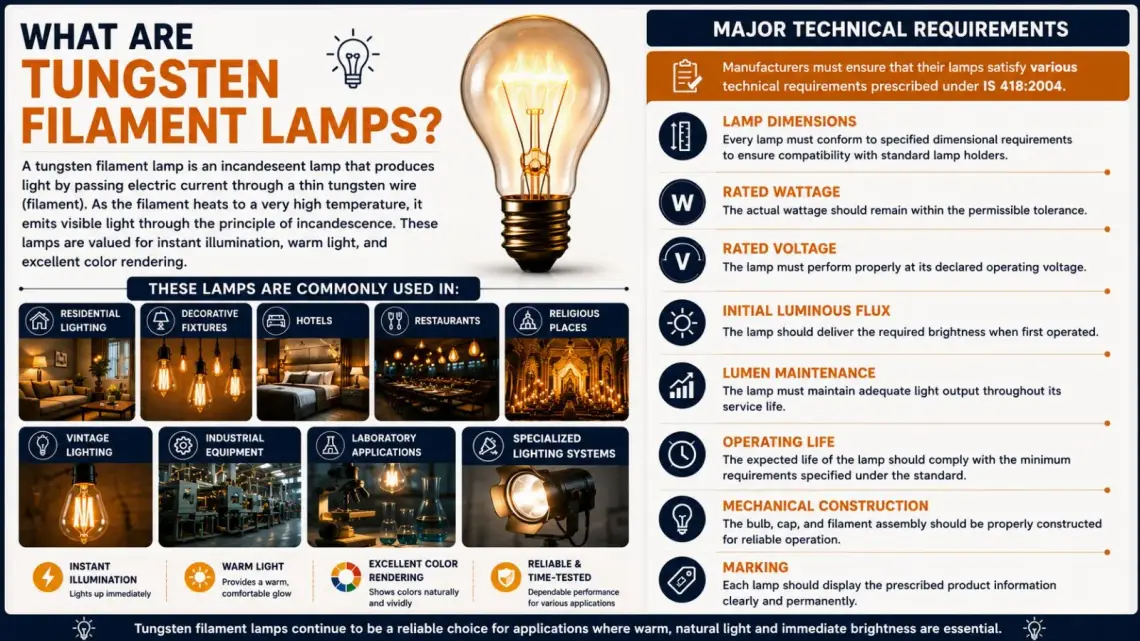
Initial Luminous Flux
The lamp should deliver the required brightness when first operated.
Lumen Maintenance
The lamp must maintain adequate light output throughout its service life.
Operating Life
The expected life of the lamp should comply with the minimum requirements specified under the standard.
Mechanical Construction
The bulb, cap, and filament assembly should be properly constructed for reliable operation.
Marking
Each lamp should display the prescribed product information clearly and permanently.
Important Tests Conducted Under IS 418:2004
During product evaluation, several laboratory tests may be conducted to verify compliance.
Common testing parameters include:
- Visual examination
- Marking verification
- Lamp dimensions
- Wattage test
- Initial luminous flux
- Lumen maintenance
- Lamp life test
- Interchangeability
- Electrical characteristics
- Performance verification
- Compliance testing
- Sampling inspection
Safety-related requirements for incandescent lamps are addressed through the associated safety standard referenced by BIS.
Common Challenges During Certification
Many manufacturers experience delays because of avoidable mistakes.
Some common issues include:
- Incorrect product specifications
- Incomplete documentation
- Improper product marking
- Test failures
- Calibration records not updated
- Manufacturing process inconsistencies
- Incorrect application details
- Delayed laboratory testing
Working with experienced compliance professionals can help streamline the certification process.
Latest Compliance Considerations for 2026
Manufacturers should pay close attention to evolving compliance expectations.
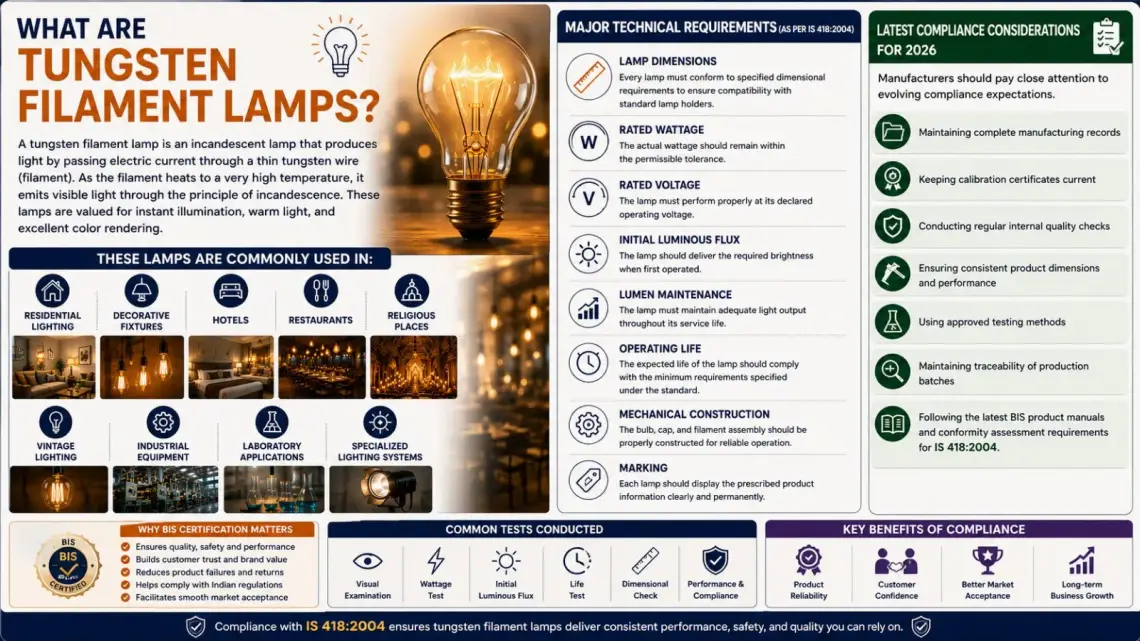
Some important considerations include:
- Maintaining complete manufacturing records
- Keeping calibration certificates current
- Conducting regular internal quality checks
- Ensuring consistent product dimensions and performance
- Using approved testing methods
- Maintaining traceability of production batches
- Following the latest BIS product manuals and conformity assessment requirements for IS 418:2004.
Frequently asked questions
What is IS 418:2004 for tungsten filament lamps?
IS 418:2004 is an Indian Standard published by the Bureau of Indian Standards (BIS) that specifies the performance requirements, testing methods, dimensions, marking, and quality criteria for tungsten filament lamps used for domestic and similar general lighting purposes. It helps manufacturers maintain consistent product quality and performance.
What are tungsten filament lamps?
Tungsten filament lamps are incandescent light bulbs that produce light by heating a thin tungsten wire through electric current. They are known for their warm illumination, excellent color rendering, instant brightness, and are commonly used in homes, decorative lighting, hotels, and specialized applications.
Why is BIS certification important for tungsten filament lamps?
BIS certification demonstrates that tungsten filament lamps comply with IS 418:2004 and meet the required quality and performance standards. It enhances customer confidence, improves product reliability, supports regulatory compliance, and strengthens a manufacturer's reputation in the Indian market.
What products are covered under IS 418:2004?
IS 418:2004 generally covers tungsten filament lamps intended for domestic and similar general lighting applications. The standard specifies requirements related to rated voltage, wattage, dimensions, luminous flux, lamp life, marking, and overall performance to ensure consistent product quality.
What tests are conducted under IS 418:2004?
Manufacturers may need to conduct various tests, including visual inspection, dimensional verification, rated wattage, luminous flux measurement, lamp life testing, electrical characteristics, marking verification, and performance evaluation to confirm that the lamps meet the applicable Indian Standard requirements.
What documents are required for BIS certification?
The certification process generally requires company registration documents, factory details, manufacturing licence, GST registration, product specifications, manufacturing process information, quality control records, testing equipment details, calibration certificates, factory layout, and other technical documents specified by BIS.
How long does the BIS certification process take?
The certification timeline depends on document readiness, laboratory testing, factory inspection, application review, and BIS evaluation. Delays may occur if documents are incomplete or product samples fail testing, so proper preparation can help streamline the overall certification process.
What are the latest compliance considerations for 2026?
Manufacturers should maintain complete production records, keep calibration certificates updated, perform regular quality inspections, ensure product consistency, use approved testing methods, maintain batch traceability, and follow the latest BIS product manuals and conformity assessment requirements applicable to IS 418:2004.