
Mandatory BIS Standard
BIS ISI Mark for Insect Killers IS 302 Part 1
- Minimum marking fee per year
- ₹31,000 – ₹1,55,000
- Micro to large firms
- Testing cost
- ₹15,000 – ₹2,75,000
- Based on 58 lab prices
- HSN code
- 8516
- Check the code with customs
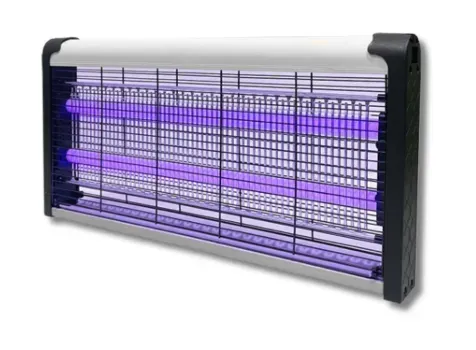
Electric insect killers are now strictly regulated in India to ensure consumer protection against electrical and fire hazards. It is mandatory to note that this product is covered in the BIS Certification scheme as per IS 302 Part 1, functioning alongside the specific criteria in Part 2/Sec 59. Under the latest Quality Control Order (QCO), all domestic manufacturers and foreign importers must secure the ISI mark before legally selling these devices in the Indian market. The rigorous BIS testing evaluates critical safety parameters like electrical insulation, grid safety, and thermal stability, ensuring full regulatory compliance and reliable operation for end-users.
Applicable Indian Standards for BIS ISI Mark for Insect Killers IS 302 Part 1
| IS number | Product | Testing cost |
|---|---|---|
| IS 302 (Part 1) : 2024 IEC 60335-1:2020 | Insect Killer | ₹15,000 – ₹2,75,00058 labs |
- Legal order: Household & Similar Electrical Appliances QCO (DPIIT), IS 302 (Part 1):2024 / IEC 60335-1:2020; enforcement due 01-10-2026
Minimum marking fee by firm size
You pay BIS a minimum marking fee every year. Micro, small and medium firms (with Udyam registration) pay less. BIS also works out a fee from the unit rate and your production. You pay whichever amount is higher.
- Large firms
- ₹1,55,000
- Medium firms
- ₹1,24,000
- Small firms
- ₹77,500
- Micro firms
- ₹31,000
Unit rate: ₹2 per piece
- Other BIS charges
- ₹9,000 for every ISI mark product: application charge ₹1,000 · licence fee ₹1,000 · audit charges ₹7,000
- Foreign manufacturers
- Get a detailed quote
- Our consulting fee
- Best-value quote – let’s talk
All prices are a guide only and do not include GST. Rules and dates can change, so check the latest notice before you apply. Ask us for an up-to-date quote.
Common questions
Is BIS certification mandatory for electric insect killers?
Yes, BIS certification is strictly mandatory for all electric insect killers in India. Under the latest Quality Control Order, manufacturers and importers must obtain the ISI mark as per IS 302 Part 1 to sell legally.
What standards apply to insect killers under the BIS scheme?
Electric insect killers are evaluated under the general safety guidelines of IS 302 Part 1, combined with the specific performance and safety requirements detailed in IS 302 Part 2/Sec 59 to ensure complete consumer protection.
What critical tests are performed during the BIS certification process?
Approved BIS laboratories conduct rigorous testing on these devices. Key parameters include checking electrical insulation, high-voltage grid safety, leakage current, and thermal stability to prevent electric shock and potential fire hazards during operation.
What is the compliance deadline for the Insect Killers QCO?
For general enterprises, mandatory compliance begins March 19, 2026. However, the government provides extensions for smaller businesses, pushing the deadline to January 1, 2027, for small enterprises and April 1, 2027, for micro-enterprises.
Does BIS certification for insect killers require EMI/EMC testing?
Yes, if the electric insect killer utilizes smart electronic control circuits or complex transformers, it must undergo strict EMI/EMC testing. This ensures its high-voltage components do not cause electromagnetic interference with other household electronics.
What is the main purpose of EMC testing for these devices?
EMC testing guarantees that the high-voltage grids and internal transformers operate efficiently without emitting harmful radio frequency interference. It also ensures the appliance remains entirely immune to external electromagnetic disruptions in residential environments.
How long does BIS certification take for foreign manufacturers?
The Foreign Manufacturers Certification Scheme (FMCS) process typically takes 4 to 6 months. However, this timeline can extend up to 9 months depending on document accuracy, factory inspection scheduling, and specific product testing requirements.
What factors can delay the FMCS certification process?
Common delays occur due to incomplete technical documentation, delayed responses to BIS queries, slow sample testing at Indian laboratories, or difficulties in scheduling the mandatory overseas factory inspection by BIS officials.
Related products
- BIS ISI Mark Certification for Air Purifier IS 302 Part 1Mandatory
- BIS ISI Mark for Air Fryer IS 302 Part 1Mandatory
- BIS ISI Mark for Dishwasher IS 302 Part 1Mandatory
- BIS ISI Mark for Electric Bean Slicer IS 302 Part 1Mandatory
- BIS ISI Mark for Electric Boilers IS 302 Part 1Mandatory
- BIS ISI Mark for Electric Can Openers IS 302 Part 1Mandatory
- BIS ISI Mark for Electric Coffee Makers IS 302 Part 1Mandatory
- BIS ISI Mark for Electric Egg Beater IS 302 Part 1Mandatory
Not sure which certification you need?
Send us the product name and the countries you sell in. A specialist replies with the standards that apply, the documents to prepare, the lab cost and the timeline. The assessment is free.
- The list of approvals comes to you in writing
- Get Started with the Right Expert
- Testing, certification and registrations handled by one team
Thank you — we've got it.
A certification specialist will contact you within 1 business day, usually much sooner.
Need it faster? WhatsApp us