
Mandatory BIS Standard
BIS ISI Mark for Liquid Heating Appliances IS 302 Part 1
- Minimum marking fee per year
- ₹31,000 – ₹1,55,000
- Micro to large firms
- Testing cost
- ₹15,000 – ₹2,75,000
- Based on 58 lab prices
- HSN code
- 8516
- Check the code with customs
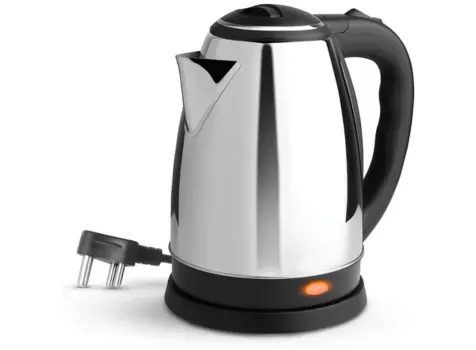
Ensuring the safety of household electrical goods is paramount, which is why securing the BIS ISI Mark Certification is mandatory for manufacturers. Specifically, appliances for heating liquids, such as electric kettles, coffee makers, and water boilers, must adhere to stringent quality guidelines to prevent electrical and thermal hazards. It is important to note that this product is covered in the BIS Certification scheme as per IS 302 Part 1. This certification builds consumer trust and serves as a legal requirement for the Indian market. Manufacturers must undergo rigorous product testing and comprehensive factory audits to obtain this crucial ISI mark.
Applicable Indian Standards for BIS ISI Mark for Liquid Heating Appliances IS 302 Part 1
| IS number | Product | Testing cost |
|---|---|---|
| IS 302 (Part 1) : 2024 IEC 60335-1:2020 | Appliances for Heating Liquids | ₹15,000 – ₹2,75,00058 labs |
- Legal order: Household & Similar Electrical Appliances QCO (DPIIT), IS 302 (Part 1):2024 / IEC 60335-1:2020; enforcement due 01-10-2026
Minimum marking fee by firm size
You pay BIS a minimum marking fee every year. Micro, small and medium firms (with Udyam registration) pay less. BIS also works out a fee from the unit rate and your production. You pay whichever amount is higher.
- Large firms
- ₹1,55,000
- Medium firms
- ₹1,24,000
- Small firms
- ₹77,500
- Micro firms
- ₹31,000
Unit rate: ₹2 per piece
- Other BIS charges
- ₹9,000 for every ISI mark product: application charge ₹1,000 · licence fee ₹1,000 · audit charges ₹7,000
- Foreign manufacturers
- Get a detailed quote
- Our consulting fee
- Best-value quote – let’s talk
All prices are a guide only and do not include GST. Rules and dates can change, so check the latest notice before you apply. Ask us for an up-to-date quote.
Common questions
Why Can’t I Sell Heating Appliances in India Without the ISI Mark?
It is illegal! The Indian government mandates that all heating liquid appliances must be covered in the BIS Certification scheme as per IS 302 Part 1 to prevent shocks and fires, guaranteeing absolute consumer safety.
Is the BIS ISI Mark a One-Time Fix or an Ongoing Promise?
It is a continuous commitment! Initially granted for one to two years, you must consistently maintain top-tier manufacturing standards and apply for timely renewals to keep your ISI mark active and your business growing.
What Happens If Manufacturers Skip the IS 302 Part 1 Rules?
Skipping compliance is a massive risk! Selling uncertified heating appliances attracts heavy financial penalties, product seizures, and potential imprisonment, completely destroying your brand reputation in the highly regulated and fast-growing Indian electronics market.
Do Electric Kettles and Heaters Actually Need EMI/EMC Testing?
Absolutely! Even simple heating appliances can emit electrical noise or suffer from voltage surges. EMI/EMC testing ensures they won't scramble your Wi-Fi or break down during power fluctuations, guaranteeing seamless and safe everyday operation.
Which Specific Indian Standards Cover EMC for These Gadgets?
Heating appliances must strictly comply with the IS 6873 (CISPR 14) series alongside IS 302. This covers both emissions (IS 6873-1) and immunity (IS 6873-2), ensuring they neither cause interference nor get damaged by external electrical noise.
Can a Basic, Non-Smart Immersion Heater Skip EMC Compliance?
No exceptions! While smart gadgets undergo stricter scrutiny, even basic heating elements with mechanical switches generate electrical transients when turning on and off. Every appliance under the IS 302 umbrella must prove EMC compatibility for approval.
How Long Does the Entire Certification Process Actually Take?
Expect a journey of 3 to 6 months! Securing your ISI mark under the Foreign Manufacturers Certification Scheme (FMCS) involves detailed document scrutiny, mandatory product testing in India, and international factory audits by BIS officials.
Will Indian Officials Actually Visit Our Overseas Factory?
Yes, they absolutely will! BIS inspectors travel globally to conduct strict on-site evaluations of your manufacturing processes, quality control systems, and in-house testing facilities before granting the highly coveted ISI mark.
Related products
- BIS ISI Mark Certification for Air Purifier IS 302 Part 1Mandatory
- BIS ISI Mark for Air Fryer IS 302 Part 1Mandatory
- BIS ISI Mark for Dishwasher IS 302 Part 1Mandatory
- BIS ISI Mark for Electric Bean Slicer IS 302 Part 1Mandatory
- BIS ISI Mark for Electric Boilers IS 302 Part 1Mandatory
- BIS ISI Mark for Electric Can Openers IS 302 Part 1Mandatory
- BIS ISI Mark for Electric Coffee Makers IS 302 Part 1Mandatory
- BIS ISI Mark for Electric Egg Beater IS 302 Part 1Mandatory
Not sure which certification you need?
Send us the product name and the countries you sell in. A specialist replies with the standards that apply, the documents to prepare, the lab cost and the timeline. The assessment is free.
- The list of approvals comes to you in writing
- Get Started with the Right Expert
- Testing, certification and registrations handled by one team
Thank you — we've got it.
A certification specialist will contact you within 1 business day, usually much sooner.
Need it faster? WhatsApp us