
Mandatory BIS Standard
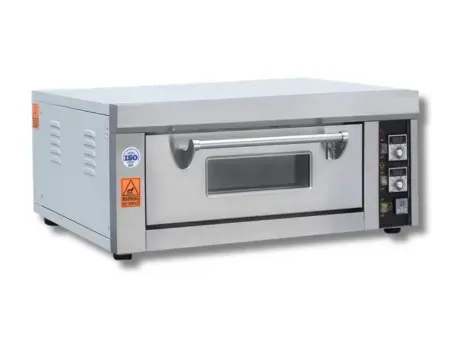
BIS ISI Mark for Single Walled Baking Ovens IS 302 Part 1
- Minimum marking fee per year
- ₹31,000 – ₹1,55,000
- Micro to large firms
- Testing cost
- ₹15,000 – ₹2,75,000
- Based on 58 lab prices
- HSN code
- 8516
- Check the code with customs
Single Walled Baking Ovens, essential in many domestic kitchens and small bakeries, are strictly regulated in India to guarantee consumer safety against electrical and thermal hazards. Crucially, this product is covered in the mandatory BIS Certification scheme as per IS 302 Part 1. Manufacturers and importers must acquire the ISI Mark before selling these appliances in the Indian market. Compliance requires rigorous laboratory testing for temperature rise, insulation resistance, and abnormal operation to prevent fire risks. Securing this certification ensures legal compliance under the latest Quality Control Orders while building vital consumer trust in your brand's safety and operational reliability.
Applicable Indian Standards for BIS ISI Mark for Single Walled Baking Ovens IS 302 Part 1
| IS number | Product | Testing cost |
|---|---|---|
| IS 302 (Part 1) : 2024 IEC 60335-1:2020 | Single Walled Baking Ovens | ₹15,000 – ₹2,75,00058 labs |
- Legal order: Household & Similar Electrical Appliances QCO (DPIIT), IS 302 (Part 1):2024 / IEC 60335-1:2020; enforcement due 01-10-2026
Minimum marking fee by firm size
You pay BIS a minimum marking fee every year. Micro, small and medium firms (with Udyam registration) pay less. BIS also works out a fee from the unit rate and your production. You pay whichever amount is higher.
- Large firms
- ₹1,55,000
- Medium firms
- ₹1,24,000
- Small firms
- ₹77,500
- Micro firms
- ₹31,000
Unit rate: ₹2 per piece
- Other BIS charges
- ₹9,000 for every ISI mark product: application charge ₹1,000 · licence fee ₹1,000 · audit charges ₹7,000
- Foreign manufacturers
- Get a detailed quote
- Our consulting fee
- Best-value quote – let’s talk
All prices are a guide only and do not include GST. Rules and dates can change, so check the latest notice before you apply. Ask us for an up-to-date quote.
Common questions
Is BIS certification mandatory for Single Walled Baking Ovens?
Yes, obtaining BIS certification is legally mandatory for these appliances. Manufacturers must test their products and affix the ISI mark before selling them in the Indian market to comply with government safety regulations.
Which Indian Standard applies to Single Walled Baking Ovens?
This product is officially covered under the mandatory BIS Certification scheme as per IS 302 Part 1. This crucial standard specifies comprehensive electrical and thermal safety requirements for household and commercial electrical heating appliances.
What key safety tests are required for this certification?
The standard mandates rigorous laboratory testing at BIS-approved facilities. Essential evaluations include checking temperature rise limits, verifying insulation resistance, measuring leakage current, and testing the appliance under abnormal operating conditions to prevent potential fire hazards.
What do EMI and EMC mean for baking ovens?
EMI (Electromagnetic Interference) refers to unwanted electrical noise generated by the oven. EMC (Electromagnetic Compatibility) ensures the oven functions properly without interfering with other nearby electronic devices, like Wi-Fi routers or radios, maintaining safe and smooth operation.
Are EMI and EMC tests mandatory for BIS certification?
Yes, depending on the oven's electronic components, BIS regulations often require mandatory EMI and EMC testing. This ensures the appliance complies with Indian safety standards, preventing electrical disruptions to other sensitive household and commercial equipment.
What specific EMI/EMC parameters are tested for baking ovens?
Testing laboratories primarily evaluate radiated and conducted emissions. They verify that the oven's internal electrical switches, thermostats, or digital controllers do not emit excessive electromagnetic noise that could negatively impact the power grid or surrounding electronics.
Does the timeline include the mandatory factory inspection?
Yes, the estimated four to six month timeframe includes the mandatory on-site audit. A designated BIS officer must travel to your overseas manufacturing facility to verify production processes, quality control systems, and in-house laboratory testing capabilities.
How long is the initial FMCS license valid once granted?
Once the rigorous testing and audits are successfully completed, the initial BIS FMCS license is granted for one year. Manufacturers can subsequently renew their license annually by maintaining compliance and submitting the required renewal documents and fees.
Related products
- BIS ISI Mark Certification for Air Purifier IS 302 Part 1Mandatory
- BIS ISI Mark for Air Fryer IS 302 Part 1Mandatory
- BIS ISI Mark for Dishwasher IS 302 Part 1Mandatory
- BIS ISI Mark for Electric Bean Slicer IS 302 Part 1Mandatory
- BIS ISI Mark for Electric Boilers IS 302 Part 1Mandatory
- BIS ISI Mark for Electric Can Openers IS 302 Part 1Mandatory
- BIS ISI Mark for Electric Coffee Makers IS 302 Part 1Mandatory
- BIS ISI Mark for Electric Egg Beater IS 302 Part 1Mandatory
Not sure which certification you need?
Send us the product name and the countries you sell in. A specialist replies with the standards that apply, the documents to prepare, the lab cost and the timeline. The assessment is free.
- The list of approvals comes to you in writing
- Get Started with the Right Expert
- Testing, certification and registrations handled by one team
Thank you — we've got it.
A certification specialist will contact you within 1 business day, usually much sooner.
Need it faster? WhatsApp us