Chemicals
India Lifts Quality Controls on Acetic Acid, Methanol & Aniline: Impact on Chemical Sector
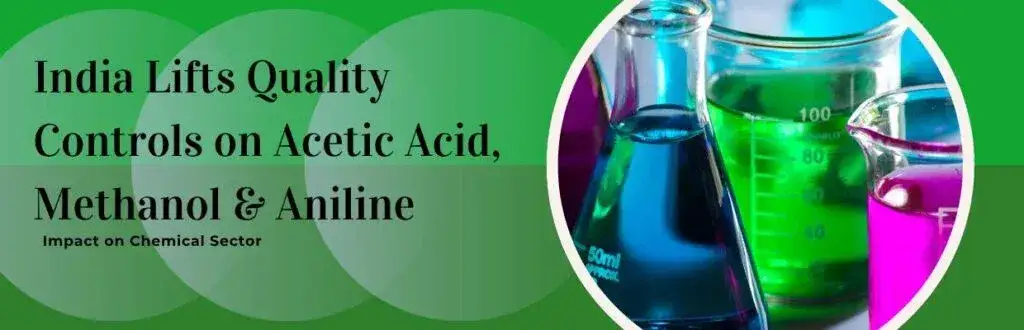
The Government of India has officially withdrawn Quality Control Orders (QCOs) for three key industrial chemicals — acetic acid, methanol, and aniline. This decision means manufacturers and importers are no longer required to obtain BIS certification or affix the Standard Mark (ISI mark) for these chemicals before selling them in India. The withdrawal aims to simplify compliance, reduce costs, and promote ease of doing business in the chemical sector — a key component of India’s “Make in India” initiative.
These chemicals are critical inputs for several industries, including textiles, pharmaceuticals, agrochemicals, paints, and plastics.
What Were These Quality Control Orders?
A Quality Control Order (QCO) is a legal requirement under the Bureau of Indian Standards (BIS) Act, 2016. When a QCO is in force, it makes the related Indian Standard (IS) mandatory. All manufacturers and importers must:- Obtain a valid BIS licence.
- Ensure product quality as per the prescribed IS standard.
- Display the BIS Standard Mark on the product.
Why Did the Government Withdraw These QCOs?
The Ministry of Chemicals and Fertilizers decided to withdraw the QCOs after consultation with the Bureau of Indian Standards (BIS), citing “public interest.” The key reasons include:Ease of Doing Business:
- Removing these QCOs reduces regulatory hurdles for domestic manufacturers and importers.
Industry Feedback:
- Many small and medium-scale companies found BIS certification costly and time-consuming.
Supply Chain Flexibility:
- Without mandatory certification, companies can source raw materials more efficiently.
Streamlining Regulations:
- The decision supports the government’s ongoing effort to simplify industrial regulations.
What Does This Mean for the Chemical Industry?
The move is expected to have a major impact on both producers and downstream industries that rely on these chemicals.Benefits:
Reduced Compliance Costs:
No more BIS testing or license fees for these chemicals.Faster Market Access:
Companies can produce or import without long certification delays.Encouragement for Investment:
Simplified regulations may attract new investors to the Indian chemical sector.Possible Risks:
Quality Variations:
Without BIS oversight, product quality may vary between suppliers.Import Pressure:
Easier imports might increase competition for domestic producers.Need for Self-Regulation:
Companies must ensure internal quality control to maintain trust and export standards.Key Chemicals Affected
| Chemical Name | Previous QCO Reference | Primary Applications |
| Acetic Acid | QCO – 2019 | Used in food, textiles, and pharmaceuticals |
| Methanol | QCO – 2019 | Used in fuels, plastics, and formaldehyde production |
| Aniline | QCO – 2019 | Used in dyes, rubber processing, and agrochemicals |