Did you Know
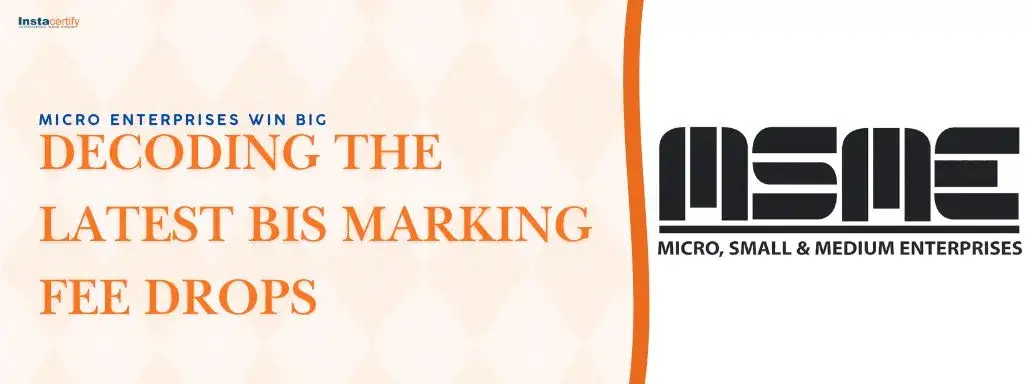
Micro Enterprises Win Big: Decoding the Latest BIS Marking Fee Drops
If you are a business owner in India, you already know that maintaining the highest standards of quality is non-negotiable. However, the path to acquiring the necessary regulatory certifications can often feel like an uphill financial battle. This is especially true for smaller businesses, budding startups, and women entrepreneurs who are just trying to find their footing in a highly competitive market.
But there is some fantastic news fresh off the press that is going to completely change the game!
On March 17, 2026, the Bureau of Indian Standards (BIS) released a landmark notification that is sending waves of relief across the manufacturing and service sectors. In a major move to promote inclusiveness and ease of doing business, the BIS has officially amended the Conformity Assessment Regulations, 2018. The result? Massive, unprecedented concessions on the annual minimum marking fees for several types of enterprises.
Here at InstaCertify, we know how critical it is to stay ahead of these regulatory shifts. We constantly guide businesses through complex compliance labyrinths—whether it’s securing your BIS, navigating Legal Metrology (LMPC) rules, or getting FSSAI clearances. So, we have thoroughly analyzed this latest notification to bring you a comprehensive, humanized breakdown of exactly what this means for your business, your budget, and your future.
Big News Unpacked: What Exactly Has Changed?
For years, the cost of compliance has been a significant hurdle for smaller enterprises. Getting that coveted ISI mark or maintaining BIS certification requires an annual marking fee. While absolutely necessary for consumer safety and quality assurance, these fees can take a big bite out of a small company’s operational budget.
Recognizing this burden, the government has stepped in. The new amendment specifically targets Scheme-I of Schedule-II under the BIS Conformity Assessment Regulations. By slashing these mandatory fees, the government is essentially putting vital capital back into the pockets of innovators, creators, and local manufacturers.
What makes this announcement even more critical is its long-term validity. These fee reductions are not just a short-term promotional gimmick. They are effective immediately (as of March 17, 2026) and will remain valid until May 31, 2029. This gives your business a solid three-year window to scale up, certify your products, and establish dominance in both domestic and international markets without the crushing weight of heavy compliance fees.
Who Gets What? A Detailed Breakdown of the Fee Concessions
Let’s get into the numbers, because this is where the real excitement lies. The BIS has structured these concessions very thoughtfully, ensuring that the businesses that need the most help receive the maximum benefits.
1. Micro Enterprises: A Massive 80% Reduction
If your business falls under the classification of a Micro Enterprise, you are in for a treat. The BIS is offering a staggering 80% decrease in the annual minimum marking fee compared to what large-scale businesses pay. This is a monumental shift. For a micro-manufacturer operating on thin margins, an 80% reduction means that funds previously locked up in regulatory fees can now be redirected toward product development, marketing, or hiring. It democratizes the certification process, ensuring that even the smallest players can proudly display the ISI mark on their products.
2. Startups: Fuelling Innovation with an 80% Cut
India is a global hub for startups, and the government wants to keep that momentum going. In a bid to encourage innovation and help new businesses enter regulated markets without financial intimidation, officially recognized startups will also receive an 80% concession on their marking fees. If you are developing a disruptive new electronic device or an innovative consumer product that requires mandatory BIS registration, this fee cut drastically lowers your barrier to entry.
3. Small Enterprises: A Solid 50% Discount
For businesses that have graduated from the ‘Micro’ category but are still scaling, the BIS is offering a generous 50% reduction in the annual marking fee. Small businesses often face the “middle-child syndrome”—they are too big for micro-benefits but not large enough to absorb heavy corporate costs. This 50% cut serves as a perfect stepping stone, allowing these growing companies to maintain their BIS standards consistently as they expand their operational footprint.
4. Women Entrepreneurs: Ultimate Empowerment with an Extra 10%
In one of the most progressive moves in this notification, the BIS has introduced an additional incentive for women-led enterprises. Women entrepreneurs will receive an extra 10% concession on top of whatever category they already fall into. For instance, if a woman runs a micro-enterprise, she will receive the base 80% concession plus an additional 10% off. This brilliant initiative goes beyond just business; it actively promotes women’s entrepreneurship and fosters inclusive industrial growth across the nation.
Why This is a Game-Changer for the Indian Market
This notification is much more than a simple fee restructure; it is a highly strategic economic maneuver. Here is why it matters on a macroeconomic scale:
- Aligning with National Visions: This move flawlessly aligns with the government’s broader initiatives like Make in India, Startup India, and the MSME Development Act. By making it cheaper to get certified, the government is heavily incentivizing local manufacturing.
- Boosting Export Competitiveness: To compete on the global stage, Indian products must meet rigorous quality standards. The BIS certification is a globally recognized testament to that quality. By lowering the cost of this certification, more businesses can afford to get their products certified, instantly making their goods more appealing to international buyers.
- Elevating Overall Market Quality: Often, unregistered or substandard products flood the market simply because the manufacturers cannot afford the certification process. By removing the financial barrier, the BIS is encouraging these manufacturers to step out of the shadows, improve their quality to meet BIS standards, and get legally certified.
How This Impacts Your Day-to-Day Operations
As a business owner, you might be wondering how to translate this news into actionable steps. If you are currently applying for, or looking to renew, a BIS certification under Scheme-I, you will directly benefit from lower operational costs starting right now.
However, dealing with government portals, understanding the exact classification of your business, and ensuring you have the flawless documentation required to prove you are a startup or a woman-led enterprise can still be daunting. The paperwork alone can often deter businesses from claiming the benefits they rightfully deserve.