Did you Know
How to Ensure Regulatory Compliance for Your Tissue Paper Factory
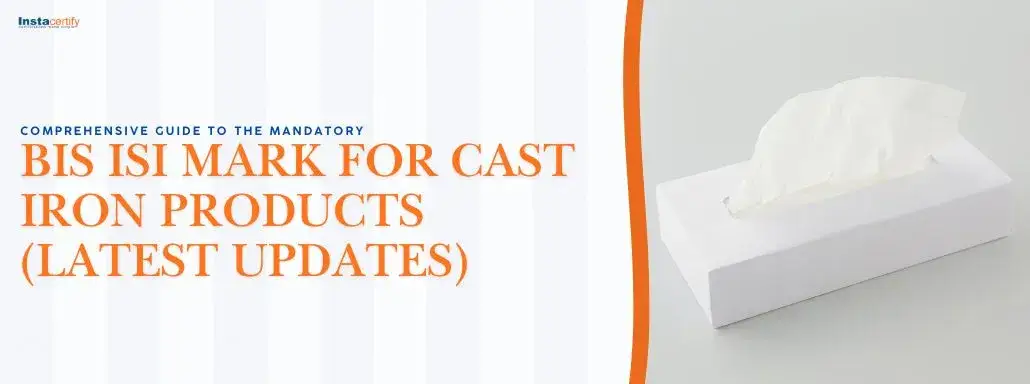
Tissue paper is now a common part of homes, hotels, restaurants, offices, hospitals, retail stores and many other everyday environments. Facial tissues, toilet rolls, paper napkins, kitchen towels and other tissue products may look simple, but manufacturers and businesses still need to pay attention to product specifications, testing, packaging declarations, environmental obligations and customer-specific requirements.
For tissue paper businesses in India, compliance should not be treated as a single certificate. The applicable requirements depend on the type of tissue product, its intended use, packaging method, manufacturing activity and whether the product is sold domestically or exported.
This guide explains the important compliance considerations for tissue paper manufacturers, packers, importers and brands, with the latest 2025–2026 changes taken into account.
Why Is Tissue Paper Compliance Important?
Compliance helps a manufacturer demonstrate that its product is manufactured against defined technical requirements and that its packaging and business operations follow applicable Indian regulations.
For tissue products, compliance can involve several layers. Product quality may need to be evaluated against an applicable Indian Standard, retail packaging may need to follow the Legal Metrology (Packaged Commodities) Rules, and plastic packaging can create separate Extended Producer Responsibility obligations. Additional requirements may apply when a product is intended for direct food contact or when it is manufactured, imported or exported for a regulated market.
A practical compliance programme therefore starts with product identification and regulatory mapping, rather than simply applying for a generic certificate.
Latest BIS Update for Tissue Paper in India
One of the most important recent changes is the revision of India's tissue-paper standards.
BIS established IS 14661 (Part 2):2025 — Tissue Paper and Tissue Products — Part 2: Specification, while the earlier IS 14661:1999 — Toilet Paper — Specification was scheduled for withdrawal on 29 June 2026. Therefore, businesses referring to the old 1999 toilet-paper standard should review their technical documentation and specifications against the newer 2025 framework.
The updated framework is supported by a series of testing standards. BIS records the following 2025 documents for tissue paper and tissue products:
IS 14661 (Part 1):2025 covers vocabulary and terminology.
IS 14661 (Part 3/Sec 1):2025 covers determination of thickness, bulking thickness and apparent bulk density.
IS 14661 (Part 3/Sec 2):2025 covers tensile strength, stretch at maximum force and tensile energy absorption.
IS 14661 (Part 3/Sec 3):2025 covers wet tensile strength.
IS 14661 (Part 3/Sec 4):2025 covers grammage.
IS 14661 (Part 3/Sec 5):2025 covers brightness and colour measurements.
IS 14661 (Part 3/Sec 6):2025 covers water-absorption time and water-absorption capacity.
IS 14661 (Part 3/Sec 7):2025 covers disintegration in water.
This is a useful development for manufacturers because compliance can now be approached through a more clearly structured family of product and test standards.
Types of Tissue Paper Products You Can Manufacture
Before buying machinery or leasing a factory space, you need to decide what exactly you want to produce. The tissue paper industry is diverse, and specializing in a specific niche can help you capture the market faster:
- Facial Tissues: Ultra-soft, highly absorbent tissues used for personal skincare and cosmetics. These require premium quality pulp.
- Paper Napkins: The most common variety, heavily utilized in restaurants, cafes, and catering events.
- Toilet Paper Rolls: A rapidly growing segment in urban Indian households and commercial spaces.
- Paper Towels: Thicker and more durable, designed for heavy-duty cleaning in kitchens and hospitals.
Step-by-Step Process to Set Up Your Manufacturing Unit
Starting a factory requires a strategic approach. Here is the blueprint to setting up your operations smoothly:
1. Market Research and Business Planning
Start by mapping out your local market. Who are your biggest potential buyers? Are there hundreds of restaurants in your vicinity, or are you targeting wholesale suppliers? Draft a solid business plan that outlines your production capacity, target audience, pricing strategy, and initial budget.
2. Location and Infrastructure
You do not need a massive industrial complex to start. A well-ventilated space of around 1000 to 1500 square feet is generally sufficient for a small-scale setup. Ensure the location has a seamless three-phase electricity supply, continuous water access, and good road connectivity for the easy transport of raw materials and finished goods.
3. Sourcing Raw Materials
The quality of your final product depends entirely on your raw materials. The primary ingredient you will need is Jumbo Tissue Paper Rolls, which are available in various GSM (Grams per Square Meter) depending on whether you are making soft facial tissues or thick paper towels. You will also need core pipes (for rolls), non-toxic dyes (if you are printing logos or colors), and packaging materials like cellophane or cardboard boxes.
4. Investing in the Right Machinery
Your machinery is the heart of your business. Depending on your budget, you can opt for semi-automatic or fully automatic machines. A standard setup requires:
- Band Saw Cutter: For cutting the jumbo rolls into smaller, manageable sizes.
- Embossing and Folding Machine: To give the tissue its texture and fold it perfectly.
- Printing Unit: If you plan to offer customized napkins for corporate clients or restaurants.
- Packaging Machine: To seal the final products hygienically.
Tissue Products Intended for Food Contact
Some paper-based products are used in environments where direct contact with food is possible. In those cases, additional food-contact requirements may need to be considered.
FSSAI's Packaging Regulations establish requirements for materials used in connection with food and specify conditions for paper and board materials intended for food contact. The regulations also address conformity documentation and material suitability.
A manufacturer supplying napkins or paper products for a specific food-contact application should therefore confirm the intended use and relevant food-contact requirements before making safety or compliance claims.
Regulatory Landscape: Crucial Licenses and Certifications
This is where many new manufacturers stumble, but it is actually your biggest opportunity to stand out. In a market flooded with unbranded goods, securing the right regulatory certifications instantly elevates your brand’s credibility, builds consumer trust, and opens doors to large corporate contracts.
To operate legally and competitively in India, you must secure the following:
- Company Registration & Udyam (MSME): Register your business as a Private Limited, LLP, or Proprietorship. Udyam registration is essential to avail government subsidies and lower interest rates on business loans.
- Trade License & Factory License: Obtained from your local municipal authority, permitting you to carry out manufacturing activities.
- State Pollution Control Board (SPCB) NOC: You must obtain the ‘Consent to Establish’ and ‘Consent to Operate’ from the pollution board, ensuring your waste management practices are up to code.
- BIS Certification: The Bureau of Indian Standards (BIS) plays a massive role in quality assurance. Complying with standards like IS 14661 (for toilet tissue) or IS 8460 (for wrapping tissue) and displaying the ISI mark proves your product is safe, hygienic, and dimensionally accurate.
- EPR Registration: Because your final products will likely be wrapped in plastic packaging, securing Extended Producer Responsibility (EPR) registration for plastic waste management is a mandatory compliance step.
- ISO 9001 Certification: Implementing a Quality Management System (QMS) shows B2B clients that your manufacturing process meets international standards.
Navigating these certifications can seem complex, but partnering with compliance and certification experts can streamline the entire process, allowing you to focus on production rather than paperwork.
What Documents Should a Tissue Paper Manufacturer Maintain?
A practical compliance file can include product specifications, raw-material details, production and quality-control records, laboratory reports, packaging artwork, declarations, supplier documents, calibration records where relevant and applicable registrations or approvals.
For imported products, records should additionally be aligned with the importer's documentation and the requirements applicable to the particular product and package.
Maintaining revision-controlled specifications is particularly important after the transition from the older IS 14661:1999 toilet-paper standard to the newer 2025 tissue-paper framework.
Tissue Products Intended for Food Contact
Some paper-based products are used in environments where direct contact with food is possible. In those cases, additional food-contact requirements may need to be considered.
FSSAI's Packaging Regulations establish requirements for materials used in connection with food and specify conditions for paper and board materials intended for food contact. The regulations also address conformity documentation and material suitability.
A manufacturer supplying napkins or paper products for a specific food-contact application should therefore confirm the intended use and relevant food-contact requirements before making safety or compliance claims.
Marketing and Distribution Strategy
Creating a great product is only half the battle; selling it is the other.
- B2B Networking: Approach local restaurants, hospitals, event management companies, and corporate offices. Offer them competitive bulk rates or customized embossing.
- Retail Distribution: Partner with local distributors to get your products onto supermarket shelves.
- Digital Presence: Build a professional website highlighting your quality standards, ISO, and isi mark certifications. A strong SEO strategy will ensure that when a hotel manager searches for “bulk tissue paper suppliers,” your brand appears first.
Overcoming Industry Challenges
Like any business, this industry has its hurdles. The prices of raw paper pulp can fluctuate based on global markets. Additionally, you will face competition from both established brands and unorganized local players.
The secret to beating the competition is quality and compliance. While local players might undercut you on price, they cannot compete with a certified, high-quality product. By strictly adhering to BIS standards and maintaining eco-friendly practices, you position your brand as a premium, reliable choice.
The Bottom Line
Starting a tissue paper manufacturing business in India is a brilliant move for forward-thinking entrepreneurs. The demand is evergreen, the technology is accessible, and the growth potential is limitless. By conducting thorough market research, investing in quality machinery, and rigorously maintaining your regulatory and compliance standards, you can build a highly profitable and sustainable brand.
Ready to take the leap? Ensure your factory setup is legally foolproof from day one. Getting your company registrations, BIS certifications, and EPR approvals sorted early on is the smartest investment you can make for your brand’s future.
Frequently asked questions
Why is regulatory compliance important for tissue paper?
Regulatory compliance ensures tissue paper meets strict health, safety, and hygiene standards. It builds consumer trust, prevents legal penalties, and guarantees that products are free from harmful chemicals while adhering to environmental and quality guidelines.
What certifications are typically required for tissue paper products?
Manufacturers usually need quality certifications like ISO standards or regional equivalents, such as BIS in India. These certifications verify proper manufacturing processes, material safety, environmental sustainability, and overall product quality for consumer market distribution.
Does tissue paper compliance include environmental and sustainability standards?
Yes, modern regulatory frameworks heavily emphasize environmental sustainability. Compliance often requires responsible sourcing of raw materials, adherence to waste management rules, and obtaining certifications like FSC to verify eco-friendly and ethical production practices.
How does a certification partner help with tissue paper compliance?
A certification partner streamlines the entire approval process by coordinating laboratory testing, managing complex documentation, and providing regulatory intelligence. This ensures rapid market access while completely avoiding costly delays and maintaining ongoing standard adherence.
What specific tests are conducted during tissue paper certification?
Laboratories test tissue paper for parameters like tensile strength, absorbency, softness, and chemical safety. These rigorous assessments guarantee the final product is highly durable, skin-friendly, and completely free from any toxic residues or contaminants.
What are the mandatory labeling requirements for tissue paper?
Compliant packaging must clearly display the manufacturer's details, batch number, manufacturing date, and net quantity. Furthermore, it should feature recognized certification marks and necessary safety warnings to ensure complete transparency for the end consumer.
Are there specific chemical restrictions for manufacturing compliant tissue paper?
Yes, strict regulations govern chemical usage. Manufacturers must completely eliminate harmful substances like elemental chlorine, heavy metals, and toxic dyes. This critical restriction prevents allergic reactions and ensures the tissue remains exceptionally safe for human skin.
Do tissue paper compliance rules differ when exporting internationally?
Absolutely. Exporting requires strict adherence to the destination country's specific quality and environmental standards. Businesses must secure internationally recognized test reports and relevant cross-border certifications to successfully navigate foreign customs and avoid unexpected legal roadblocks.